Hamlet: Shakespeare's Definitive Tragedy and Its Enduring Legacy
Few works in the history of Western literature command as much fascination and intellectual scrutiny as Hamlet. Written by William Shakespeare, this seminal Shakespearean tragedy has captivated audiences for centuries, evolving from a Renaissance stage play into a global cultural phenomenon. Set in the royal courts of Elsinore, Denmark, the play delves into themes of revenge, madness, and the complexities of the human condition.
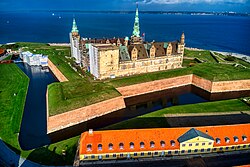
Key Facts
- Author: William Shakespeare
- Genre: Shakespearean tragedy
- Setting: Elsinore and other parts of Denmark
- Estimated Composition: c. 1599–1601
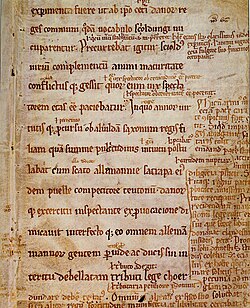
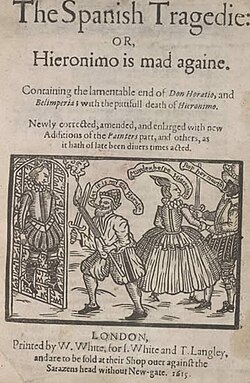
- Primary Sources: Based on the legend of Amleth from Gesta Danorum and influenced by The Spanish Tragedy and Ur-Hamlet
- Language: Early Modern English
The Origins and Composition of the Play
Scholars have long debated the exact timeline of Hamlet's creation. One prominent estimate suggests the play was written between 1599 and 1601, based on its frequent allusions to Shakespeare's Julius Caesar, which dates to mid-1599. Another piece of evidence comes from a 1602 entry in the Register of the Stationers' Company, noting that the play was "latelie Acted by the Lo: Chamberleyne his servantes."
The narrative roots of the play are deep, drawing from the legend of Amleth found in Saxo Grammaticus's Gesta Danorum. It also shares thematic DNA with other contemporary works, such as Thomas Kyd's The Spanish Tragedy.
Core Characters and Dramatic Conflict
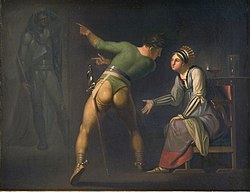
The tragedy centers on Hamlet, the Prince of Denmark, who is the son of the late King Hamlet and the nephew of the current King, Claudius. The plot is set in motion by the appearance of the Ghost of Hamlet's father, which prompts a series of devastating events involving the royal family and the court of Elsinore.
The Royal Court and Key Figures
The intricate web of relationships in the play includes:
- Gertrude: The Queen of Denmark and Hamlet's mother.
- Polonius: The King's chief counsellor.
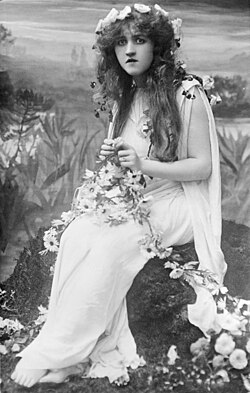
- Ophelia: Polonius's daughter, whose tragic arc is a central element of the play.
- Laertes: Polonius's son.
- Horatio: Hamlet's loyal friend.
- Claudius: The usurping King of Denmark.
![Horatio, Hamlet, and the ghost (Artist: Henry Fuseli, 1789)[4]](/images/d9/1f/d91f89ad3af2e314b58bbfad63bf99134373bcc50c4f0389601540f9674d2c71.png)
Supporting Cast and Courtiers
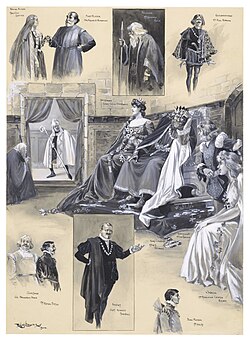
The court is populated by various figures who influence the unfolding tragedy, including the courtiers Rosencrantz and Guildenstern, the officer Marcellus, and the soldier Francisco. The play also features the Prince of Norway, Fortinbras, and a pair of gravediggers (sextons) who provide moments of dark levity.

Textual History and Variations
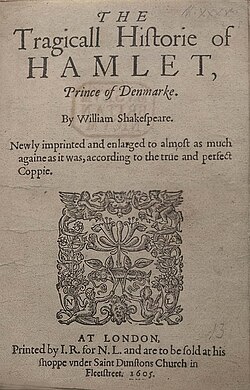
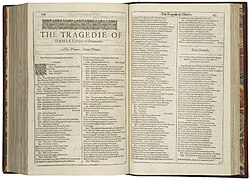
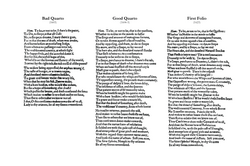
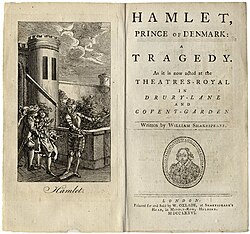
The transmission of Hamlet's text has been a subject of intense academic study. There are several distinct versions, often referred to as Quartos and the First Folio. The quality and wording of the text can vary significantly between these editions, particularly in famous passages like the "To be, or not to be" soliloquy.
Thematic Depth and Critical Interpretations
Hamlet is celebrated for its profound philosophical and psychological depth. Critics have approached the play through various lenses:
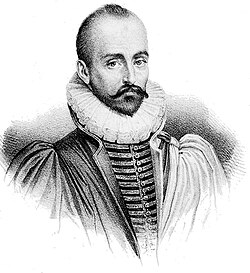
- Philosophical: Exploring existential questions similar to those posed by contemporary writers like Michel de Montaigne.
- Psychoanalytic: Analyzing the internal motivations and mental states of the characters.
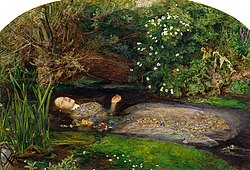
- Feminist: Examining the roles and descents of female characters, particularly Ophelia.
- Religious: Considering the implications of death, suicide, and Christian burial.
![Ophelia is distracted by grief.[123] Feminist critics have explored her descent into madness (artist: Henrietta Rae 1890).](/images/b7/4d/b74d73f114c468931f9d2fe979a69615fe74f9b3ea5eeae159436a9da45babb6.jpg)
Summary of Key Elements
| Category | Details |
|---|---|
| Primary Protagonist | Hamlet, Prince of Denmark |
| Antagonist | Claudius |
| Key Setting | Elsinore, Denmark |
| Major Themes | Revenge, Madness, Mortality, Philosophy |
| Literary Era | Early Modern English / Renaissance |
Performance and Visual Legacy
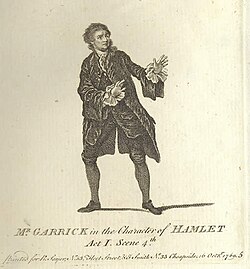
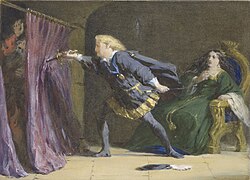
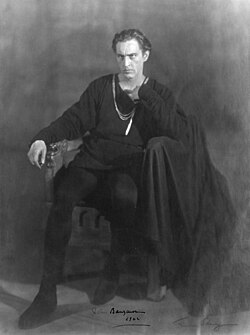
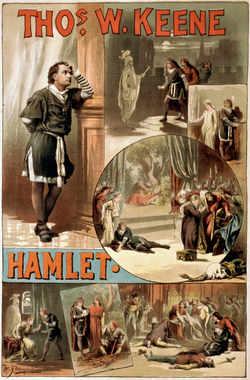
From the 19th-century stage to modern cinematic adaptations, Hamlet has been interpreted in countless ways. Notable performers have brought the Prince to life, including John Barrymore, Edwin Booth, and more recently, Jude Law and Paul Giamatti. The play's visual iconography—from the skull of Yorick to the tragic drowning of Ophelia—remains deeply embedded in the global consciousness.
![The gravedigger scene.[5] (Artist: Eugène Delacroix, 1839)](/images/2a/d7/2ad7bf520dbdc9f55577a968b9646295b9744c9ca8dc8b8a349e0621141e403c.jpg)
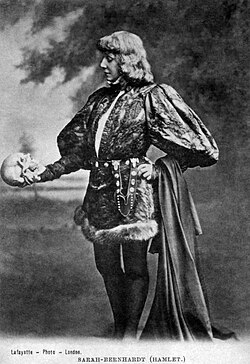
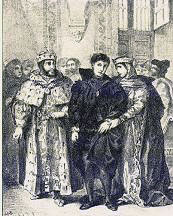
: Hamlet's statement that his dark clothes are the outer sign of his inner grief demonstrates strong rhetorical skill (artist: Eugène Delacroix 1834).
: Actors before Hamlet by Władysław Czachórski (1875), National Museum in Warsaw
Frequently Asked Questions
What is the setting of Hamlet?
The play is primarily set in Elsinore, Denmark.
Who wrote the play Hamlet?
The play was written by William Shakespeare.
What are the main themes of the play?
Key themes include revenge, madness, mortality, and philosophical inquiry.
Who are the main characters in Hamlet?
The central characters include Hamlet, Claudius, Gertrude, Polonius, Ophelia, Laertes, and Horatio.
When was Hamlet written?
It is estimated to have been written between approximately 1599 and 1601.