English Renaissance Theatre: The Golden Age of Drama (1558–1642)
The English Renaissance, a period of profound cultural flourishing, birthed one of the most influential eras in literary history. Spanning from 1558 to 1642, this era of drama transformed storytelling from transitory performances into a permanent, professionalized art form. While often referred to as Elizabethan theatre, the period actually encompasses several distinct stages: the Elizabethan era (1558–1603), the Jacobean era (1603–1625), and the Caroline era (1625–1642).
Driven by legendary playwrights such as William Shakespeare, Christopher Marlowe, and Ben Jonson, the stage became a central pillar of English social life, evolving from small-scale school performances to massive, profitable public playhouses.
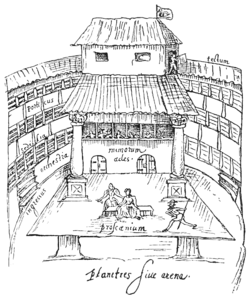
Key Facts
- Timeline: The era lasted from 1558 until the English Parliament banned theatrical plays in 1642.
- Major Playwrights: William Shakespeare, Christopher Marlowe, and Ben Jonson were the most prominent figures.
- Theatre Types: Performances occurred in large open-air public theatres and smaller, roofed private theatres.
- Repertory System: Acting companies rarely performed the same play two days in a row, maintaining a rotating schedule of diverse works.
- Audience Growth: London's total theatre capacity grew from approximately 5,000 spectators around 1580 to over 10,000 after 1610.
The Rise of Permanent Playhouses
Before the late 16th century, drama was often a transitory phenomenon. The establishment of large, profitable, and permanent playhouses was the essential catalyst for the success of English Renaissance drama. This shift was partially driven by necessity; in 1572 and 1575, the Mayor and Corporation of London banned plays and expelled players to combat the plague.
To survive, players moved outside the city's jurisdiction to the "liberties" of Shoreditch and Newington Butts. This led to a boom in construction, including The Theatre (1576) by James Burbage, the Curtain (1577), the Rose (1587), the Swan (1595), the Globe (1599), the Fortune (1600), and the Red Bull (1604).
Public vs. Private Theatres
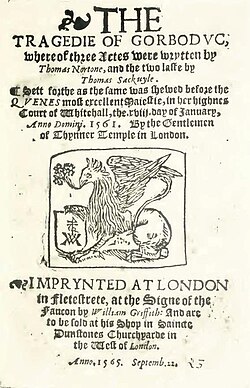
As the era progressed, two distinct architectural models emerged. The large, open-air public theatres—such as the Globe and the Fortune—could accommodate massive crowds. In contrast, private theatres like the Blackfriars (1599) were smaller, enclosed, and roofed, offering a more intimate setting that resembled modern theatre structures.
By the 1630s, London audiences had a diverse selection of six major venues: three large open-air houses (the Globe, Fortune, and Red Bull) and three smaller enclosed spaces (the Blackfriars, Cockpit, and Salisbury Court).
The Life of the Playwright and Actor
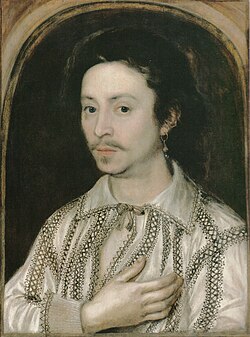
The profession of a dramatist was notoriously difficult and often financially unstable. Most playwrights struggled with poverty and uncertainty; for instance, Philip Henslowe's diaries show payments as low as £6 or £7 per play around 1600. While some, like Ben Jonson, found success through court masques (elaborate spectacles performed for royalty), many others faced significant financial hardship.
William Shakespeare achieved a level of financial security that few of his peers could match. This was not solely due to his writing, but because he was an actor and a shareholder in his company and the theatres they utilized. The workload for actors was immense, as companies operated on a repertory system, meaning they performed a wide variety of plays in rapid succession rather than running a single production for months.
Genres and Themes
The era saw a rich variety of dramatic styles. History plays, which depicted English or European history, were highly popular. Examples include Shakespeare's works on Richard III and Henry V, and Marlowe's Edward II. Other notable genres included:
- Pastoral: Plays focusing on rural life, such as The Faithful Shepherdess.
- Morality Plays: Allegorical dramas like Four Plays in One.
- Tragicomedy: A hybrid subgenre that saw an increase in popularity after 1610.
- Masque: Elaborate courtly entertainments.
Summary of Theatre Venues and Capacity
| Theatre Category | Key Characteristics | Notable Examples |
|---|---|---|
| Public Theatres | Large, open-air, circular/polygonal structures | The Globe, The Rose, The Swan, The Fortune |
| Private Theatres | Smaller, enclosed, roofed, more intimate | Blackfriars, The Cockpit, Salisbury Court |
| Audience Capacity | Grew from ~5,000 (c. 1580) to >10,000 (post-1610) | N/A |
Frequently Asked Questions
What caused the end of the English Renaissance theatre?
The era came to an end in 1642 when the English Parliament enacted a ban on theatrical plays.
How did playwrights make a living?
It was a challenging profession. Many struggled with poverty, but those who were also shareholders in acting companies or successful at securing royal patronage, like Ben Jonson, found more stability.
What was the repertory system?
The repertory system was a method where acting companies performed a rotating selection of different plays. Unlike modern theatre, they rarely performed the same play two days in a row.
Were plays commonly printed during this time?
Only a minority of plays were printed. Most were published in individual quarto editions (small, inexpensive booklets), and many scholars believe publishing plays was a risky and marginal business for printers.
What is the difference between Elizabethan and Jacobean theatre?
Elizabethan theatre specifically refers to the period during Queen Elizabeth I's reign (1558–1603), while Jacobean theatre refers to the period following her, during the reign of King James I (1603–1625).