Wilaya: The Administrative Division Across Global Cultures
The term wilaya (or wilayah) is a versatile administrative designation used across various languages and political systems. Rooted in the Arabic word w-l-y, meaning "to govern," it describes a territory that is governed. In a literal sense, a wāli (governor) is the individual who governs a wilāya.
While often translated into English as "state," "province," or "governorate," the specific meaning of a wilaya varies significantly depending on the geographic region and the historical context of the government using it. From the ancient Caliphates to modern-day nation-states, the term defines the relationship between central authority and regional administration.
Key Facts
- Etymology: Derived from the Arabic root for "to govern."
- Common Translations: Province, state, governorate, or region.
- Global Reach: Used in North Africa, West Asia, Central Asia, Southeast Asia, and East Africa.
- Historical Use: Central to the administrative restructuring of the Ottoman Empire after 1864.
- Modern Application: Used officially in countries like Algeria, Sudan, and Afghanistan.
Regional Applications of Wilaya
North Africa and West Asia
In the Arab world, the term is frequently used to denote primary administrative subdivisions. In Morocco, the distinction between provinces and wilāyas is maintained to avoid administrative confusion. In Sudan, the term is translated as "state," while in Mauritania, it is referred to as a "region." In Tunisia, these divisions are known as governorates.
Interestingly, in Arabic, the word wilaya is also used to describe the states of the United States. Consequently, the United States of America is referred to as al-Wilāyāt al-Muttaḥida l-Amrīkiyya, which literally translates to "the American United States."
Central Asia and the Caucasus
The Classical Persian form, wilāyat, remains prevalent in several Central Asian nations. In Afghanistan, provinces (wilāyāt) are further subdivided into districts. Similarly, Tajikistan, Turkmenistan, and Uzbekistan use variations of the term (such as viloyat or welaýat) for their regions. This persists despite the use of Russian terms like oblast and raion during the Soviet era.
In the Caucasus, the Tsez language uses wilayat for the districts of Dagestan, and the self-proclaimed Caucasus Emirate also utilizes the term for its divisions.
Southeast Asia and East Africa
In Malaysia, the term Wilayah Persekutuan refers to the three federal territories—Kuala Lumpur, Labuan, and Putrajaya—which are under direct federal control. In Thailand, it serves as the standard Malay translation for "province," and in the Philippines, it is used in the context of the province of Sulu (Wilāya sin Lupa' Sūg).
In Kenya and Tanzania, wilaya is a Swahili term used to describe the administrative districts that exist within larger provinces.
China
In the Xinjiang region of Northwest China, the Uyghur language uses wilayet to translate the seven undifferentiated prefectures. Other administrative divisions in the region typically employ Russian loanwords such as oblasti or rayoni.
Historical and Political Contexts
The Ottoman Empire
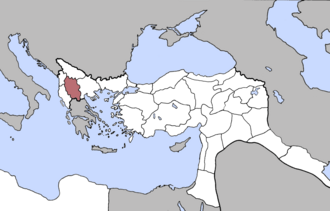
Historically, the Ottoman Empire utilized eyālets as its primary provinces. However, starting in 1864, the empire restructured these into smaller units called vilâyets (the Turkish pronunciation of wilāya). These vilâyets were typically further subdivided into sanjaks. In modern Turkey, these provinces have since been renamed il.
Non-State Actors
Certain militant organizations have adopted the term to lend a sense of official governance to the territories they control. The Islamic State (ISIS) refers to its governed territories as wilayah (e.g., Khorasan Province), and Al-Shabaab in Somalia similarly divides its controlled areas into wilayas or local administrations.
Summary of Regional Terminology
| Region/Country | Local Term | Common English Translation |
|---|---|---|
| Morocco | Wilāya | Wilaya / Province |
| Sudan | Wilāya | State |
| Mauritania | Wilāya | Region |
| Malaysia | Wilayah | Federal Territory |
| Afghanistan | Wilāyāt | Province |
| Ottoman Empire (Post-1864) | Vilâyet | Province |
| Kenya/Tanzania | Wilaya | District |
Frequently Asked Questions
What is the literal meaning of the word wilaya?
The word comes from the Arabic root "w-l-y," which means "to govern." Therefore, a wilaya is literally "that which is governed."
How does the use of wilaya differ between Malaysia and Morocco?
In Morocco, a wilaya is a primary administrative division similar to a province. In Malaysia, "Wilayah" specifically refers to Federal Territories under the direct control of the federal government, such as Kuala Lumpur.
Did the Ottoman Empire always use the term vilayet?
No. Traditionally, the Ottoman provinces were called eyālets. The transition to vilâyets began in 1864 as part of a restructuring process to create smaller administrative units.
Is the term wilaya used in non-Arabic speaking countries?
Yes. It is used in various forms in Persian-speaking regions (Afghanistan, Tajikistan), Turkic languages (Uzbekistan, Turkmenistan), and in Swahili (Kenya, Tanzania).
How is the United States described in Arabic?
The United States is called al-Wilāyāt al-Muttaḥida l-Amrīkiyya, which translates literally to "the American United States," using the plural form of wilaya.