Ottoman EmpireSultanConstantinopleOsman IMehmed the Conqueror

Ottoman Empire: The Rise and Fall of the Eternal State

Ottoman Empire: The Rise and Fall of the Eternal State Known to its rulers as the Devlet-i ʿAlīye-i ʿOs̱mānīye (the Sublime Ottoman State), the Ottoman Empire was one of history's most en...

Ottoman Empire: The Rise and Fall of the Eternal State

Known to its rulers as the Devlet-i ʿAlīye-i ʿOs̱mānīye (the Sublime Ottoman State), the Ottoman Empire was one of history's most enduring and influential powers. Spanning over six centuries from approximately 1299 to 1922, it evolved from a small Anatolian principality into a transcontinental superpower that bridged Europe, Asia, and Africa.

The empire's motto, Devlet-i Ebed-müddet ("The Eternal State"), reflected the ambition of its leaders to maintain a permanent and stable order. At its peak, the empire served as the center of the Islamic world, blending diverse cultures, languages, and religions under the authority of the Sultan.
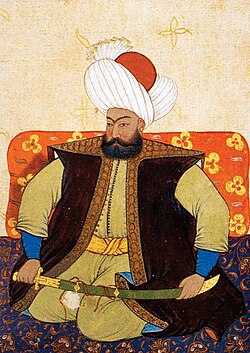
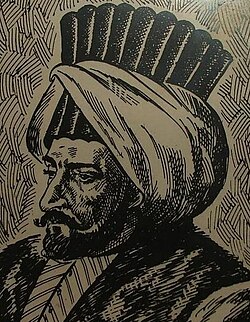
Ottoman miniature of Osman I by Yahya Bustanzâde (18th century)

Key Facts

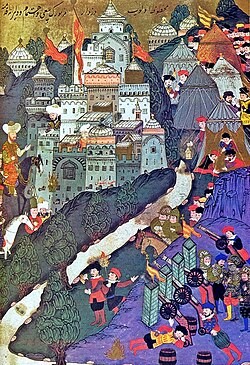
The Battle of Nicopolis in 1396, as depicted in an Ottoman miniature from 1523
  • Founded: c. 1299 by Osman I.
  • Peak Territory: Reached approximately 5.2 million km² by 1683.
  • Capital Cities: Söğüt, Nicaea, Bursa, Adrianople, and finally Constantinople (Istanbul).
  • State Religion: Sunni Islam (Hanafi school).
  • Government: Transitioned from absolute monarchy to parliamentary constitutional monarchy.
  • Dissolution: The sultanate was abolished in 1922, followed by the Republic of Turkey in 1923.

The Rise and Expansion (1299–1566)

Late 16th or early 17th century Ottoman galley known as Tarihi Kadırga at the Istanbul Naval Museum, built in the period between the reigns of Sultan Murad III (1574–1595) and Sultan Mehmed IV (1648–1687)[77][78]

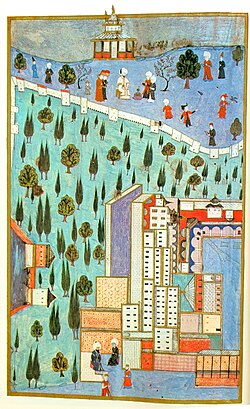
The empire began as a small frontier state in Anatolia. Through strategic military campaigns and political alliances, the early Ottomans expanded their influence across the Balkans and Asia Minor. A pivotal moment occurred on May 29, 1453, when Sultan Mehmed the Conqueror captured Constantinople, ending the Byzantine Empire and establishing the city as the new Ottoman capital.
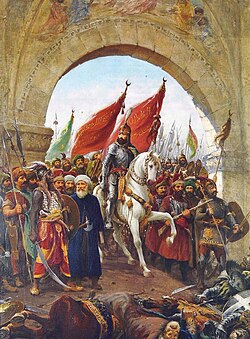
Sultan Mehmed the Conqueror's entry into Constantinople; painting by Fausto Zonaro (1854–1929)

Following the conquest of Constantinople, the empire entered a period of rapid expansion. By 1517, the Ottomans proclaimed the Ottoman Caliphate, asserting the Sultan's role as the spiritual leader of the Muslim community. Military victories, such as the Battle of Mohács in 1526 and the naval triumph at the Battle of Preveza in 1538, solidified Ottoman dominance in Central Europe and the Mediterranean.

Ottoman miniature of the Battle of Mohács in 1526[63]

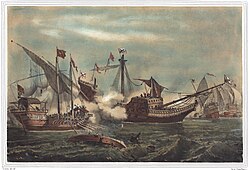
Ottoman admiral Barbarossa Hayreddin Pasha defeated the Holy League of Charles V under the command of Andrea Doria at the Battle of Preveza in 1538.

Stagnation, Reform, and Conflict (1566–1827)
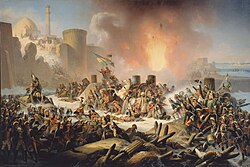
Ottoman troops attempting to halt the advancing Russians during the Siege of Ochakov in 1788

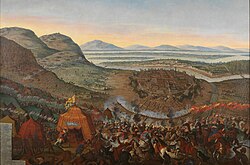
After the reign of Suleiman the Magnificent, the empire faced a gradual period of stagnation. While it remained a formidable power, it encountered significant military setbacks, including the Battle of Lepanto and the Second Siege of Vienna in 1683. These defeats signaled a shift in the balance of power toward European states.
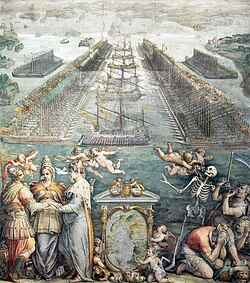
Order of battle of the two fleets in the Battle of Lepanto, with an allegory of the three powers of the Holy League in the foreground, fresco by Giorgio Vasari

The Second Siege of Vienna in 1683, by Frans Geffels (1624–1694)

The 18th century was marked by territorial fluctuations. For instance, Austrian troops captured Belgrade in 1717, though the Ottomans regained it via the 1739 Treaty of Belgrade. Despite these losses, the empire attempted various internal reforms to modernize its administration and military to compete with the rising powers of Russia and the Habsburgs.
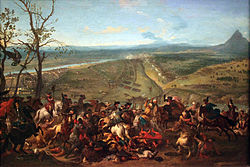
Austrian troops led by Prince Eugene of Savoy capture Belgrade in 1717. Austrian control in Serbia lasted until the Turkish victory in the Austro-Russian–Turkish War (1735–1739). With the 1739 Treaty of Belgrade, the Ottoman Empire regained northern Bosnia, Habsburg Serbia (including Belgrade), Oltenia and the southern parts of the Banat of Temeswar.

Decline and the Path to Dissolution (1828–1922)
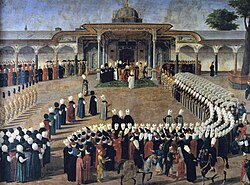
Selim III receiving dignitaries during an audience at the Gate of Felicity, Topkapı Palace. Painting by Konstantin Kapıdağlı.

The 19th century brought intense pressure from nationalist movements and external interventions. The Greek War of Independence and the Crimean War (1853–1856) highlighted the empire's vulnerability. In response, the state entered the First Constitutional Era in 1876, attempting to move from an absolute monarchy to a constitutional one.
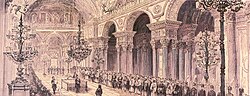
Opening ceremony of the First Ottoman Parliament at the Dolmabahçe Palace in 1876. The First Constitutional Era lasted only two years until 1878. The Ottoman Constitution and Parliament were restored 30 years later with the Young Turk Revolution in 1908.

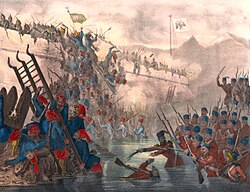
Ottoman troops storming Fort Shefketil during the Crimean War of 1853–1856

The early 20th century saw the rise of the Young Turk Revolution in 1908, which sought to restore the constitution and modernize the state. However, the empire's entry into World War I on the side of the Central Powers proved fatal. This period was marked by devastating losses, the Arab Revolt, and the Armenian genocide, where an estimated 600,000 to 1.5 million people were killed through deportation and ethnic cleansing policies.
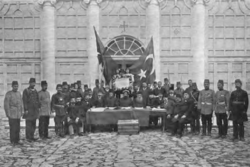
Declaration of the Young Turk Revolution by the leaders of the Ottoman millets in 1908

The Armenian genocide was the result of the Ottoman government's deportation and ethnic cleansing policies regarding its Armenian citizens after the Battle of Sarikamish (1914–1915) and the collapse of the Caucasus Front against the Imperial Russian Army and Armenian volunteer units during World War I. An estimated 600,000[160] to more than 1 million,[160] or up to 1.5 million[161][162][163] people were killed.

Following the war, the Treaty of Sèvres and the subsequent Turkish War of Independence led to the final collapse. The sultanate was abolished on November 1, 1922, and the Republic of Turkey was established on October 29, 1923. The caliphate, the last vestige of the old order, was abolished in 1924.
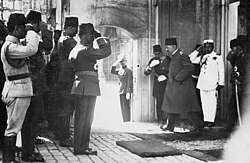
Mehmed VI, the last Sultan of the Ottoman Empire, leaving the country after the abolition of the Ottoman sultanate, 17 November 1922

Society, Culture, and Governance

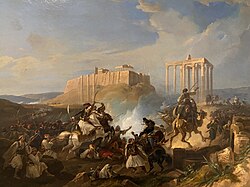
The siege of the Acropolis in 1826–1827 during the Greek War of Independence

The Ottoman Empire was a multicultural mosaic. While Ottoman Turkish was the official language, Arabic, Persian, Greek, and French were widely used. The state employed the millet system, allowing different religious communities (such as Christians and Jews) a degree of autonomy in managing their own legal and social affairs.
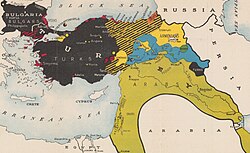
Ethnic map of the Ottoman Empire in 1917. Black = Bulgars and Turks, Red = Greeks, Light yellow = Armenians, Blue = Kurds, Orange = Lazes, Dark Yellow = Arabs, Green = Nestorians

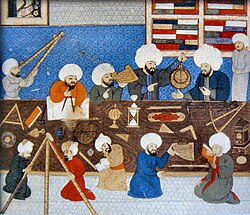
Ottoman architecture is perhaps the empire's most visible legacy, characterized by the classical style of Mimar Sinan, as seen in the Süleymaniye Mosque. The empire also fostered a rich tradition of miniature painting, poetry, and science, including the establishment of the Constantinople observatory in 1577.
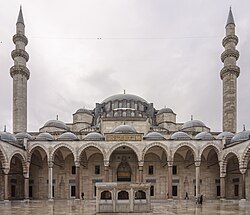
Süleymaniye Mosque in Istanbul, designed by Mimar Sinan in the 16th century and a major example of the classical Ottoman style

The Constantinople observatory of Taqi ad-Din in 1577

Summary of Ottoman Empire Evolution
Period Key Characteristic Major Event/Leader Approx. Area (km²)
Rise (1299–1453) Expansion in Anatolia/Balkans Osman I / Conquest of Constantinople 1.22 Million (1481)
Peak (1453–1566) Global Superpower Suleiman the Magnificent 3.4 Million (1521)
Stagnation (1566–1827) Territorial Contraction Siege of Vienna (1683) 5.2 Million (1683)
Decline (1828–1922) Modernization & Dissolution Young Turk Revolution / WWI 2.55 Million (1913)

Frequently Asked Questions

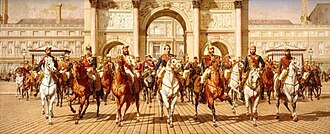
The monarchs of Europe in Paris (Napoleon III is at the centre, Sultan Abdulaziz is second from right), fictional representation of the opening of the Universal Exposition of 1867.
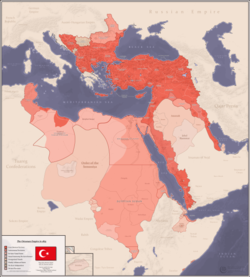
The Ottoman Empire in 1875 under Sultan Abdulaziz
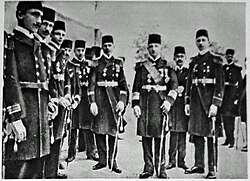
Admiral Wilhelm Souchon, who commanded the Black Sea raid on 29 October 1914, and his officers in Ottoman naval uniforms
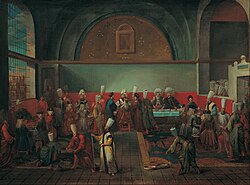
Ambassadors at the Topkapı Palace
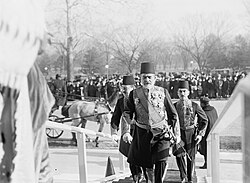
Yusuf Ziya Pasha, Ottoman ambassador to the United States, in Washington, D.C., 1913
An unhappy wife complaining to the Qadi about her husband's impotence, as depicted in an Ottoman miniature. Divorce is allowed in Islamic law and can be initiated by either the husband or the wife.[193]
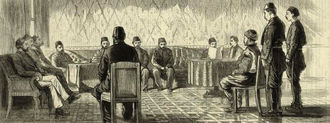
An Ottoman trial, 1877
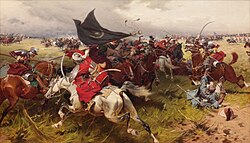
Ottoman sipahis in battle, holding the crescent banner, by Józef Brandt
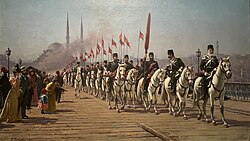
Modernised Ertugrul Cavalry Regiment crossing the Galata Bridge in 1901
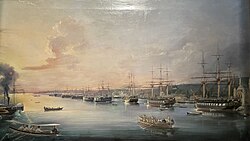
The Ottoman fleet in the Bosphorous near Ortaköy
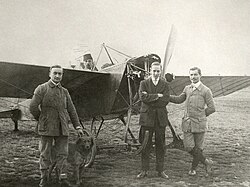
Ottoman pilots in early 1912
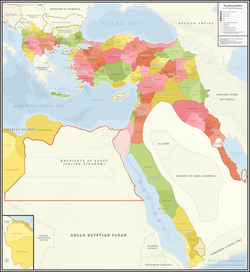
Administrative divisions of the Ottoman Empire in 1899 (year 1317 Hijri)
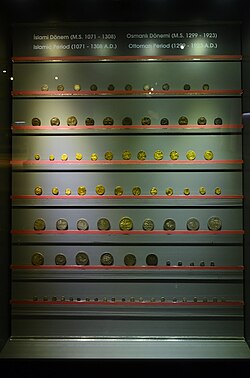
Coins of the Sultanate of Rûm and the Ottoman Empire at Aydın Archaeological Museum
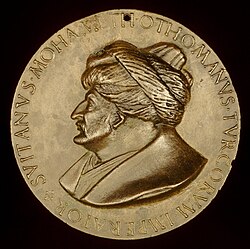
A European bronze medal from the period of Sultan Mehmed the Conqueror, 1481
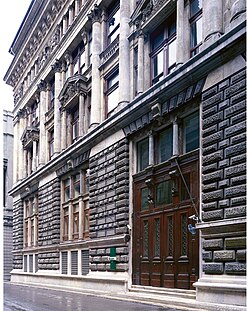
The Ottoman Bank was founded in 1856 in Constantinople. On 26 August 1896, the bank was occupied by members of the Armenian Revolutionary Federation.
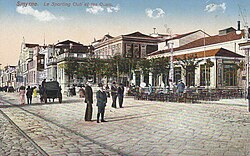
İzmir under Ottoman rule in 1900
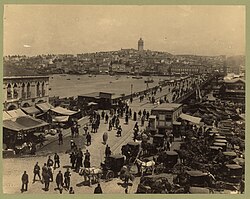
View of Galata (Karaköy) and the Galata Bridge on the Golden Horn, c. 1880–1893
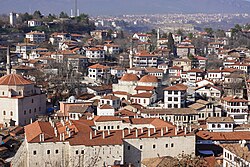
The town of Safranbolu is one of the best-preserved Ottoman villages.
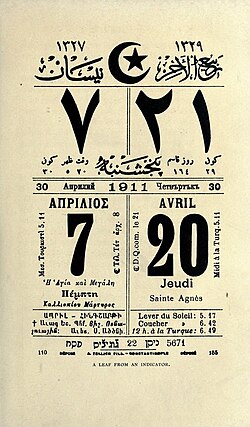
1911 Ottoman calendar shown in several different languages such as: Ottoman Turkish, Greek, Armenian, Hebrew, Bulgarian and French
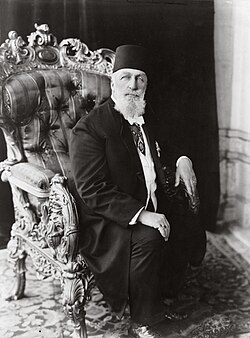
Abdülmecid II was the last caliph of Islam and a member of the Ottoman dynasty.
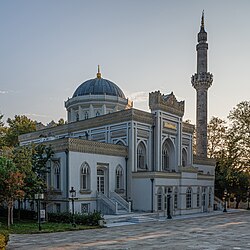
The Yıldız Hamidiye Mosque in Istanbul, Turkey
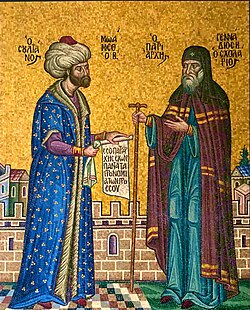
Mehmed the Conqueror and Patriarch Gennadius II
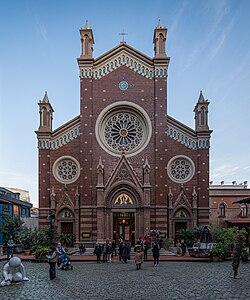
The original Church of St. Anthony of Padua, Istanbul was built in 1725 by the local Italian community of Istanbul.
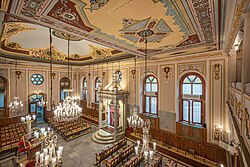
Hemdat Israel Synagogue of Istanbul
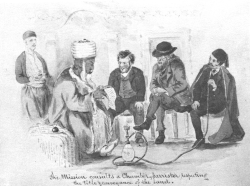
Depiction of a hookah shop in Lebanon
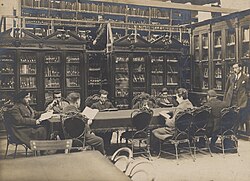
The Beyazıt State Library was founded in 1884.
Ahmet Nedîm Efendi, one of the most celebrated Ottoman poets
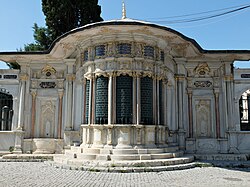
Sebil (water distribution kiosk) of the Mihrişah Sultan Complex in Istanbul, from the late 18th century, an example of the Ottoman Baroque style
Ottoman miniature lost its function with the Westernisation of Ottoman culture.
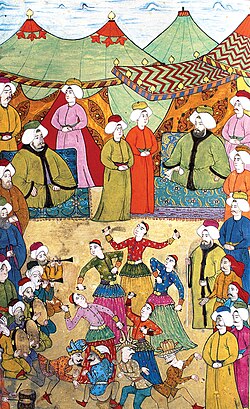
Musicians and dancers entertaining the crowds, from the Surname-i Hümayun, 1720
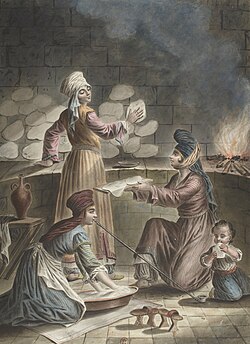
Turkish women baking bread, 1790
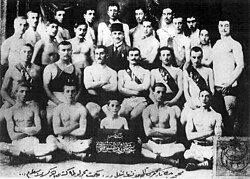
Members of Beşiktaş J.K. in 1903
Girl Reciting the Qurān (Kuran Okuyan Kız), an 1880 painting by the Ottoman polymath Osman Hamdi Bey, whose works often showed women engaged in educational activities[318]

Who was the founder of the Ottoman Empire?

The empire was founded around 1299 by Osman I, a leader of a small Turkic principality in Anatolia.

What was the significance of the conquest of Constantinople?

The capture of Constantinople in 1453 by Sultan Mehmed the Conqueror ended the Byzantine Empire and provided the Ottomans with a strategic capital that linked Europe and Asia.

What was the millet system?

The millet system was an administrative structure that allowed non-Muslim religious communities to govern their own internal affairs, including legal and educational matters, under the umbrella of the empire.

How did the Ottoman Empire end?

The empire collapsed following its defeat in World War I. The sultanate was abolished in 1922, and the Republic of Turkey was officially established in 1923.

What was the role of the Caliph in the empire?

Starting with Selim I in 1517, the Ottoman Sultans also claimed the title of Caliph, making them the nominal spiritual leaders of the global Sunni Muslim community.

References

  1. İslâm Ansiklopedisi: "It is disputed when the Ottomans conquered this place; various dates have been put forward in this regard, such as 1361, 1362, 1367 and 1369. Among these, the opinion that Edirne was captured in 1361 as a result of a systematic conquest policy by Murad and Lala Şahin, while Orhan Gazi was still alive, gains prominence. However, it has also been stated that the date of conquest may have occurred after 1366 (1369), based on an elegy showing that the city metropolitan Polykarpos was in Edirne in this capacity until 1366."[4]
  2. In Ottoman Turkish, the city was known by various names, among which were Ḳosṭanṭīnīye (قسطنطينيه) (replacing the suffix -polis with the Arabic suffix), Istanbul (استنبول) and Islambol (اسلامبول, lit. 'full of Islam'); see Names of Istanbul). Ḳosṭanṭīnīye became obsolete in Turkish after the proclamation of the Republic of Turkey in 1923,[5] and after Turkey's transition to Latin script in 1928,[6] the Turkish government in 1930 requested that foreign embassies and companies use Istanbul, and that name became widely accepted internationally.[7]
  3. Liturgical language, coinage, and scientific literature[8]
  4. Court, diplomacy, poetry, historiographical works, literary works, taught in state schools, and offered as an elective course or recommended for study in some madrasas.[9][10][11][12][13][14][15][16]
  5. Among Greek-speaking community; spoken by some sultans.