The Vast Legacy of the Turkic Peoples: History, Culture, and Demographics
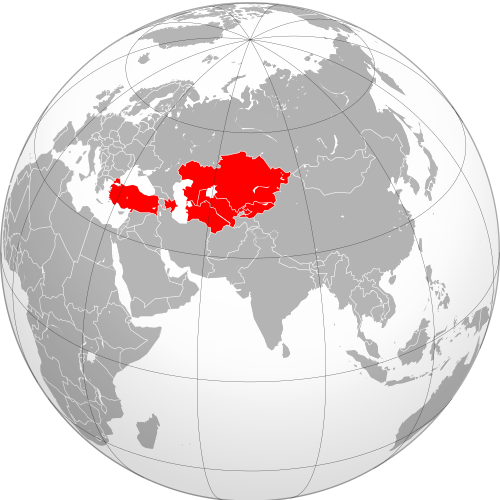
Spanning from the vast steppes of Central Asia to the shores of the Mediterranean, the Turkic peoples represent one of the most expansive and influential linguistic and cultural groups in human history. With a total population exceeding 170 million, Turkic-speaking populations are woven into the fabric of dozens of nations across Eurasia, from the Arctic reaches of Siberia to the heart of Anatolia.
To understand the Turkic world is to trace a journey of massive migrations, the rise and fall of mighty khaganates (empires), and a profound religious evolution that has shaped the modern geopolitical landscape.
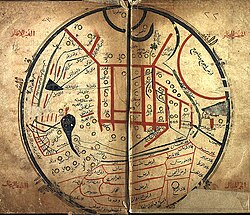
Key Facts
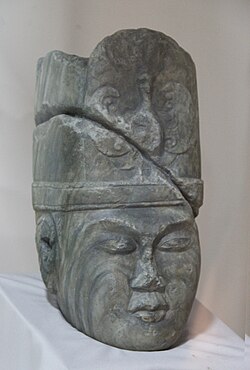
- Total Population: Over 170 million people worldwide.
- Primary Regions: Turkey, Uzbekistan, Iran, Russia, Kazakhstan, and China.
- Major Ethnic Groups: Turks, Azerbaijanis, Uzbeks, Kazakhs, Uyghurs, and Turkmens.
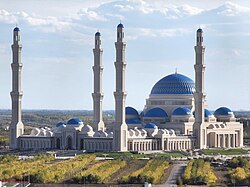
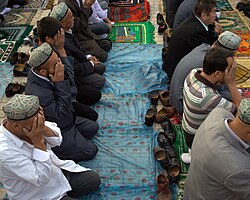
- Religious Diversity: Predominantly Sunni Islam, but including Shia Islam, Orthodox Christianity, Tengrism, and Judaism.
- Historical Origins: Likely located in a compact area in Eastern Mongolia.
The Origins and Early History of Turkic Peoples
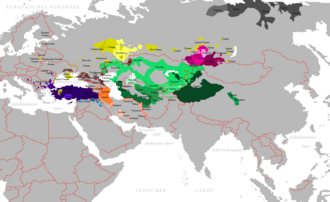
The exact origins of the Turkic peoples remain a subject of intense historical and genetic study. Recent research suggests that the ultimate Proto-Turkic homeland may have been located in a relatively compact area, most likely in Eastern Mongolia.
![According to Uchiyama et al. 2020 the "ultimate Proto-Turkic homeland may have been located in a more compact area, most likely in Eastern Mongolia".[115]](/images/ee/9d/ee9d19817c39857b7adadb65d3f573bbdd7ff3fe85bab18997f6b31ae44dd969.png)
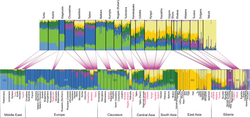
Genetic studies, including supervised admixture modeling, show that modern Turkic-speaking populations possess a complex ancestral composition. This includes Ancient Northeast Asian ancestry (such as the Ashina and Mongolia_N_North groups), Chinese Central Plain millet farmers (YR_LN), and West Eurasian-related ancestry (such as Russia_Sintashta_MLBA).
![Ancestral composition of modern Turkic‐speaking populations based on supervised admixture, with modeled proportions of Ancient Northeast Asian ancestry (Mongolia_N_North and Ashina, ), as well as Chinese Central Plain millet farmers (YR_LN, ) and West Eurasian‐related ancestry (Russia_Sintashta_MLBA, ).[103]](/images/d7/07/d7075f56adfba14703a0e6ddb087bf71f6ce80eb750cf6c68f27d39bec292198.png)
The Era of the Khaganates
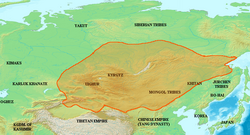
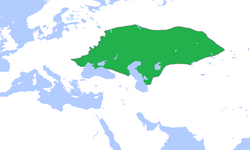
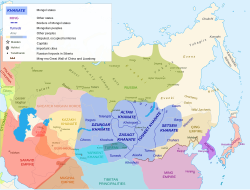
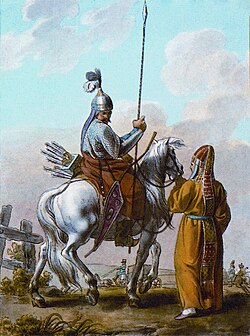
The historical record of Turkic power is defined by the rise of powerful nomadic confederations. The Xiongnu (3rd c. BCE – 1st c. CE) are often cited in the context of early steppe expansions. This was followed by the monumental era of the Göktürks (5th–8th c.), who established the Turkic Khaganate, a period that solidified Turkic identity and political structure across the steppes.
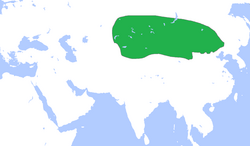
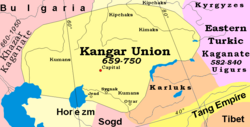
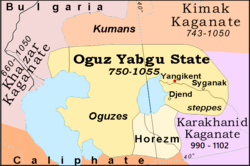
Other significant historical entities include the Uyghur Khaganate (8th–9th c.), the Kangar Union (659–750), and the Oghuz Yabgu State (c. 750 CE). These states facilitated the movement of people and ideas, setting the stage for the later Islamic-era empires.
Expansion and the Islamic Golden Age
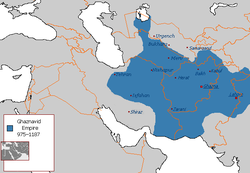
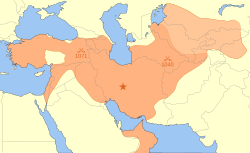
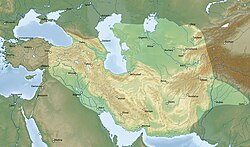
As Turkic groups migrated westward, they encountered and integrated with Persian, Arabic, and Byzantine cultures. This era saw the rise of legendary dynasties such as the Ghaznavids, the Seljuk Empire, and the Timurid Empire. These empires were instrumental in the spread of Islam and the development of the "Turco-Persian" tradition, blending Turkic military prowess with Persianate administrative and artistic sophistication.
Modern Demographics and Distribution
Today, Turkic-speaking populations are distributed across a vast geographic range. While many are concentrated in Central Asia and Turkey, significant minorities exist in the European Union, the Middle East, and the Russian Federation.
Population by Region and Group
The following table provides a snapshot of the major Turkic-speaking populations and their primary regions.
| Ethnonym | Estimated Population | Primary Region(s) | Predominant Religion |
|---|---|---|---|
| Turks | 60,000,000–65,000,000 | Turkey, Northern Cyprus | Sunni Islam, Alevism |
| Azerbaijanis | 31,300,000 | Azerbaijan, Iran, Dagestan | Shia & Sunni Islam |
| Uzbeks | 30,700,000 | Uzbekistan | Sunni Islam |
| Kazakhs | 15,193,000 | Kazakhstan | Islam |
| Uyghurs | 11,900,000 | Xinjiang, China | Islam |
| Turkmens | 8,000,000 | Turkmenistan | Islam |
| Volga Tatars | 6,200,000 | Tatarstan, Russia | Sunni Islam, Orthodox Christianity |
| Kyrgyz | 6,000,000 | Kyrgyzstan | Sunni Islam |
Cultural and Religious Diversity
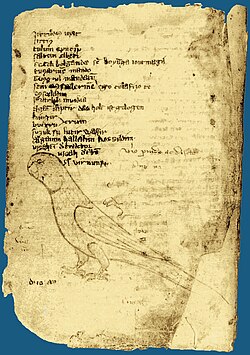
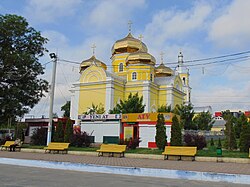
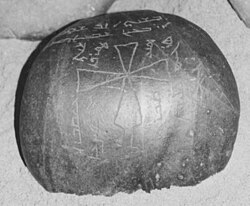
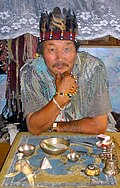
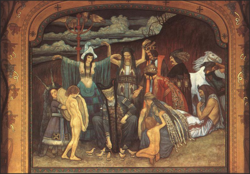
While Islam is the predominant religion for many Turkic groups, the cultural landscape is remarkably diverse. Many groups maintain traditions rooted in Tengrism (ancient Turkic shamanism) or practice Orthodox Christianity (such as the Gagauz in Moldova or the Chuvash in Russia). Some smaller groups, like the Crimean Karaites and Krymchaks, practice Judaism.
International Cooperation
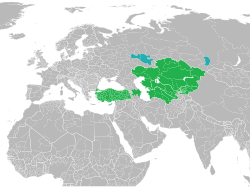
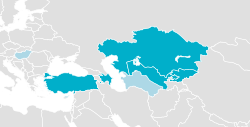
In the modern era, efforts to foster cooperation among Turkic-speaking nations have led to the formation of international organizations. TÜRKSOY and the Organization of Turkic States serve as platforms for cultural and political engagement among member and observer states.
Frequently Asked Questions
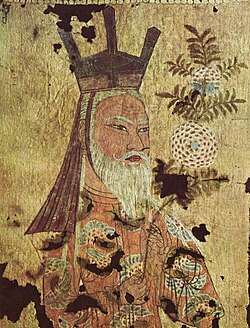
![An early Turk Shahi ruler named Sri Ranasrikari "The Lord who brings excellence through war" (Brahmi script). In this realistic portrait, he wears the Turkic double-lapel caftan. Late 7th to early 8th century CE.[253][254][255]](/images/4d/4a/4d4ace413058b515fe4bd545e15bc1bc9418976cbc509b19699afd1fba722f31.jpg)
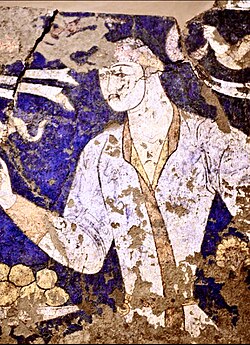
![Ghaznavid portrait, Palace of Lashkari Bazar. Schlumberger noted that the turban, the small mouth and the strongly slanted eyes were characteristically Turkic.[266]](/images/94/f2/94f263c88cd59754e0fc8ac3518b3dd001f70ead696904643f5fc2b2f52d9f17.jpg)
Where is the primary homeland of the Turkic peoples?
Historical and scientific evidence suggests the "ultimate" Proto-Turkic homeland was likely located in a compact area within Eastern Mongolia.
What are the largest Turkic-speaking populations today?
The largest groups are the Turks (primarily in Turkey), Azerbaijanis, Uzbeks, and Kazakhs.
Are all Turkic-speaking people Muslim?
No. While a large majority of Turkic-speaking populations practice Islam (both Sunni and Shia), there are significant populations that practice Orthodox Christianity, Tengrism, Tibetan Buddhism, and Judaism.
What is the total population of Turkic speakers?
The total population of people speaking Turkic languages is estimated to be over 170 million.
Which historical empires were of Turkic origin?
Significant historical Turkic empires include the Göktürk Khaganate, the Seljuk Empire, the Ghaznavid Dynasty, the Timurid Empire, and the Golden Horde.