Vowel Harmony: Phonological Processes and Global Language Examples
In the study of phonology, vowel harmony is a fascinating process where vowels within a word assimilate, or "harmonize," to share specific distinctive features. This linguistic phenomenon ensures that vowels within a certain domain—usually a single phonological word—match one another in quality, creating a cohesive sound pattern.
Unlike simple assimilation where sounds change based on their immediate neighbor, vowel harmony is often a "long-distance" process. This means a single trigger vowel can influence other vowels across the word, even if they are separated by several consonants. Essentially, the trigger vowel dictates the required feature, and all subsequent vowels in the domain shift to match it.
Key Facts
- Definition: A phonological process where vowels assimilate to share specific features.
- Scope: Typically confined to a phonological word but can occasionally cross word boundaries.
- Mechanism: A trigger vowel causes other vowels in the domain to match its features.
- Common Features: Backness, height, roundedness, nasalization, and tongue root position.
- Global Presence: Prominent in Turkic, Mongolic, and Uralic language families.
Dimensions of Vowel Harmony
Linguists categorize vowel harmony based on the specific phonetic dimension being harmonized. These dimensions define the "natural classes" of vowels involved in the process.
| Dimension | Alternative Name | Feature Value |
|---|---|---|
| Backness Harmony | Palatal harmony | Back or Front [±back] |
| Roundedness Harmony | Labial harmony | Rounded or Unrounded [±round] |
| Height Harmony | Height harmony | High or Low [±high] |
| Tongue Root Harmony | Tongue root harmony | Advanced or Retracted [±ATR] |
Vowel Harmony in Major Language Families
Turkic Languages
Turkic languages, including Turkish and Azerbaijani, are well-known for their rigorous front/back harmony. In these languages, suffixes often have multiple forms to match the vowels of the root word. For example, in Turkish, the genitive suffix may appear as -ın (back) or -in (front) depending on the preceding vowel.
Uralic Languages
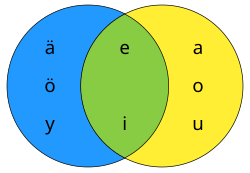
Uralic languages like Finnish and Hungarian also employ complex harmony systems. In Finnish, the choice of suffix depends on whether the root contains back vowels. If a word contains only neutral vowels, the suffix typically defaults to a front form, unless a non-initial back vowel is present.
Hungarian presents a more intricate system where suffixes can have one, two, three, or four different forms. These variations are driven by whether the root vowels are back, front unrounded, or front rounded (often referred to as "cleft lip" vowels).
Mongolic and Korean
Mongolian utilizes Tongue Root Harmony, distinguishing between advanced (+ATR) and retracted (-ATR) tongue root positions. Similarly, Korean exhibits harmony in its verb and adjective infinitive forms, where the non-past tense marker changes (e.g., -a vs -eo) based on the vowel of the stem.
Other Linguistic Variations
Beyond the major families, vowel harmony appears in diverse forms globally:
- Persian: Exhibits rounding harmony in certain verb constructions (e.g., be-kon becoming bokon).
- Yokuts: Uses a system of rounded and unrounded harmony for aorist and gerundial suffixes.
- Bantu Languages: Languages like Standard Lingala and Shona utilize height harmony.
- Yurok: Features a rare form of rhotic vowel harmony.
Vowel-Consonant Harmony
In some rare cases, harmony extends beyond vowels. In Chilcotin, for instance, there is a relationship between "flat" vowels and "flat" consonants. If no flat consonants are present in a word, the vowels must belong to the non-flat class.
Frequently Asked Questions
What is the difference between vowel harmony and assonance?
While both involve repeating vowel sounds, assonance is a poetic device used for stylistic effect, whereas vowel harmony is a systematic phonological rule inherent to a language's grammar.
Can a word have both front and back vowels?
In languages with strict vowel harmony, this is generally avoided within a single root. However, some languages have "neutral" vowels that can appear in both front and back harmony environments without triggering a change.
How does agglutination relate to vowel harmony?
Agglutination is the process of adding multiple suffixes to a root. In languages with vowel harmony, these suffixes must change their vowels to match the root, often resulting in multiple versions of the same suffix.
What is Tongue Root Harmony (ATR)?
Tongue Root Harmony refers to the positioning of the root of the tongue. Vowels are categorized as either Advanced Tongue Root (+ATR) or Retracted Tongue Root (-ATR), and they must harmonize within the word.
Is vowel harmony found in English?
English does not have a systematic vowel harmony process like Turkish or Finnish, although it has other vowel-related phonological rules such as vowel reduction in unstressed syllables.