Indo-European Languages: A Linguistic Overview of Europe
Europe is a continent defined by a rich and complex tapestry of speech. While many of the languages spoken across its borders belong to the massive Indo-European family, the linguistic landscape is far from uniform. From the sweeping Germanic dialects of the north to the melodic Romance tongues of the south, the way people communicate reveals centuries of migration, history, and cultural evolution.
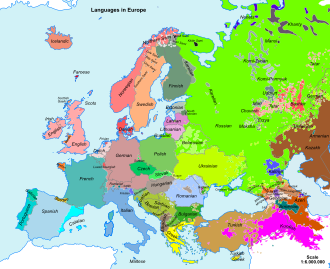
To understand the linguistic makeup of the continent, one must first look at the primary language families that dominate the region. The Indo-European family is the most widespread, encompassing several major branches including Germanic, Romance, Slavic, Celtic, Baltic, Hellenic, and Indo-Iranian.
Major Indo-European Branches
Germanic Languages
The Germanic branch is highly diverse, ranging from the widely spoken English and German to various North and West Germanic subgroups. English (an Anglo-Frisian language) stands as a massive linguistic force, while German features numerous regional variations such as High German, Low German, and various Upper German dialects like Bavarian and Alemannic.
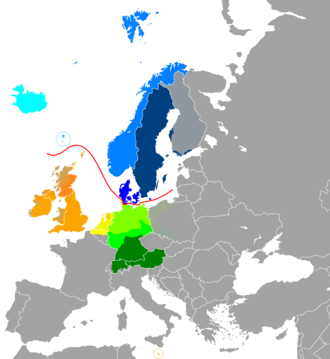
In Northern Europe, North Germanic languages maintain a strong presence, while West Germanic languages like Dutch and German dominate much of the central and western regions. The distribution often shows areas where native speakers of one language frequently communicate in a neighboring Germanic tongue.
Romance Languages
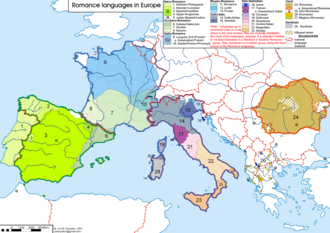
Descending from Latin, the Romance languages are a cornerstone of Southern and Western European culture. This group includes French (part of the Gallo-Romance branch), Spanish and Portuguese (West Iberian), and Italian (Italo-Dalmatian). The distribution of these languages has shifted significantly over the centuries, as seen in historical linguistic maps.
Slavic Languages
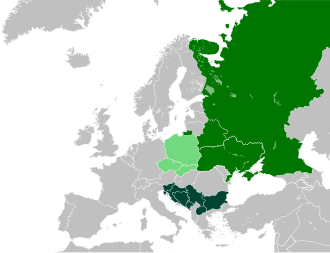
The Slavic branch is divided into three main categories: East, West, and South Slavic. Russian and Ukrainian represent the East Slavic group, while Polish and Czech are prominent in the West. The South Slavic group includes languages such as Serbo-Croatian and Bulgarian, which are central to the Balkan peninsula.
Other Linguistic Families in Europe
While Indo-European languages are dominant, they are not the only ones. Other families play vital roles in the European and Eurasian identity.
Uralic and Turkic Languages
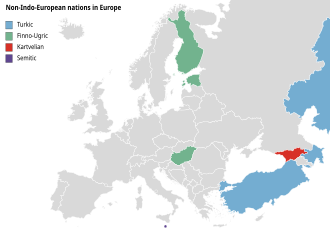
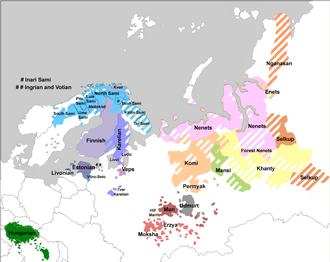
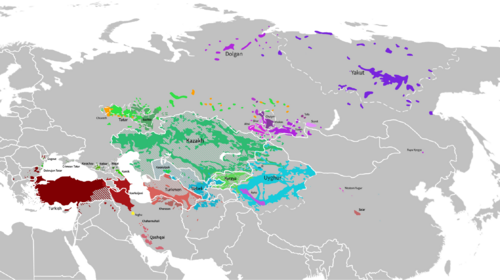
The Uralic language family, which includes Hungarian and Finnish, provides a distinct linguistic contrast to the Indo-European majority. Similarly, Turkic languages have a significant presence across Eurasia, impacting the linguistic borders of Eastern Europe and Turkey.
Baltic and Celtic Traditions
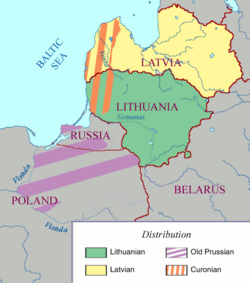
The Baltic languages, such as Lithuanian and Latvian, maintain a unique historical presence in the Baltic region. Meanwhile, the Celtic branch, though smaller in modern speaker numbers, survives through the Brittonic family (including Welsh, Cornish, and Breton) and the Goidelic family (such as Irish and Scottish Gaelic).
Key Facts
- The Indo-European family is the most widespread linguistic group in Europe.
- English is one of the largest Germanic languages by speaker count.
- Romance languages are derived from Latin and are prominent in Western and Southern Europe.
- Slavic languages are categorized into East, West, and South branches.
- Uralic and Turkic languages represent significant non-Indo-European linguistic groups in the region.
- Celtic languages like Welsh and Breton represent the surviving Brittonic branch.
Linguistic Data Summary
| Language Family/Branch | Example Language | Approximate Speaker Context |
|---|---|---|
| Germanic (West) | English | 63,000,000+ |
| Germanic (West) | German | 97,000,000+ |
| Romance (Western) | French | 81,000,000+ |
| Romance (Western) | Spanish | 47,000,000+ |
| Slavic (East) | Russian | 106,000,000+ |
| Slavic (West) | Polish | 38,500,000+ |
| Celtic (Brittonic) | Welsh | c. 843,500 |
Frequently Asked Questions
What are the most common language families in Europe?
The most common are the Indo-European families, specifically the Germanic, Romance, and Slavic branches. However, Uralic languages also hold a significant presence.
What is the difference between West and North Germanic languages?
West Germanic languages include English, German, and Dutch, while North Germanic languages include groups like Swedish and Danish.
Are there non-Indo-European languages spoken in Europe?
Yes, several families exist outside of Indo-European, including the Uralic languages (like Hungarian) and Turkic languages.
What are Brittonic languages?
Brittonic is a branch of the Celtic language family that includes Welsh, Cornish, and Breton.
How are Slavic languages categorized?
Slavic languages are categorized into three main groups: East Slavic (e.g., Russian), West Slavic (e.g., Polish), and South Slavic (e.g., Serbo-Croatian).