Latin: The Eternal Language of Empire, Law, and Legacy
Latin, known as lingua Latina, is an Italic language of the Indo-European family that originated in Latium, the region of central Italy. While it ceased to be a native spoken language around the 8th century AD, its influence remains woven into the fabric of modern civilization, from the legal systems of the West to the very words we speak today.
The journey of Latin began with the Latins and Romans, evolving from a local dialect into the administrative engine of one of history's greatest empires. Today, it maintains official status in Vatican City, regulated by the Pontifical Academy for Latin.
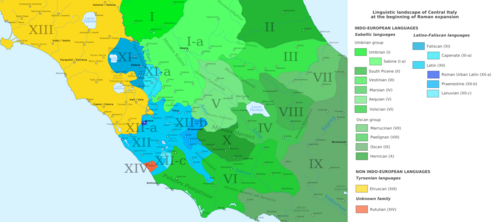
Key Facts

- Family: Indo-European > Italic > Latino-Faliscan.
- Native Era: Approximately 7th century BC to 8th century AD.
- Modern Status: Official language of Vatican City.
- Descendants: The Romance languages (Spanish, French, Italian, Portuguese, Romanian).
- Writing System: The Latin alphabet.
The Evolution of Latin
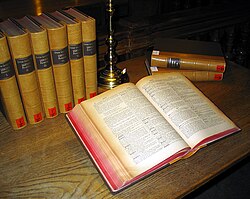
Old and Classical Latin
The earliest forms of the language, known as Old Latin, are found in inscriptions from the 6th and 7th centuries BC. These early texts often utilized different scripts or directions of writing, including boustrophedon (alternating directions).
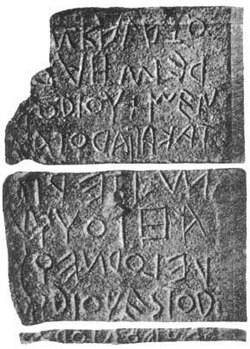

As the Roman Republic flourished, the language evolved into Classical Latin. This version is characterized by the urbane, polished style used by the Roman elite and writers. A prime example is Julius Caesar's Commentarii de Bello Gallico, which remains a model of journalistic and patrician prose.
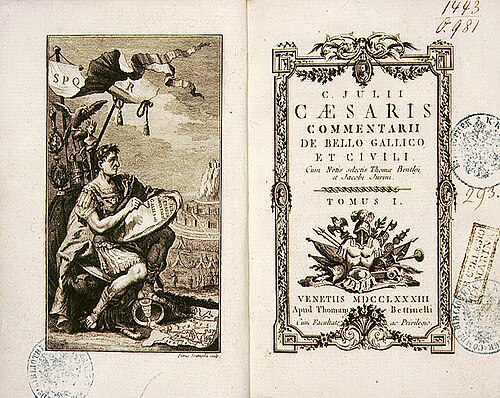
Vulgar and Late Latin
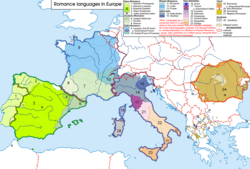
While the elite wrote in Classical Latin, the common people spoke Vulgar Latin. This spoken variety was more fluid and less rigid than the literary standard. Over time, Vulgar Latin diverged across different regions, eventually evolving into the Romance languages.
Medieval, Renaissance, and Neo-Latin
Following the collapse of the Western Roman Empire, Latin persisted as the language of religion, law, and scholarship. Medieval Latin served as the lingua franca of Europe, while Neo-Latin emerged during the Renaissance, championed by figures like Petrarch to revive the purity of classical style.

![Most 15th-century printed books (incunabula) were in Latin, with the vernacular languages playing only a secondary role.[22]](/images/d2/eb/d2eb7322d48910a44fdbcaf4edf275bdbab341a4a0797ca7f37a9ec6571e37f4.png)
Linguistic Structure and Phonology
Phonetics and Writing
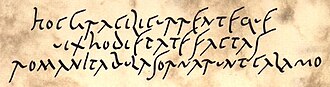
Classical Latin utilized a specific set of consonant and vowel phonemes. Vowels were distinguished by length (short vs. long), and the language employed various diphthongs such as ae and au. The orthography evolved from early scripts to the standardized Latin alphabet used globally today.
Grammar and Syntax
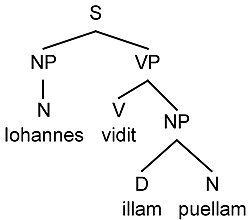
Latin is a highly inflected language, meaning the endings of words change to indicate their grammatical function. Declension is the process of changing noun endings to show case (e.g., nominative, genitive), while conjugation alters verb endings to indicate tense, person, and number.
| Declension | Final Letter of Stem | Genitive Singular Ending |
|---|---|---|
| First | ā | -ae |
| Second | ŏ | -ī |
| Third | ĭ / Consonant | -īs |
| Fourth | ŭ | -ūs |
| Fifth | ē | -ēī / -ĕī |
The Enduring Legacy of Latin
Influence on English
Latin has profoundly shaped the English language. In the Middle Ages, influence arrived via ecclesiastical usage and the Norman Conquest. Later, between the 16th and 18th centuries, writers created "inkhorn terms"—complex words borrowed directly from Latin and Greek to expand the English vocabulary.
Statistically, Romance words make up approximately 59% of English vocabulary, compared to 20% in German and 14% in Dutch.
Modern Usage and Mottos
Latin continues to be used for prestige, tradition, and neutrality. The European Union often uses Latin names for its institutions (e.g., Consilium) to avoid favoring any one member state's language.

Many governments and military organizations employ Latin mottos to convey timeless values. Examples include:
- United States Marine Corps: Semper Fidelis ("Always faithful")
- Royal Air Force: Per ardua ad astra ("Through adversity to the stars")
- New York State: Excelsior ("Ever upward")
- Virginia: Sic semper tyrannis ("Thus always to tyrants")

![A large WWI memorial gate in Nottingham UK reading: "Virtue survives death" or "Virtue outlives death."[45]](/images/34/0d/340d5d4c41ba5b7ae9d0b8795ebde98cf104e98ea861c49a4d637588fd5a9984.jpg)
Frequently Asked Questions
Is Latin still a living language?
Not as a native tongue. It is considered a dead language because it has no community of native speakers. However, it is a "living" academic and liturgical language used in the Vatican and by scholars worldwide.
What are the Romance languages?
The Romance languages are the modern descendants of Vulgar Latin, including Italian, French, Spanish, Portuguese, and Romanian.
Why is Latin still taught in schools?
Latin is taught to provide students with a deeper understanding of Western culture, a stronger grasp of English vocabulary, and a foundation for learning other Romance languages.
What is the difference between Classical and Vulgar Latin?
Classical Latin was the formal, standardized version used in literature and official government business. Vulgar Latin was the everyday spoken language of the general population, which eventually evolved into the modern Romance languages.
Where can I see Latin used today?
Beyond the Vatican, Latin is found in legal terminology, scientific naming (botanical Latin), university mottos, and official state seals across the United States and Europe.