The Global Reach of the French Language: History, Usage, and Evolution
French is far more than just the language of France; it is a global powerhouse of communication, culture, and diplomacy. As a member of the Indo-European language family, specifically within the Romance branch, French has evolved from its roots in Vulgar Latin to become one of the most widely spoken languages on the planet. Today, it serves as a vital tool for millions across five continents.
Key Facts
- Total Speakers: Approximately 451 million (projected for 2026).
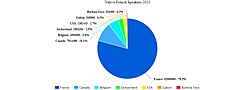
- Native Speakers (L1): 110 million.
- Second Language Speakers (L2): 351 million.
- Official Status: Recognized as an official language in 26 countries.
- Language Family: Romance (descended from Latin).
- Writing System: Latin script and French Braille.
The Linguistic Roots and Evolution of French
The journey of French began with Vulgar Latin—the everyday spoken form of Latin used by soldiers and settlers in Gaul. Over centuries, this evolved through several distinct stages: from Old Gallo-Romance to Old French, then Middle French, and finally into the Modern French spoken today.
Linguistically, French is characterized by several unique features. It has undergone significant changes from its Latin ancestors, such as the loss of Latin declensions (word endings that indicate grammatical function) and the disappearance of the neuter gender. In modern grammar, French utilizes a complex system of moods and tenses, including the indicative, subjunctive, conditional, and imperative moods.
Phonology and Writing
French is known for its distinct sounds, including various nasal vowels and specific consonant sounds like the uvular r. The writing system uses the Latin script, supplemented by various accents (such as the circumflex) that can affect pronunciation or serve purely orthographic purposes. For the visually impaired, French Braille provides an accessible way to read the language.
Global Distribution and Official Status
French is a truly international language, with a presence that spans Europe, Africa, the Americas, Asia, and Oceania. Its status varies by region, ranging from being the primary native language to serving as an administrative or cultural tongue.
![Knowledge of French in the European Union and candidate countries[98]](/images/35/4a/354a999fd0414e02750b11b0e9b8b349f6b1c659e1872abfa67e4f06b9fdead1.webp)
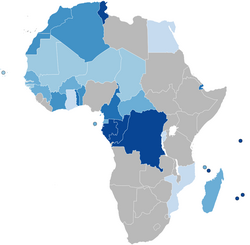
French in Africa
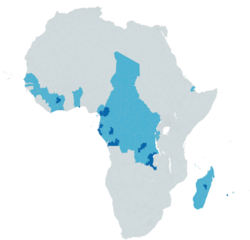
Africa is a central pillar of the Francophonie (the French-speaking world). In many African nations, French serves as an official language, facilitating administration and education. However, the linguistic landscape is shifting, with some nations recently adjusting the official status of the language to reflect their colonial histories.
French in the Americas and Beyond
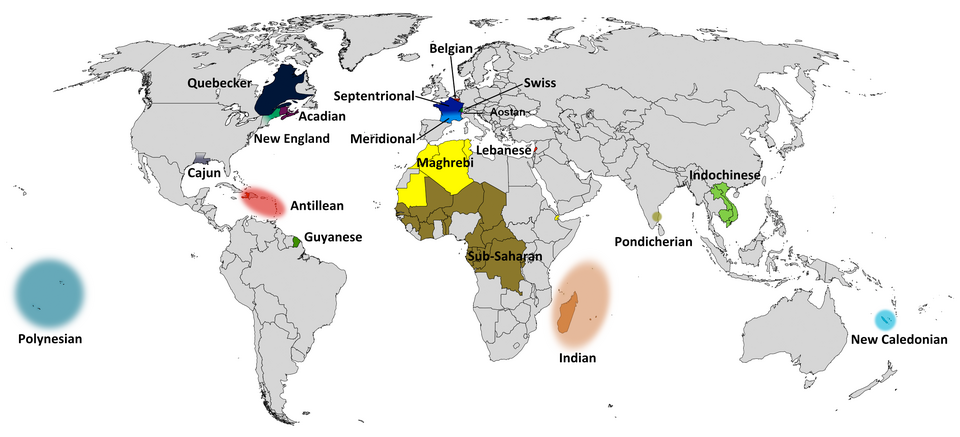
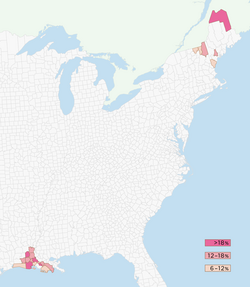
In the Americas, French is a major language in Canada, particularly in Quebec, where it holds significant official status. It also has a presence in the United States, particularly in regions like Louisiana and Maine. Beyond the West, French maintains historical and cultural ties in places like Lebanon, Cambodia, Laos, and Vietnam.
Varieties of French
Because of its wide distribution, many distinct varieties of French have emerged. These include Canadian French (with its own sub-dialects like Acadian and Quebec French), African French, Belgian French, and Swiss French. Each variety carries unique nuances in accent, vocabulary, and usage.
Summary of French Language Statistics
| Category | Estimated Number of Speakers |
|---|---|
| Native Speakers (L1) | 110 million |
| Second Language Speakers (L2) | 351 million |
| Total Global Speakers | 451 million |
Frequently Asked Questions
What is the Francophonie?
The Francophonie refers to the community of people and nations that use the French language. It encompasses not just the speakers themselves, but also the shared cultural and political connections between French-speaking countries.
How many countries use French as an official language?
French is an official language in 26 countries, including France, Canada, Belgium, Switzerland, and many nations across Africa such as Senegal, Ivory Coast, and the Democratic Republic of the Congo.
Is French a Romance language?
Yes. French belongs to the Romance language family, meaning it evolved from Vulgar Latin. It shares this lineage with other major languages like Spanish, Italian, and Portuguese.
What are the main regulatory bodies for the French language?
The language is regulated by several key institutions depending on the region, most notably the Académie Française in France, the Office québécois de la langue française in Quebec, and the Direction de la langue française in Belgium.
Does French have different dialects?
Yes, there are numerous varieties of French influenced by local geography and history. Examples include Cajun French in the United States, Maghreb French in North Africa, and Acadian French in Canada.