The Enduring Legacy of Latin: From Ancient Rome to the Modern World
Latin, known as lingua Latina, is much more than a dead language of antiquity. Once the native tongue of the Latins in the Latium region, it served as the linguistic foundation for the Roman Empire and evolved into the bedrock of Western civilization. While it ceased to be a primary spoken language around the 8th century AD, its influence persists in our legal systems, scientific nomenclature, and the very structure of modern European languages.
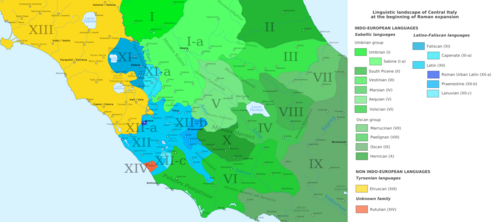
The Evolution of the Latin Language

The history of Latin is a journey through several distinct stages, each reflecting the changing political and social landscape of Europe.
Old and Classical Latin
The earliest forms of the language, known as Old Latin, can be seen in ancient inscriptions. One of the oldest extant examples is the Lapis Niger in Rome, dating to approximately 600 BC. Another significant early text is the Duenos Inscription from the 6th century BC. As Rome expanded, the language transitioned into Classical Latin, the sophisticated, standardized form used during the Golden Age of Roman literature.

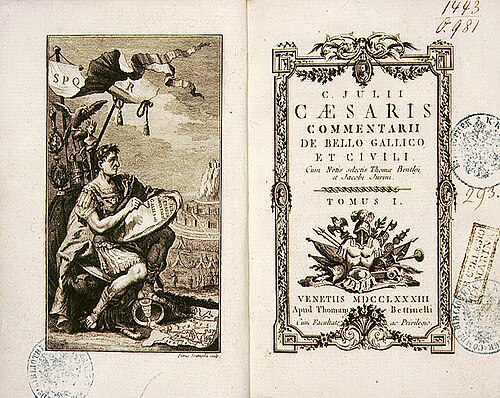
Classical Latin is exemplified by the works of great authors like Julius Caesar. His Commentarii de Bello Gallico is celebrated for its journalistic, unvarnished style, which served as a model for the urbane Latin spoken during the Roman Republic.
From Vulgar Latin to the Romance Languages
As the Roman Empire spread, the everyday spoken version of the language—Vulgar Latin—began to diverge across different regions. This process eventually led to the birth of the Romance languages, the modern descendants of Latin. These include Italian, French, Spanish, Portuguese, and Romanian.
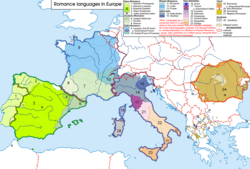
Even after the fall of the Western Empire, Latin continued to evolve through Late Latin and Medieval Latin, serving as the universal language of scholarship, religion, and diplomacy throughout the Middle Ages.
Latin in the Modern Era

Although it is no longer a native language, Latin remains highly active in specific professional and cultural spheres.
Official and Religious Status
Today, Latin holds official status in Vatican City and is regulated by the Pontifical Academy for Latin. It has also historically appeared on coinage; for instance, a 9th-century Byzantine coin featured the Latin titles imperator and rex, even as spoken Latin faded in the Eastern Empire.

Mottos and Symbolic Use
Latin is frequently used for mottos to convey authority, tradition, and timeless values. You can find Latin in the official identities of various entities:
- United States State Mottos: Such as New York's Excelsior ("Ever upward") or Kansas's Ad astra per aspera ("Through hardships, to the stars").
- Military Organizations: The US Marine Corps uses Semper Fidelis ("always faithful"), while the Royal Air Force uses Per ardua ad astra ("Through adversity to the stars").
- International Institutions: The European Union uses Latin names in some institutional logos, such as Consilium for the EU Council, as a sign of shared continental heritage.

The Linguistic Legacy: Influence on English
![A large WWI memorial gate in Nottingham UK reading: "Virtue survives death" or "Virtue outlives death."[45]](/images/34/0d/340d5d4c41ba5b7ae9d0b8795ebde98cf104e98ea861c49a4d637588fd5a9984.jpg)
The impact of Latin on the English language is profound. English has borrowed extensively from Latin at various stages of its development, from ecclesiastical influences in the Middle Ages to the "inkhorn terms" of the 16th to 18th centuries. While some of these borrowed words were forgotten, others—like imbibe and extrapolate—became permanent fixtures.
The sheer volume of Latin influence is evident in vocabulary statistics:
- English: 59% of the vocabulary is derived from Romance/Latin sources.
- German: 20% of the vocabulary.
- Dutch: 14% of the vocabulary.
![Most 15th-century printed books (incunabula) were in Latin, with the vernacular languages playing only a secondary role.[22]](/images/d2/eb/d2eb7322d48910a44fdbcaf4edf275bdbab341a4a0797ca7f37a9ec6571e37f4.png)
Key Facts
- Language Family: Indo-European > Italic > Latino-Faliscan > Latin.
- Writing System: The Latin alphabet.
- Official Status: Official language of Vatican City.
- Modern Descendants: The Romance languages (e.g., Spanish, French, Italian).
- English Impact: Approximately 59% of English vocabulary is of Latin/Romance origin.
Summary of Latin Language Data

| Category | Details |
|---|---|
| Native Era | c. 7th century BC – c. 8th century AD |
| Writing System | Latin Alphabet |
| ISO Codes | la (639-1), lat (639-2/3) |
| Primary Descendants | Romance Languages |
| Current Official Use | Vatican City |
Frequently Asked Questions

Is Latin still a living language?
While Latin is no longer a native language spoken in daily life by a community, it is considered a "living" language in specific contexts. It is used in religious ceremonies, scientific naming, legal mottos, and is actively studied in schools and universities worldwide.
How does Latin affect the English language?
Latin has significantly shaped English through direct borrowing and through the influence of Old French. Many common polysyllabic words in English are of Latin origin, and the language's academic and legal terminologies are heavily rooted in Latin.
What are the Romance languages?
The Romance languages are a group of modern languages that evolved directly from the Vulgar Latin spoken throughout the Roman Empire. This group includes languages such as Italian, French, Spanish, Portuguese, and Romanian.
Why do people still study Latin today?
Latin is studied to gain direct access to classical literature, to understand the roots of Romance languages, to improve understanding of English vocabulary, and to explore the historical foundations of Western law, science, and religion.
What is the difference between Classical and Vulgar Latin?
Classical Latin refers to the highly standardized, literary form of the language used by authors and officials during the Roman Republic and Empire. Vulgar Latin was the colloquial, everyday spoken language used by the general population, which eventually evolved into the modern Romance languages.