Historical Linguistics: The Science of Language Evolution
Language is not a static entity; it is a living, breathing system that shifts and adapts over centuries. Historical linguistics, also referred to as diachronic linguistics, is the scientific study of these changes. By analyzing how languages evolve, researchers can trace the lineage of modern speech, reconstruct lost ancestral tongues, and uncover the social and cultural forces that shape human communication.
The field operates on the uniformitarian principle, which suggests that the linguistic processes we observe in the modern world—such as slang evolving into standard usage or the gradual shifting of vowel sounds—were also active in the distant past. Through this lens, linguists can describe the history of speech communities and perform etymology, the study of the origins and meanings of individual words.
Key Facts
- Diachronic analysis focuses on language development through time, while synchronic analysis examines a language at a specific moment.
- The comparative method is used to establish language families and reconstruct unrecorded proto-languages.
- Linguistic reconstruction is generally limited to a time-depth of approximately 10,000 years due to chance resemblances and variations.
- Historical linguistics is considered Lamarckian in an evolutionary sense, as it studies acquired characteristics passed through generations.
- Conservative languages change slowly over time, whereas innovative languages undergo more rapid transformation.
The Development of the Discipline
Modern historical linguistics emerged in the late 18th century, evolving from philology—the study of ancient texts and documents. Initially, the field focused heavily on the Indo-European languages due to their extensive written records, as well as the Uralic languages of Eurasia. Over time, this research expanded globally to include Austronesian and various Native American language families.
While some scholars have attempted to group these families into "super-families" like Nostratic, such theories are not widely accepted because the evidence fades as the time-depth increases. Dating proto-languages remains a difficult and approximate process.
Diachronic vs. Synchronic Analysis
A fundamental distinction in linguistics is the difference between synchronic and diachronic perspectives. A synchronic analysis views a language as a snapshot in time (usually the present), whereas a diachronic analysis tracks the evolution of a linguistic feature across different eras.
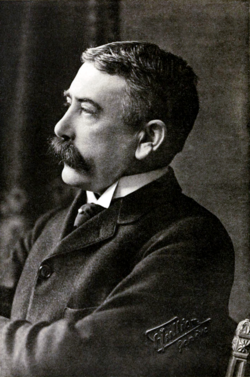
Ferdinand de Saussure established this demarcation, arguing that synchronic linguistics should take primacy. However, critics note that a purely synchronic view is nearly impossible for periods before the invention of the gramophone, as written records often lag behind the actual spoken language. Furthermore, sociolinguists observe that variation between older and younger speakers in the present day is essentially "language change in progress."
To illustrate, consider the English "strong verb" (e.g., sing, sang, sung). Synchronically, these appear as irregular forms that must be memorized. Diachronically, however, they are remnants of a once-regular system of internal vowel changes known as ablaut from the Indo-European parent language.
Core Branches of Historical Study
Comparative Linguistics
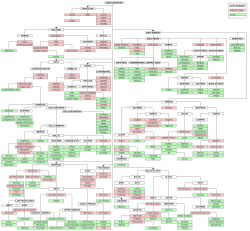
This branch focuses on comparing languages to determine their historical relatedness. Linguists distinguish between genetic descent (sharing a common ancestor) and convergence (similarities caused by borrowing). By using the comparative method, researchers can reconstruct proto-languages—the hypothetical ancestors of known language families.
Etymology
Etymology tracks the history of words, including when they entered a language and how their forms shifted. Words may enter a language via borrowing (loanwords), derivation from existing elements, or phono-semantic matching (a hybrid process of sound and meaning).
Dialectology
Dialectology is the study of linguistic varieties based on geographic distribution. It examines how local dialects diverge from a common ancestor and how immigrant groups introduce new linguistic practices to settlements, leading to further diversification.
Technical Frameworks: Phonology, Morphology, and Syntax
Historical linguistics applies specific analytical tools to different levels of language:
- Phonology: The study of sound systems. It distinguishes between phonemes (sounds that change meaning) and allophones (variations of a sound that do not change meaning). These principles also apply to sign languages, though the units are not auditory.
- Morphology: The study of word-formation patterns and rules. Historical linguists track how these formal means of expression change over time.
- Syntax: The study of sentence construction. Researchers compare changes in sentence structure between related languages to find universal grammar rules.
| Analysis Type | Focus | Primary Goal |
|---|---|---|
| Synchronic | Single point in time | Describe current linguistic state |
| Diachronic | Evolution over time | Explain how and why language changed |
| Comparative | Multiple related languages | Establish genetic relatedness and proto-languages |
Frequently Asked Questions
What is the difference between a phoneme and a phone?
A phone is a distinct speech sound, while a phoneme is the smallest unit of sound that can change the meaning of a word. For example, in English, the aspirated and non-aspirated "p" are different phones but are considered the same phoneme because they don't change the word's meaning.
How far back can linguists accurately trace languages?
Due to chance resemblances and the natural variation of language over time, most linguists assume a limit of approximately 10,000 years for reliable linguistic reconstruction.
What is a proto-language?
A proto-language is a reconstructed, hypothetical ancestral language from which a group of related daughter languages descended, such as Proto-Indo-European.
Why is historical linguistics described as Lamarckian?
It is described as Lamarckian because it deals with the transmission of acquired characteristics. Unlike biological evolution, where acquired traits aren't passed on, linguistic changes adopted by a generation of speakers are passed directly to the next.
What is the difference between a conservative and an innovative language?
A conservative language is one that retains many features of its ancestral form over time, while an innovative language undergoes more significant changes and developments.