German Language: History, Distribution, and Linguistic Structure
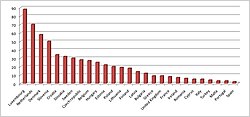
German, known natively as Deutsch, is a major West Germanic language of the Indo-European family. With approximately 95 million native speakers and an additional 80 to 85 million second-language speakers, it serves as a primary medium of communication, culture, and science across Central Europe and beyond.
From its roots in ancient Germanic tribes to its role as a modern global language, German has evolved through distinct stages—Old High German, Middle High German, and Early New High German—eventually coalescing into the standardized forms used today in Germany, Austria, and Switzerland.
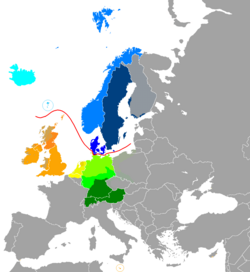
Key Facts

- Native Speakers: Approximately 95 million people.
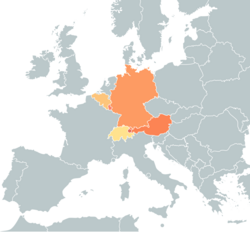
- Official Status: Official language in 6 countries (Austria, Belgium, Germany, Liechtenstein, Luxembourg, and Switzerland).
- Language Family: Indo-European > Germanic > West Germanic > High German.
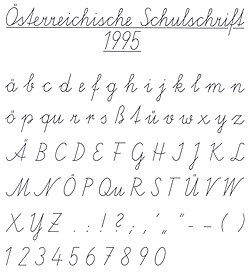
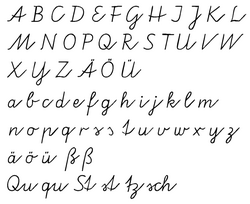
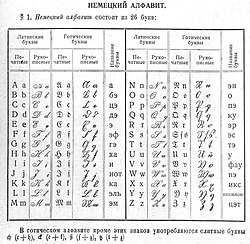
- Writing System: Latin script (German alphabet).
- Global Reach: Recognized minority language in 9 countries, including Brazil, Namibia, and Russia.
Geographical Distribution
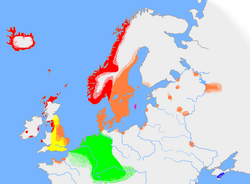
The primary area where German is spoken is known as the German Sprachraum. While Germany holds the vast majority of native speakers, the language is deeply integrated into the national identities of several other European states.
European Distribution
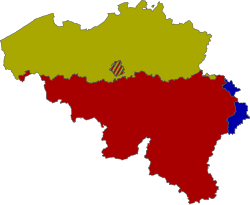
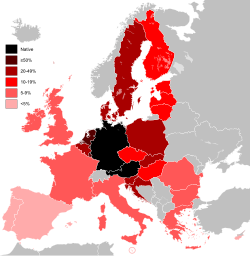
In addition to being the sole official language of Germany and Austria, German is a co-official language in Belgium (specifically within the German-speaking Community) and Luxembourg. It also holds official status in the South Tyrol subdivision of Italy.
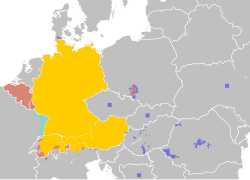
Beyond these borders, German is a recognized minority language in several nations, including the Czech Republic, Denmark, Hungary, Poland, Romania, Russia, and Slovakia. In New Zealand, it remains the third most spoken European language after English and French.
Global Diaspora
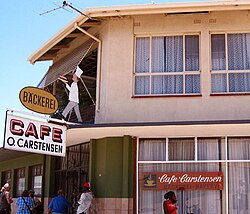
German speakers are found worldwide due to historical migration. Significant populations exist in the Americas, particularly in Brazil (such as in Antônio Carlos, Santa Catarina), and in Africa, where it is a national language in Namibia.
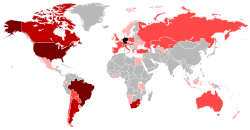
| Region/Country | Percentage of Native Speakers |
|---|---|
| Germany | 78.3% |
| Austria | 8.40% |
| Switzerland | 5.60% |
| Brazil | 3.20% |
| Italy (South Tyrol) | 0.40% |
| Other | 4.10% |
Linguistic Varieties and Dialects
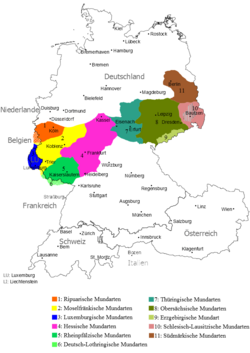
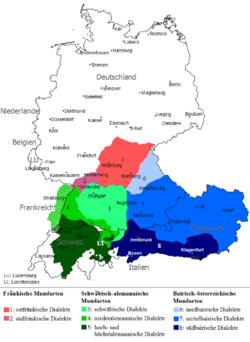
![German language area and major dialectal divisions around 1900[25]](/images/c6/3a/c63a40a4b9dc9a1ff0a396375cec475cd3cfba7a733a63024ecd7ffe12e603c9.png)
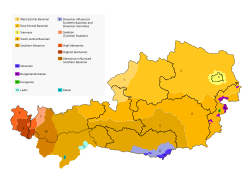
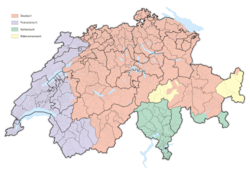
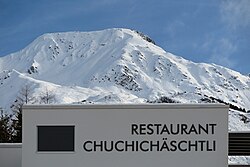
Modern German is not a monolithic entity but a collection of standard varieties and regional dialects. The most prominent standard forms are Standard German, Austrian Standard German, and Swiss Standard German.
![The national and regional standard varieties of German[81]](/images/6e/b3/6eb354d9c79498f52e1fb97ef7144222e43dfaeecf54bc900e4a64b79fdf58c1.png)
Major Dialect Groups
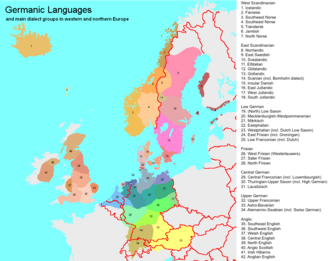
- Low German (Niederdeutsch): Spoken primarily in Northern Germany and parts of Belgium.
- High German (Hochdeutsch): This group includes Central German and Upper German.
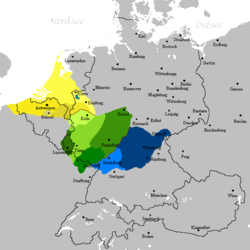
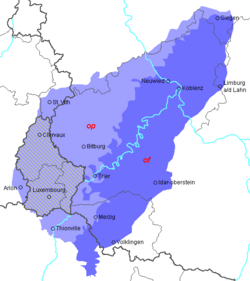
- Central German: Encompasses West Central German (including Luxembourgish and Alsatian) and East Central German.
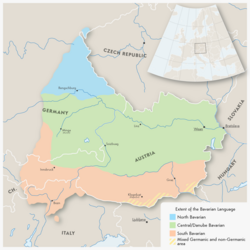
- Upper German: Includes Alemannic (Swiss German) and Austro-Bavarian dialects.
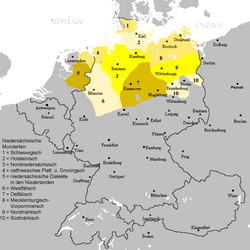
The transition between these dialects is often illustrated by the "Rhenish fan," where specific consonant shifts occur across different geographic lines.
Grammar and Orthography
![Modern High German translation of the Christian Bible by the Protestant reformer Martin Luther (1534).[28] The widespread popularity of the Bible translated into High German by Luther helped establish modern Standard German.[28]](/images/18/97/18979bcfacc2f0eb6b4c94739e9a15c05a20b3de82602463161e6d752b78a950.jpg)
German is known for its complex grammatical structure, which allows for significant flexibility in sentence construction to emphasize different parts of a statement.
Noun Inflection and Case
German nouns inflect based on case (Nominative, Accusative, Dative, and Genitive), gender (Masculine, Feminine, Neuter), and number (Singular, Plural). This system determines the form of the accompanying articles.
Word Order and Syntax
While German often follows a subject-verb-object order, its flexible word order allows the object or an adverb of time to be placed at the beginning of a sentence for emphasis, provided the verb remains in the second position in main clauses.
Vocabulary and Literature
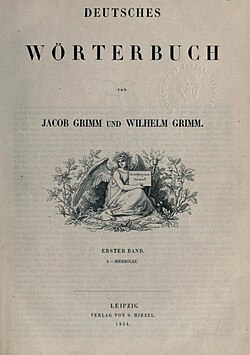
The German lexicon contains a mix of native Germanic words and loanwords (Fremdwörter) from Latin and French. The language has a rich literary tradition, shaped by figures such as Johann Wolfgang von Goethe, Friedrich Schiller, and the Brothers Grimm.
Frequently Asked Questions

What is the difference between High German and Low German?
High German refers to the dialects of the central and southern highlands that underwent the High German consonant shift, forming the basis for the modern standard language. Low German is spoken in the northern lowlands and did not undergo these specific phonetic changes.
How many people speak German worldwide?
There are approximately 95 million native (L1) speakers and between 80 to 85 million second-language (L2) speakers.
In which countries is German an official language?
German is an official language in Germany, Austria, Switzerland, Liechtenstein, Luxembourg, and Belgium.
What role did Martin Luther play in the language?
Martin Luther's translation of the Christian Bible into High German in 1534 was instrumental in establishing and spreading modern Standard German across different dialect regions.
Is Swiss German the same as Standard German?
No. While Swiss Standard German is used in formal writing and official contexts, the spoken variety (Swiss German) consists of Alemannic dialects that differ significantly in pronunciation and vocabulary from the standard form.