White Flight: The History and Drivers of Racial Migration
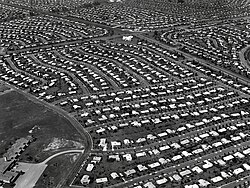
White flight, also referred to as white exodus, is a demographic phenomenon characterized by the large-scale migration of white populations away from areas becoming more racially or ethnoculturally diverse. These populations typically move toward more racially homogenous suburban or exurban regions. While the term gained prominence in the United States during the 1950s and 1960s, it describes a global pattern of movement driven by a complex interplay of social, economic, and political factors.
In recent years, the scope of the term has expanded. It now includes migrations from older inner suburbs to rural areas, as well as shifts from the American Northeast and Midwest toward the milder climates of the South and West. Beyond residential shifts, the term is also applied to post-colonial emigration from Africa, often spurred by anti-colonial policies or violent crime.
Key Facts
- Definition: The movement of white residents from diverse urban centers to homogenous suburban or rural areas.
- Primary Catalysts: School desegregation, urban decay, rising crime rates, and racial prejudice.
- Global Reach: Observed in the US, Canada, the UK, Australia, New Zealand, and various African nations.
- Academic Findings: Research indicates that white flight is more likely in middle-class neighborhoods once certain thresholds of minority populations are reached.
- Social Impact: Often leads to increased isolation of ethnic minorities in inner cities and the creation of "parallel lives" between different ethnic groups.
The American Experience: Catalysts and Consequences
In the United States, white flight became a defining feature of the mid-20th century. During the civil rights movement of the 1950s and 1960s, middle-class white populations left cities such as Detroit, Cleveland, Baltimore, Kansas City, and Oakland. This occurred even in areas where public school segregation had ended prior to the landmark 1954 Supreme Court decision, Brown v. Board of Education.
The Role of School Desegregation
The legal termination of "separate but equal" policies catalyzed significant migration. In response to court-ordered integration, some white parents established "segregation academies"—private religious schools designed to avoid racially mixed classrooms. The impact was stark: in Baltimore's Clifton Park Junior High, the white student population plummeted from 2,023 in 1957 to just 12 students ten years later.
Further acceleration occurred following Swann v. Charlotte-Mecklenburg Board of Education (1971), which ordered the busing of students to integrate schools, and Penick v. The Columbus Board of Education (1977), which spurred migration in Ohio.
Urban Decay and Economic Factors
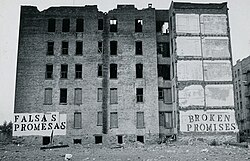
Beyond racial tension, historians and economists point to urban decay—the process where a previously functioning city falls into disrepair—and rising crime as primary drivers. Some research suggests that neighborhood deterioration was a more robust determinant of flight than racial prejudice alone. This exodus often coincided with the loss of industrial jobs as heavy industry restructured, leaving inner cities with concentrated poverty.
Global Perspectives on White Exodus
While most prominent in the US, similar patterns have been documented worldwide, though the drivers vary by region.
Europe and the United Kingdom
In the UK, research from the London School of Economics found evidence of white flight between 1991 and 2001 in London, Greater Manchester, West Yorkshire, and the West Midlands. By 2011, less than 50% of London's population was white British. Reports have highlighted a trend of white British families moving from the capital to areas like Essex, leading to concerns about social cohesion and ethnic groups living "parallel lives."
Canada and Oceania
In Canada, the city of Brampton saw its white population fall from 192,400 in 2001 to approximately 151,000 in later years, even as the total population grew. In Australia, similar shifts were noted in Sydney's south-western suburbs, with Australian-born residents relocating to the northwest and northeast.
New Zealand has observed white flight within its education system. Between 2000 and 2010, the number of New Zealand European students in low-decile (poorer) schools dropped by half, while high-decile schools saw a corresponding increase. This is often attributed to the racial and class stigmas associated with schools that have majority Maori and Pacific Islander populations.
Africa
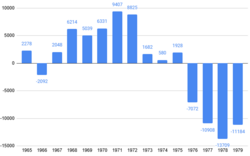
In Africa, white flight often took the form of post-colonial emigration. In Rhodesia (now Zimbabwe), large-scale migration occurred between 1965 and 1979, driven by anti-colonial state policies and violent conflict.
Academic Debates and Models
Not all historians agree on the terminology. Some argue that "white flight" is a misnomer because it implies a passive departure. Historian Amanda Seligman notes that in some Chicago neighborhoods, white residents did not simply leave but actively defended their territory through intimidation, legal tactics, and violence.
Economists like Leah Boustan suggest that the phenomenon is a hybrid of racism and economic incentives. Recent data from Indiana University (2000–2010) indicates that white flight is systematically more likely in middle-class neighborhoods than in poorer ones once minority population thresholds are crossed.
| Region | Primary Drivers | Key Examples/Locations |
|---|---|---|
| United States | School desegregation, urban decay, crime | Detroit, Baltimore, Columbus |
| United Kingdom | Ethnic minority concentration, urban migration | London (Newham, Brent), Essex |
| Canada | Demographic shifts, minority thresholds | Brampton |
| New Zealand | Socioeconomic status, school deciles | Rotorua |
| Africa | Post-colonial policies, violent crime | Rhodesia (Zimbabwe) |
Frequently Asked Questions
What is the difference between white flight and general suburbanization?
While suburbanization is the general movement of people from cities to suburbs, white flight specifically refers to the migration of white populations driven by the increasing racial or ethnic diversity of their urban neighborhoods.
Did school desegregation cause white flight in the US?
Yes, in many cases. The 1954 Brown v. Board of Education decision and subsequent busing mandates led many white families to move to suburbs or enroll their children in private "segregation academies" to avoid integrated public schools.
Is white flight only caused by racism?
Not exclusively. While racial prejudice is a significant factor, researchers also cite economic reasons, rising crime rates, and general urban decay as robust determinants that influence the decision to leave city centers.
How does white flight affect inner cities?
It often results in the concentration of impoverished populations and the isolation of ethnic minorities, which can lead to a lack of social cohesion and the development of "parallel lives" where different ethnic groups rarely interact.
Where has white flight been observed outside of North America?
It has been documented in the United Kingdom (particularly London), Australia (Sydney), New Zealand, and various African nations during post-colonial transitions.