Thurgood Marshall: The Architect of Civil Rights and First Black Supreme Court Justice
Thurgood Marshall was a transformative figure in American law, serving as a relentless advocate for equality long before he ascended to the highest court in the land. As the first African-American Associate Justice of the Supreme Court of the United States, Marshall spent his career dismantling the legal framework of racial segregation and expanding the constitutional protections afforded to all citizens.
From his early days as a civil rights attorney to his tenure on the federal bench, Marshall's approach to the law was defined by a commitment to justice and a belief in a living Constitution that evolved to protect the marginalized.
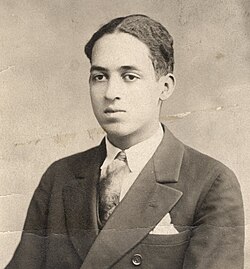
Key Facts
- Historic First: The first African-American to serve as an Associate Justice of the U.S. Supreme Court.
- Legal Record: Won 29 of the 32 civil rights cases he argued before the Supreme Court.
- Landmark Victory: Led the legal team in Brown v. Board of Education (1954), which ended legal segregation in public schools.
- Judicial Career: Served as a Judge on the U.S. Court of Appeals for the Second Circuit and as the 32nd U.S. Solicitor General.
- Supreme Court Tenure: Appointed by President Lyndon B. Johnson in 1967; served until his retirement in 1991.
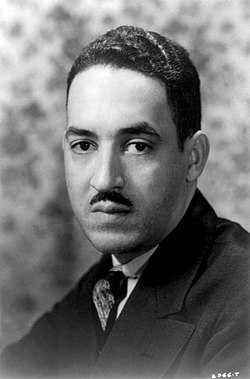
Early Legal Career and the Fight Against Segregation
Marshall's journey toward the Supreme Court began with his work as an attorney for the NAACP Legal Defense and Educational Fund. Working alongside special counsel Charles Hamilton Houston, Marshall targeted the "separate but equal" doctrine established by Plessy v. Ferguson (1896).
In the 1938 case Missouri ex rel. Gaines v. Canada, Marshall helped argue that if a state provided legal education to white students, it must provide a substantially equivalent education to Black students. This strategy of highlighting inherent educational disparities paved the way for future victories.
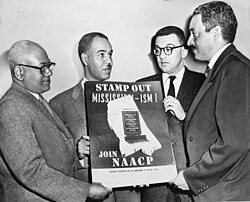
The Path to Brown v. Board of Education
Throughout the 1940s, Marshall secured critical wins in cases such as Sipuel v. Board of Regents of the University of Oklahoma and Sweatt v. Painter. These cases chipped away at the legality of segregated professional schools. This momentum culminated in the 1954 landmark decision Brown v. Board of Education, where the Court finally ruled that segregation in public education was unconstitutional.
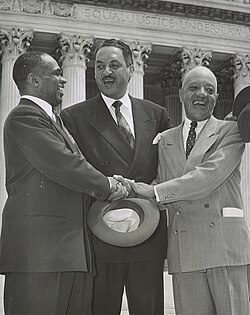
Ascension to the Federal Judiciary
Marshall's legal brilliance led to several high-profile appointments. In 1961, President John F. Kennedy appointed him to the U.S. Court of Appeals for the Second Circuit. During this time, Marshall authored 98 majority opinions—none of which were reversed by the Supreme Court—demonstrating a preference for broad interpretations of constitutional protections.
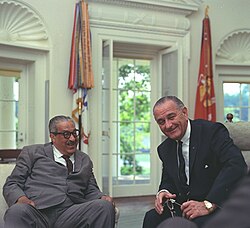
In 1965, President Lyndon B. Johnson appointed Marshall as the 32nd Solicitor General of the United States, the government's chief advocate before the Supreme Court.
Tenure on the Supreme Court
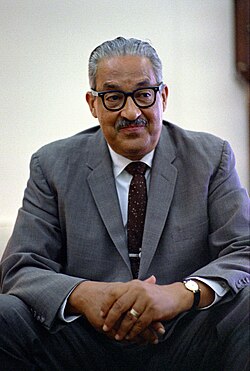
On October 2, 1967, Marshall was sworn in as an Associate Justice of the Supreme Court, replacing Justice Tom C. Clark. Despite opposition from Southern senators, he was confirmed with a 69–11 vote.
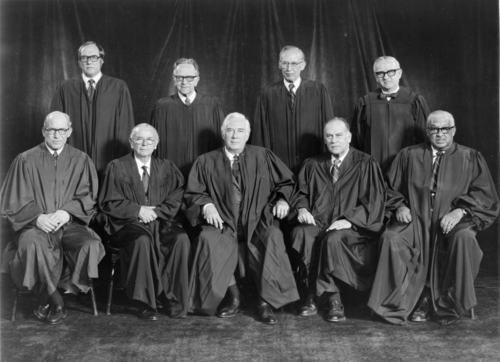
During his 24 years on the bench, Marshall was known as a staunch liberal. While he was often in the majority during the liberal Warren Court era, he frequently wrote powerful dissents as the Court shifted toward conservatism under later appointments. His closest judicial ally was Justice William J. Brennan Jr.
Constitutional Contributions and Philosophy
Marshall introduced the "sliding-scale" approach to the Equal Protection Clause, suggesting that courts use a flexible balancing test rather than rigid tiers to determine if a law is discriminatory. His judicial philosophy was marked by several key stances:
- Capital Punishment: He fervently opposed the death penalty, viewing it as cruel and unusual punishment.
- First Amendment: He supported a robust interpretation of free speech and privacy, notably in Stanley v. Georgia.
- Reproductive Rights: He was a supporter of abortion rights in Roe v. Wade.
Personal Life and Legacy
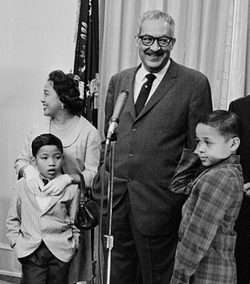
Beyond the courtroom, Marshall was a family man, married to Cecilia Suyat with two sons, John and Thurgood Jr. He remained dedicated to the law until his health began to decline in the early 1990s.
Justice Marshall retired on June 27, 1991, citing his age and failing health. He passed away from heart failure on January 24, 1993, at the age of 84. He is buried at Arlington National Cemetery.
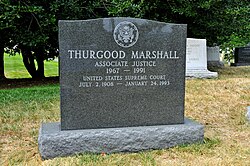
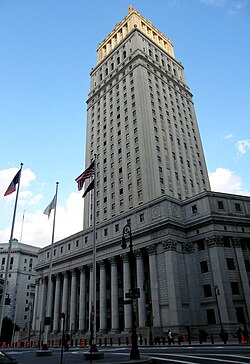
Marshall's legacy persists not only in the law but in the names of institutions, such as the Thurgood Marshall United States Courthouse. In a unique tribute, the Episcopal Diocese of Washington named him a permanent saint of the church in 2018, with a feast day on May 17.
| Role | Period | Appointing Authority / Organization |
|---|---|---|
| Civil Rights Attorney | 1936–1961 | NAACP Legal Defense Fund |
| Judge, Second Circuit Court of Appeals | 1961–1965 | John F. Kennedy |
| U.S. Solicitor General | 1965–1967 | Lyndon B. Johnson |
| Associate Justice, Supreme Court | 1967–1991 | Lyndon B. Johnson |
Frequently Asked Questions
What was Thurgood Marshall's most significant legal victory?
His most significant victory was Brown v. Board of Education (1954), in which he successfully argued that racial segregation in public schools was unconstitutional, effectively overturning the "separate but equal" doctrine.
How many cases did Marshall win before the Supreme Court as a lawyer?
Marshall won 29 of the 32 civil rights cases he argued before the Supreme Court prior to becoming a justice.
What was Marshall's view on the death penalty?
Marshall was a fierce opponent of the death penalty, arguing that it constituted cruel and unusual punishment. He and Justice William Brennan dissented in over 1,400 cases where the majority refused to review death sentences.
Who succeeded Thurgood Marshall on the Supreme Court?
Following his retirement in 1991, Thurgood Marshall was succeeded by Justice Clarence Thomas.
What is the "sliding-scale" approach to the Equal Protection Clause?
It is a judicial method Marshall proposed that calls for courts to apply a flexible balancing test to evaluate equal protection claims, rather than relying on a rigid, tier-based analysis.