Lincoln University: A Legacy of Leadership and Firsts
Founded in 1854, Lincoln University stands as a beacon of academic excellence and social progress. Located in Lower Oxford Township, Pennsylvania, it holds the prestigious distinction of being the first college-degree-granting Historically Black University (HBCU) in the United States. From its humble beginnings as a private institute to its current status as a public state-related university, Lincoln has spent over 170 years empowering students to break barriers in law, medicine, and the arts.
Key Facts
- Established: April 29, 1854, as the Ashmun Institute.
- Status: Public state-related HBCU.
- Accreditation: Middle States Commission on Higher Education (MSCHE).
- Campus Size: 422 acres in southern Chester County, with a second location in Philadelphia.
- Notable Alumni: Thurgood Marshall and Langston Hughes.
- Mascot: Luther the Lincoln Lion.
A Rich Historical Foundation
The institution was founded by John Miller Dickey, a Presbyterian minister, and his wife, Sarah Emlen Cresson, a Quaker. Originally named the Ashmun Institute after religious leader and social reformer Jehudi Ashmun, the school was created to provide higher education opportunities for African Americans during an era of extreme limitation.
In 1866, the school was renamed Lincoln University in honor of the assassinated President Abraham Lincoln. Throughout the era of legal segregation in the American South, the university became a magnet for talented students from across the country. This academic rigor yielded significant results: between 1854 and 1954, Lincoln graduates represented 20% of all African American physicians and over 10% of African American lawyers in the U.S.
The university has also hosted global figures. In 1910, President William Howard Taft delivered the commencement address. In 1921, President Warren Harding visited to speak on healing and harmony following the Tulsa race massacre. Perhaps most notably, in 1946, physicist Albert Einstein visited the campus to lecture on physics and speak out against racism.
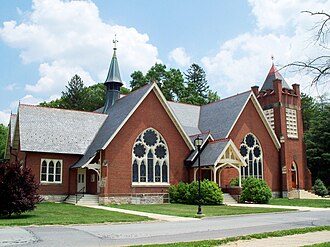
Campus Life and Facilities
The main campus spans 422 acres and features 56 buildings. It is recognized on the National Register of Historic Places as of 2022. The campus is designed to blend historic charm with modern utility, featuring residence halls that range from the 1870s-era Alumni Hall to contemporary apartment-style suites built in 2005.
Key academic and social hubs include:
- Ivory V. Nelson Science Center: A 150,000-square-foot high-technology facility completed in 2008.
- Langston Hughes Memorial Library (LHML): Opened in 1972, this library houses the personal collection of the renowned poet and alumnus James Mercer Langston Hughes.
- Student Union Building (SUB): A renovated center containing the bookstore, café, and media studios.
- Thurgood Marshall Living Learning Center: Named after the first African American Supreme Court Justice and 1930 graduate.
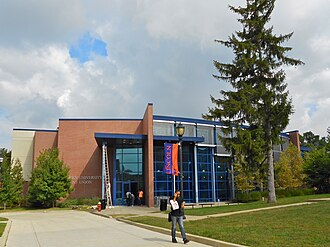
Academic Standing and Student Diversity
Lincoln University continues to be a competitive institution, ranking 19th among HBCUs in the 2020 U.S. News & World Report. While the majority of the student body is African American (83%), the university maintains a history of inclusivity, welcoming students of various races and nationalities. Women, who began receiving degrees in 1953, made up 66% of undergraduate enrollment by 2019.
The university is a member of the Thurgood Marshall College Fund and is designated as a Space-grant institution. Student life is vibrant, with over 60 organizations focusing on everything from social justice and the arts to media and publishing.
| Category | Details |
|---|---|
| President | Brenda A. Allen |
| Enrollment (Fall 2025) | 1,527 students (1,424 Undergrad / 103 Postgrad) |
| Colors | Orange and Blue |
| Athletic Affiliations | NCAA Division II, CIAA, ECAC, CACC |
| Campus Newspaper | The Lincolnian |
The Barnes Foundation Connection
A unique chapter in the university's history is its relationship with the Barnes Foundation. Philanthropist Albert C. Barnes formed a close bond with former president Horace Mann Bond, granting Lincoln University the privilege of naming four of the five original directors of the foundation's governing board. This gave the university significant influence over one of the world's most valuable art collections. While a 2005 settlement diluted this influence to allow the collection to move to a more public location, the historical tie remains a point of pride.
Recent Developments
Under the leadership of President Brenda A. Allen, an alumna of the class of 1981, the university has seen significant financial growth. Philanthropist MacKenzie Scott has provided two transformative gifts: $20 million in 2020 and a record-breaking $25 million in December 2025.
The university also faced a tragedy on October 25, 2025, when a shooting during homecoming weekend resulted in one death and six injuries. This event led to a criminal investigation and the arrest of one individual.
Frequently Asked Questions
What is the significance of Lincoln University in HBCU history?
Lincoln University is recognized as the first college-degree-granting Historically Black University in the United States, establishing a precedent for higher education for African Americans.
Who are some of the most famous alumni of Lincoln University?
The university's most distinguished alumni include Thurgood Marshall, the first African American Supreme Court Justice, and Langston Hughes, the celebrated poet. Both have been honored with U.S. Postal Service commemorative stamps.
When did Lincoln University become coeducational?
The university amended its charter in 1953 to allow women to receive degrees, though the transition to a balanced coeducational student body occurred gradually over the following decades.
What is the relationship between Lincoln University and the Barnes Foundation?
Due to a friendship between Horace Mann Bond and Albert C. Barnes, Lincoln University was historically granted the right to appoint the majority of the board of directors for the Barnes Foundation, an art collection valued at billions of dollars.
Where is Lincoln University located?
The main campus is located on 422 acres in Lower Oxford Township, southern Chester County, Pennsylvania, with an additional campus presence in University City, Philadelphia.