Harlem Renaissance: The Intellectual and Cultural Flowering of the New Negro Movement
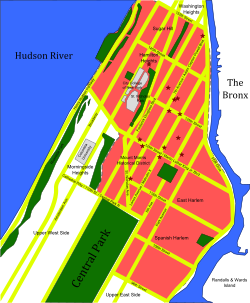
The Harlem Renaissance was a profound intellectual and cultural explosion of African-American music, dance, art, fashion, literature, theater, politics, and scholarship. Centered in the Harlem neighborhood of New York City and spanning from 1918 through the mid-1930s, this movement redefined how Black identity was perceived both within the United States and globally, with significant influences extending to Paris, France.
At its peak, the era was known as the New Negro Movement, a term derived from the 1925 anthology The New Negro edited by philosopher Alain Locke. Locke, often regarded as the "dean" of the movement, helped articulate a new vision of African-American life that rejected subservience and embraced artistic and intellectual autonomy.
Key Facts
- Timeline: Approximately 1918 to the mid-1930s.
- Core Location: Harlem, New York City, with extensions into other Northeastern and Midwestern urban centers.
- Primary Catalyst: The Great Migration of African Americans fleeing the Jim Crow South.
- Defining Concept: The "New Negro," emphasizing racial pride and cultural sophistication.
- Major Outcomes: Mainstream recognition of Black cultural achievements and the establishment of a new Black identity.
The Roots of the Movement
The Harlem Renaissance did not happen in isolation; it was the result of massive demographic shifts and a growing spirit of militancy in the struggle for civil rights. The Great Migration saw hundreds of thousands of African Americans leave the racist conditions of the Deep South for cities like Chicago, Detroit, Philadelphia, Washington, D.C., and New York.
Harlem became a primary destination, bolstered by Black immigration from British, French, and other Caribbean colonies. By the early 1900s, the neighborhood began to solidify as a Black hub, particularly after African-American realtors and church groups purchased large blocks of land along 135th Street and Fifth Avenue in 1910. The First World War further accelerated this growth, as the demand for industrial labor rose while European immigration ceased.
This concentration of people—ranging from unskilled laborers to an educated middle class—created a unique environment where shared experiences of slavery, emancipation, and oppression forged a unified determination to create a new identity as free people.
Mainstream Recognition and the Arts
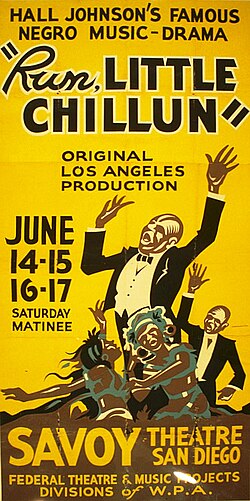
The movement gained momentum in the late 1910s as Black artists began to break through traditional barriers. A pivotal moment occurred in 1917 with the premiere of plays such as Granny Maumee and Simon the Cyrenian. Though written by white playwright Ridgely Torrence, these works featured African-American actors portraying complex human emotions, successfully rejecting the derogatory stereotypes of blackface and minstrel shows.
Literature and Radicalism
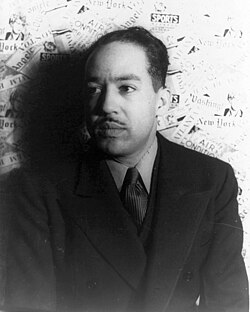
Literature served as a cornerstone of the movement. In 1917, Hubert Harrison, known as "The Father of Harlem Radicalism," founded the Liberty League and The Voice, the first newspaper of the New Negro Movement. While political, Harrison's work emphasized the arts through book reviews and poetry.
Some figures, however, challenged the very definition of the "Renaissance." Harrison argued that the term was largely a white invention that ignored the continuous stream of Black literary production since 1850. Others, like the Chicago-based poet Fenton Johnson, are viewed as "forerunners" who paved the way for the movement's later success.
Music and Musical Theatre
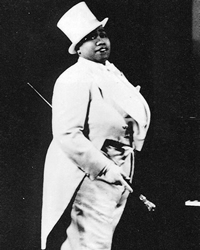
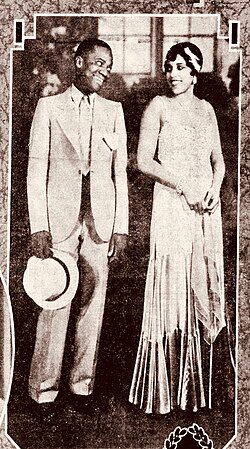
Music was perhaps the most visible export of the Harlem Renaissance. The 1921 debut of the musical Shuffle Along, written and produced entirely by African Americans (including Eubie Blake and Noble Sissle), was a watershed moment. It brought jazz to Broadway and proved that mixed audiences would pay to see Black performers in mainstream theaters.
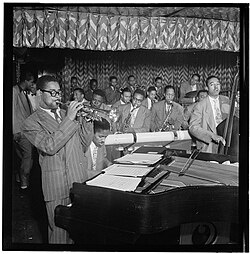
The era's music was characterized by a blend of high-society sophistication and popular virtuosity, epitomized by figures like trumpeter Dizzy Gillespie and the soulful expressions of blues singers.
Visual Arts and Photography
In the visual arts, sculptors like Augusta Savage focused on the dignity of everyday Black people. Savage founded the Savage Studio of Arts and Crafts in 1932, providing free training to the community. She was the only African American commissioned for the 1939 New York World Fair, where she exhibited Lift Every Voice and Sing.
Photography also played a vital role in documenting the era. The work of Van Der Zee captured the essence of Harlem life, later gaining renewed attention in the 1960s through major exhibitions at the Metropolitan Museum of Art.
![Arturo Alfonso Schomburg was a historian, writer, curator, and archivist regarded as an important intellectual figure in the Harlem Renaissance. In 1926, the New York Public Library purchased his collection of 4,600 books, pamphlets, art, and manuscripts on Black culture and held them at the 135th Street Branch Library, now the Schomburg Center for Research in Black Culture.[16]](/images/8a/c9/8ac9a70e29fcdf2a96ae62e630bade407a3ff673b0462f39a00896ca00203796.jpg)
Summary of the Harlem Renaissance
| Category | Details |
|---|---|
| Primary Goal | Forging a new identity and gaining mainstream recognition for Black culture. |
| Key Figures | Alain Locke, Langston Hughes, Augusta Savage, Hubert Harrison. |
| Major Works | The New Negro (Anthology), Shuffle Along (Musical). |
| Driving Forces | The Great Migration, WWI labor demands, Civil Rights militancy. |
| Artistic Mediums | Jazz, Blues, Poetry, Sculpture, Photography, Theater. |
Frequently Asked Questions
What was the "New Negro Movement"?
The New Negro Movement was another name for the Harlem Renaissance. It referred to a shift in African-American identity toward racial pride, intellectualism, and a refusal to submit to the Jim Crow-era stereotypes of the past.
How did the Great Migration contribute to the Harlem Renaissance?
The Great Migration brought hundreds of thousands of African Americans from the rural South to Northern cities. This created a dense concentration of Black intellectuals, artists, and workers in Harlem, allowing them to share experiences and collaborate on cultural projects.
Why was the musical Shuffle Along so important?
Shuffle Along was the first African-American musical to play in white theaters across the country. It proved the commercial viability of Black performers on Broadway and helped popularize jazz with a mainstream audience.
Who was Alain Locke?
Alain Locke was a philosopher and the editor of the 1925 anthology The New Negro. He is regarded as the "dean" of the Harlem Renaissance for his role in shaping the movement's intellectual framework.
What role did Augusta Savage play in the movement?
Augusta Savage was a prominent sculptor and educator who provided free art classes to Harlem residents. She advocated for artists to be fairly compensated for their work and represented the movement at the 1939 World Fair.