Alberta Hunter: The Indomitable Voice of Jazz and Blues
Alberta Hunter was more than just a vocalist; she was a force of nature in the early 20th-century music scene. A prolific singer and songwriter, Hunter navigated the complex landscapes of jazz and blues from the 1920s through the 1950s, only to vanish from the spotlight for two decades before making one of the most remarkable comebacks in music history. Her life was a testament to resilience, spanning careers in entertainment, wartime service, and healthcare.
Born on April 1, 1895, in Memphis, Tennessee, Hunter's journey began in hardship. After her father left the family, she sought independence at the age of 11, moving to Chicago with the dream of becoming a professional singer. Though she initially worked in a boardinghouse for six dollars a week, her determination never wavered.

Key Facts
- Active Years: 1914–1984 (with a hiatus from the late 1950s to 1977).
- Major Hit: Co-wrote the critically acclaimed "Downhearted Blues" (1922).
- Wartime Service: Led the USO's "The Rhythm Rascals" in the China-Burma-India theatre.
- Career Pivot: Worked as a nurse for 20 years at Goldwater Memorial Hospital.
- Legacy: Inducted into both the Blues Hall of Fame (2011) and the Memphis Music Hall of Fame (2015).
The Rise of a Blues Icon
Hunter's professional start was in the bordellos and clubs of Chicago, where she performed for diverse crowds. Under the tutelage of jazz pianist Tony Jackson, she expanded her repertoire and began composing her own material. She became known for her exceptional gift for improvisation—the art of creating lyrics on the spot to engage her audience.
Her breakthrough came at the Dreamland ballroom, the most prestigious venue for Black entertainers in Chicago at the time. Between 1917 and 1922, her salary grew from modest beginnings to $35 a week. This success paved the way for international tours in Paris and London, where she found a level of artistic respect that deeply impacted her.
Recording Success and Industry Struggles
Throughout the 1920s, Hunter recorded for a dizzying array of labels, including Black Swan, Paramount, and Columbia. However, her career also highlighted the exploitative nature of the early music industry. She co-wrote "Downhearted Blues" with Lovie Austin, but the recording rights were secretly sold by Ink Williams to Columbia Records. While the song became a massive hit—selling nearly one million copies with Bessie Smith as the vocalist—Hunter received only $368 in royalties.
Global Stages and Wartime Service
By the late 1920s and 1930s, Hunter was a fixture in New York and London. She appeared in the first London production of Show Boat in 1928 and performed with Jack Jackson's society orchestra at the Dorchester in London. She also made a rare appearance in an early color film, the Radio Parade of 1935.
In New York, she collaborated with legends such as Louis Armstrong and Sidney Bechet, producing hits like "Cake Walking Babies (From Home)." Her commitment to service led her to join the USO in 1944. As the leader of African American Unit 342, known as "The Rhythm Rascals," she became the first USO unit to visit the China-Burma-India theatre of war, later performing in Casablanca, occupied Japan, and Korea.
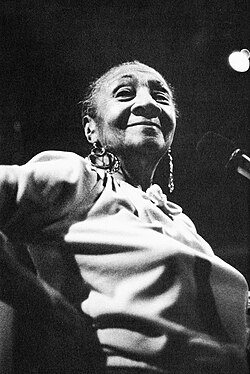
A Radical Career Change and Final Act
The death of her mother in 1957 prompted a sudden departure from the stage. Seeking a new purpose, Hunter "invented" a high school diploma and enrolled in nursing school. For the next 20 years, she dedicated her life to healthcare, volunteering at the Joint Diseases Hospital in Harlem before working at Roosevelt Island's Goldwater Memorial Hospital.
In a twist of irony, the hospital forced her to retire when they believed she had reached the age of 70. In reality, Hunter was 82. This forced retirement sparked her return to music. She secured a regular engagement at a Greenwich Village club, where she performed until her death on October 17, 1984.
Alberta Hunter: Career Summary
| Period | Primary Role | Key Achievement/Location |
|---|---|---|
| 1914–1940s | Singer/Songwriter | Dreamland Ballroom; "Downhearted Blues" |
| 1944–1950s | USO Leader | The Rhythm Rascals; Asia and North Africa |
| 1957–1977 | Nurse | Goldwater Memorial Hospital, NY |
| 1977–1984 | Singer | Greenwich Village comeback; Amtrak Blues |
Frequently Asked Questions
What was Alberta Hunter's most famous song?
She co-wrote "Downhearted Blues" in 1922. Although it became a massive commercial success for Columbia Records and Bessie Smith, Hunter herself received very little of the royalties due to a secret deal made by Ink Williams.
Why did Alberta Hunter stop singing in 1957?
Following the death of her mother, with whom she was very close, Hunter lost her passion for performing and decided to pursue a career in nursing.
How did she return to the music industry in her 80s?
After being forced to retire from nursing at age 82 (because the hospital thought she was 70), she returned to the stage, eventually securing a residency at a club in Greenwich Village.
What was her role during World War II?
Hunter led the USO's African American Unit 342, "The Rhythm Rascals," entertaining troops in Casablanca and becoming the first USO unit to visit the China-Burma-India theatre.
Which halls of fame has she been inducted into?
Alberta Hunter was inducted into the Blues Hall of Fame in 2011 and the Memphis Music Hall of Fame in 2015.