Clarence Williams: The Architect of Early Jazz and Blues Publishing
Clarence Williams was far more than a talented musician; he was a visionary entrepreneur and a pivotal figure in the early development of American jazz and blues. As a pianist, composer, promoter, and publisher, Williams operated at the intersection of art and commerce, helping to shape the sound of the 1920s while creating vital infrastructure for African-American artists during an era of intense segregation.
Early Life and the New Orleans Influence
Born in Plaquemine, Louisiana, in either 1893 or 1898, Williams was immersed in music from a young age. The son of a bassist, Dennis, and Sally Williams, he displayed an early spirit of independence, running away from home at age 12 to join Billy Kersands' Traveling Minstrel Show. This experience led him to New Orleans, where he initially worked odd jobs and shined shoes before establishing himself as a singer and master of ceremonies.
By 1913, Williams had become a respected local entertainer and pianist. His business acumen emerged early as he managed entertainment for African-American vaudeville theaters, saloons, and dance halls along Rampart Street and within the famous Storyville district.
Building a Music Empire
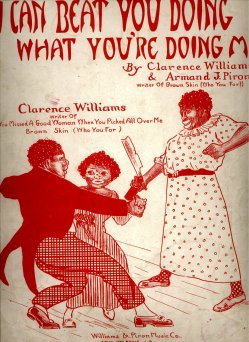
In 1915, Williams partnered with violinist and bandleader Armand J. Piron to launch a music publishing business. By the 1920s, this venture grew into the leading African-American owned music publisher in the United States. After a brief tour with W. C. Handy and a stint in Chicago, Williams settled in New York City in the early 1920s.
In 1921, he married blues singer and actress Eva Taylor. Together, they sought to create a sanctuary for Black creativity. They purchased a large home on Ruscoe Street in Queens, intending to build a community where artists and intellectuals could collaborate free from the racial discrimination prevalent in the city. Their home became a hub for the Harlem Renaissance, hosting luminaries such as Duke Ellington, Langston Hughes, and Zora Neale Hurston.
Influence on the Recording Industry
Williams played a critical role in the early recording industry, particularly through his work with the OKeh phonograph company. He supervised the "8000 race series"—recordings specifically marketed to African-American audiences—and recruited many of the artists who performed on the label.
As a bandleader, he utilized different ensembles for different sounds: Clarence Williams' Jazz Kings for "hot" jazz and Clarence Williams' Washboard Five for washboard-driven tracks. His studio sessions are historically significant for bringing together jazz giants. In 1924, his groups "The Red Onion Jazz Babies" and "Clarence Williams' Blue Five" featured both Louis Armstrong and Sidney Bechet. These recordings are famous for the competitive energy between the cornetist and saxophonist, most notably on the track "Cake Walkin' Babies from Home," though they also displayed friendly collaboration on "Texas Moaner Blues."
Compositions and Later Years
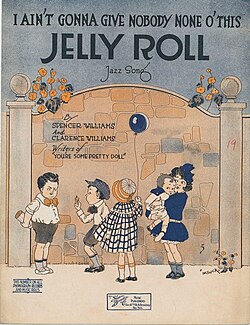
Williams' publishing house focused heavily on recording songs from its own catalog, leading to multiple versions of tunes like "Baby Won't You Please Come Home" and "Papa De-Da-Da." He is credited with numerous works, including "Shout, Sister, Shout" (1929) and the song "My Bucket's Got a Hole in It," which became a 1949 hit for Hank Williams and was later recorded by Louis Armstrong.
In 1927, he ventured into musical theater with Bottomland, starring Eva Taylor. Although the production was a commercial failure at New York's Princess Theatre, Williams later recorded several of its numbers. In 1943, he sold his extensive music catalog to Decca Records for $50,000 and retired from the music industry to open the Harlem Thrift Shop.
Clarence Williams passed away in Queens, New York, on November 6, 1965. He was posthumously inducted into the Songwriters Hall of Fame in 1970.
Key Facts
- Role: Pianist, composer, publisher, and recording supervisor.
- Major Contribution: Established the leading African-American owned music publishing house in the 1920s.
- Industry Impact: Supervised the OKeh "8000 race series" and recruited top jazz talent.
- Notable Collaborations: Brought Louis Armstrong and Sidney Bechet together in the 1920s.
- Legacy: Inducted into the Songwriters Hall of Fame in 1970.
| Category | Details |
|---|---|
| Primary Instruments | Piano, Vocals |
| Key Recording Labels | OKeh, Columbia, Vocalion, Bluebird, QRS |
| Famous Ensembles | Jazz Kings, Washboard Five, Blue Five, Red Onion Jazz Babies |
| Notable Songs | "Sugar Blues", "Royal Garden Blues", "My Bucket's Got a Hole in It" |
| Spouse | Eva Taylor (m. 1921) |
Frequently Asked Questions
Who were the most famous musicians Clarence Williams worked with?
Williams collaborated with and produced some of the most influential figures in jazz and blues, including Louis Armstrong, Sidney Bechet, Bessie Smith, and King Oliver.
What was the significance of the "8000 race series"?
The 8000 race series were recordings produced by the OKeh phonograph company specifically for African-American audiences, which Williams supervised and helped populate with talent.
Did Clarence Williams write all the songs credited to him?
Not all. Williams admitted that some songs credited to him were written by others, but he had purchased the rights to them outright, which was a standard business practice in music publishing at the time.
What was the purpose of the house Williams and Eva Taylor bought in Queens?
They intended to create a collaborative community for Black artists, musicians, and intellectuals to live and work together, avoiding the racial segregation and discrimination found in other parts of New York City.
When was Clarence Williams recognized by the Songwriters Hall of Fame?
He was posthumously inducted into the Songwriters Hall of Fame in 1970.