Langston Hughes: The Voice of the Harlem Renaissance
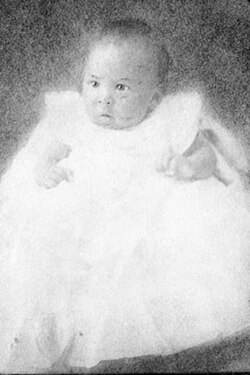
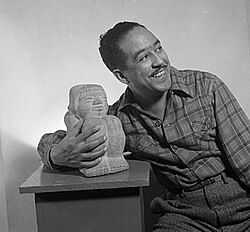
James Mercer Langston Hughes was more than just a writer; he was a cultural pioneer who captured the soul of Black America in the early 20th century. Born in Joplin, Missouri, on February 1, 1901, Hughes became a central figure of the Harlem Renaissance, an intellectual and artistic explosion of African American culture centered in Harlem, New York. As a poet, novelist, playwright, and columnist, he dedicated his life to depicting the real-life experiences of working-class Black people.
Hughes is perhaps most celebrated as an innovator of jazz poetry, a style that mirrored the rhythms and improvisational nature of jazz and blues music. His work bridged the gap between high art and the everyday language of the streets, making his poetry accessible and deeply resonant.
Key Facts
- Full Name: James Mercer Langston Hughes
- Lifespan: February 1, 1901 – May 22, 1967
- Primary Role: Leader of the Harlem Renaissance and innovator of jazz poetry.
- Education: Attended Columbia University and earned a BA from Lincoln University.
- Notable First Work: The Weary Blues (1926).
- Historic Home: His residence at 20 East 127th Street is a New York City Landmark.
Early Life and Education
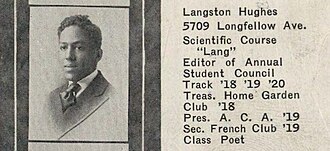
Hughes's upbringing was shaped by a strong family legacy of activism. He was the grandson of Charles Henry Langston and Mary Sampson Patterson Leary Langston, and the great-nephew of John Mercer Langston. These familial ties to the struggle for civil rights informed his lifelong commitment to social activism.
His academic journey took him through several institutions. He attended Columbia University and later Lincoln University, where he earned his Bachelor of Arts. During his time at Lincoln, his talent was recognized early; in 1926, he was awarded the Witter Bynner undergraduate poetry prize.
Developing a Literary Voice
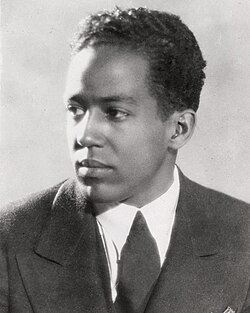
By the mid-1920s, Hughes began publishing work in influential journals such as The Crisis. His poetry often focused on the beauty and resilience of his people, as seen in his 1923 poem "My People." This period marked the beginning of his rise as a voice for the marginalized.
A Prolific Literary Career
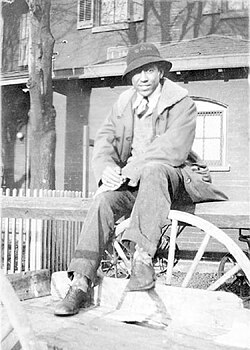
Hughes's career spanned nearly four decades, from 1926 to 1964. He was a versatile writer who refused to be pigeonholed into a single genre. While poetry was his primary medium, he excelled in short stories, novels, and drama.
Poetry and Music
His first collection, The Weary Blues (1926), established his reputation for blending literary form with musical rhythm. His influence extended beyond the page; composers like Harry Burleigh and Mira Sulpizi set his texts to music, further cementing the link between his words and sound.
Novels and Short Stories
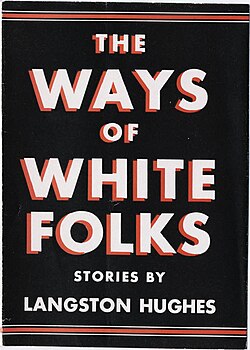
Hughes explored the complexities of race and society through prose. His first novel, Not Without Laughter (1930), was written under the patronage of Charlotte Osgood Mason. He also created the recurring character "Simple," who appeared in various collections such as Simple Speaks His Mind (1950), providing a witty and poignant commentary on American life.
![Langston Hughes at Tuskegee Institute with Jessie Fauset (left) and Zora Neale Hurston, 1927.[57][58]](/images/6a/20/6a20bbe18d59b849a01a962c2456d59b42df7815f44daaff468e011d3cc6ea44.jpg)
Drama and Non-Fiction
In the realm of theater, Hughes collaborated with Zora Neale Hurston on the play Mule Bone (1931). He also wrote several other plays, including Black Nativity (1961). His non-fiction works, such as the autobiography The Big Sea (1940), provided insight into his personal journey and the artistic circles of his time.
Global Perspective and Political Views
Hughes's concerns were not limited to the United States. He was a proponent of Pan-Africanism—the idea of solidarity among all people of African descent. His travels took him to the Soviet Union, China, and Korea, and he wrote about these experiences to highlight global struggles for freedom.
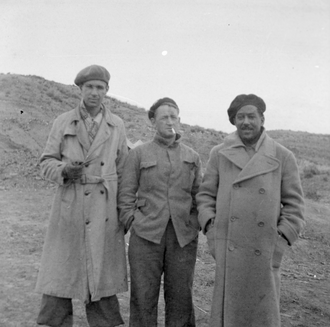
His commitment to justice was evident in his work Madrid 1937, written during the Spanish Civil War. He maintained a close relationship with the Lincoln Brigade, soldiers who fought against fascism in Spain.
Legacy and Honors
Langston Hughes passed away on May 22, 1967, at the age of 66. His impact on American literature is immeasurable. In 1981, the New York City Landmarks Preservation Commission granted landmark status to his Harlem home, and 127th Street was renamed "Langston Hughes Place."
Today, his work continues to be celebrated globally. For example, his poem "Danse Africaine" is featured as a public art installation in Leiden, Netherlands.
![The poem "Danse Africaine" on a wall of the building at the Nieuwe Rijn [nl] 46, Leiden, Netherlands](/images/73/1c/731c3e8c3796505a19a9f6abb63e7e66dd466b9f0fe46376b108de31caf4579a.jpg)
| Category | Notable Works | Key Themes |
|---|---|---|
| Poetry | The Weary Blues, Montage of a Dream Deferred | Jazz rhythms, Black identity, resilience |
| Novels/Stories | Not Without Laughter, The Ways of White Folks | Racial dynamics, working-class life |
| Plays | Mule Bone, Black Nativity | African American culture, spirituality |
| Non-Fiction | The Big Sea, Fight for Freedom | Autobiography, NAACP history |
Frequently Asked Questions
What is jazz poetry?
Jazz poetry is a literary style pioneered by Langston Hughes that incorporates the rhythms, improvisational feel, and themes of jazz and blues music into written verse.
What was Langston Hughes's role in the Harlem Renaissance?
Hughes was a leading figure and spokesperson for the movement, using his writing to celebrate Black culture and challenge racial stereotypes through authentic depictions of African American life.
Where did Langston Hughes go to college?
Hughes attended Columbia University and graduated with a Bachelor of Arts from Lincoln University.
Which of his works are considered the most influential?
His first poetry collection, The Weary Blues, and his autobiography, The Big Sea, are among his most influential works, alongside his various "Simple" stories.
Is there a physical memorial to Langston Hughes?
Yes, his former home at 20 East 127th Street in Harlem is a New York City Landmark, and the street itself has been renamed "Langston Hughes Place." Additionally, there is a Langston Hughes Memorial Library at Lincoln University.