Western Hemisphere Geography: Boundaries, Landmarks, and Global Reach
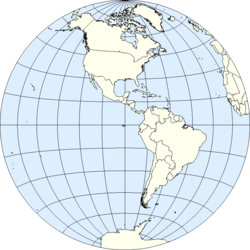
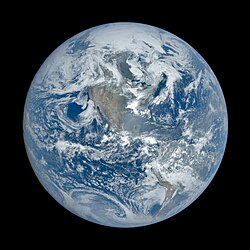
The Western Hemisphere is one of the two halves of the Earth divided by the Prime Meridian and the 180th meridian. While many people in the United States use the term as a metonym—a figure of speech where a concept is referred to by the name of something closely associated with it—to describe the Americas, the true geographical definition is much broader. It encompasses vast stretches of land and ocean across multiple continents and island groups.
Defining the Boundaries
Geographically, the Western Hemisphere is defined by the space lying west of the Prime Meridian (0° longitude) and east of the 180th meridian. This division creates a massive area that includes the entirety of the Americas, with a few exceptions such as some of the Aleutian Islands southwest of the Alaskan mainland. However, the hemisphere's reach extends far beyond the Western Hemisphere's namesake continents.
Beyond the Americas, the Western Hemisphere includes:
- The westernmost parts of Europe and Africa, including both mainland areas and various islands.
- The extreme eastern tip of the Russian mainland and its associated islands in North Asia.
- Numerous territories located within Oceania.
- A significant portion of Antarctica.
Alternative Definitions
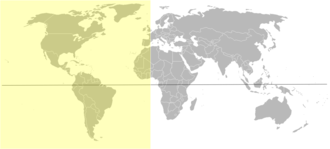
Because the standard definition includes large portions of Europe and Africa, some sources attempt to redefine the hemisphere to align more closely with the Americas. One such method uses the 20th meridian west and the 160th meridian east. This adjustment excludes the European and African mainlands but still retains certain islands, parts of eastern Russia, Oceania, and sections of Antarctica. It is important to note that no single meridian-based definition can include all of the Americas while simultaneously excluding all land outside of them.
Key Landmarks and Physical Features
The Western Hemisphere is home to some of the planet's most impressive natural and man-made structures. The geographic center of this hemisphere on the Earth's surface is located in the Pacific Ocean, specifically at the intersection of the Equator and the 90th meridian west. This point lies among the Galápagos Islands, with the nearest land being Genovesa Island.
Natural and Man-Made Extremes
From towering mountain peaks to massive urban structures, the hemisphere holds several records:
- Highest Mountain: Aconcagua, located in the Andes of Argentina, reaches an elevation of 6,960.8 metres (22,837 feet).
- Tallest Freestanding Structure: The CN Tower in Toronto, standing at 553.3 metres (1,815 ft).
- Tallest Building: One World Trade Center in New York City, which rises to 1,776 feet (541.3 m).
Sovereign States Spanning Both Hemispheres
Several nations are unique because they occupy territory in both the Western and Eastern Hemispheres. These countries are split by either the Prime Meridian or the 180th meridian (also known as the antimeridian).
Countries Split by the Prime Meridian
The following nations have territory on both sides of the Prime Meridian:
- France: Approximately one-third of the country, including cities like Nantes and Bordeaux, as well as overseas regions like Guadeloupe, Martinique, and French Guiana, lies in the Western Hemisphere.
- Spain: Most of Spain, including Madrid and the Canary Islands, is in the Western Hemisphere.
- Algeria: About one-quarter of the country, including the city of Oran, is located in the Western Hemisphere.
- Mali: Most of the country, including the capital Bamako, lies in the Western Hemisphere.
- Burkina Faso: Most of the country, including the capital Ouagadougou, is in the Western Hemisphere.
- Ghana: Most of Ghana, including the capital Accra, lies in the Western Hemisphere.
- Togo: Parts of the country lie within the Western Hemisphere.
Countries Split by the 180th Meridian
Other nations are divided by the 180th meridian. Most of these are located on one side of the International Date Line, which curves around them:
- Russia: Only the portion lying east of the 180th meridian is in the Western Hemisphere.
- United States: Most of the country is east of the 180th meridian, but the Aleutian Islands, Guam, the Northern Mariana Islands, and Wake Island fall within the Western Hemisphere.
- Kiribati: This nation is unique for being located in four hemispheres, as both the Equator and the 180th meridian cross its territory.
- Tuvalu: The meridian passes close to the nation.
- Fiji: The meridian passes through Taveuni and near Rotuma.
- New Zealand: While most of the country is in the Eastern Hemisphere, the Chatham and Kermadec Islands, as well as the Cook Islands, Niue, and Tokelau, are in the Western Hemisphere.
Summary of Hemisphere Characteristics
| Category | Feature/Location | Detail |
|---|---|---|
| Highest Point | Aconcagua | 6,960.8 metres (Argentina) |
| Tallest Building | One World Trade Center | 1,776 feet (New York City) |
| Tallest Structure | CN Tower | 553.3 metres (Toronto) |
| Geographic Center | Pacific Ocean | 90°W, 0° (near Galápagos Islands) |
| Four-Hemisphere Nation | Kiribati | Crossed by Equator and 180th Meridian |
Key Facts
- The Western Hemisphere is defined by the Prime Meridian and the 180th meridian.
- It includes the Americas, parts of Europe, Africa, Asia, Oceania, and Antarctica.
- Aconcagua is the highest mountain in the hemisphere.
- Kiribati is the only country located in all four hemispheres.
- The geographic center of the hemisphere is in the Pacific Ocean near the Galápagos Islands.
Frequently Asked Questions
Is the Western Hemisphere the same as the Americas?
Not strictly. While the term is often used as a metonym for the Americas, the geographical Western Hemisphere also includes parts of Europe, Africa, Asia, Oceania, and Antarctica.
Which country is in all four hemispheres?
Kiribati is the only country that is located in all four hemispheres because both the Equator and the 180th meridian pass through its territory.
What is the highest point in the Western Hemisphere?
The highest point is Aconcagua, located in the Andes mountains in Argentina, standing at 6,960.8 metres.
How is the Western Hemisphere defined?
It is defined as the half of the Earth that lies west of the Prime Meridian and east of the 180th meridian.
Which major building is the tallest in the Western Hemisphere?
One World Trade Center in New York City is the tallest building, reaching a height of 1,776 feet.