Temperate Climates: Geography, Classification, and Global Impact
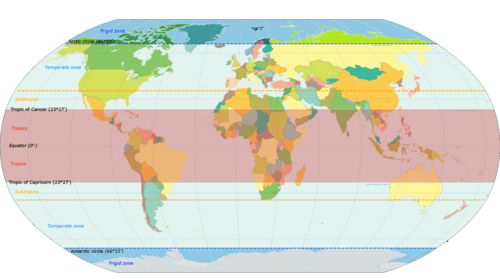
Temperate climates occupy the vital middle latitudes of Earth, spanning the regions between the tropics and the polar zones. Located approximately between 23.5° and 66.5° north and south of the Equator, these areas are characterized by more distinct seasonal changes and wider annual temperature ranges than the relatively stable tropical regions.
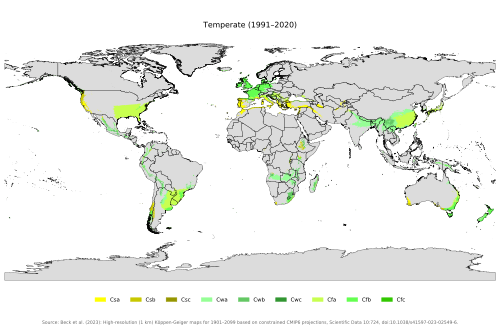
While latitude is a primary driver of temperature, the specific character of a temperate climate is shaped by a complex interplay of factors. These include sea currents, prevailing wind directions, continentality (the influence of large landmasses), and altitude.
Key Facts
- Latitudinal Range: Occurs between the tropics (23.5°) and the polar circles (66.5°).
- Köppen Definition: A "C" (temperate) climate has a mean temperature in the coldest month above −3 °C (26.6 °F) but below 18 °C (64.4 °F).
- Seasonal Variation: Features more pronounced seasonal shifts compared to tropical climates.
- Human Impact: The majority of the global human population resides in these zones.
The Köppen Climate Classification
In the widely used Köppen climate classification system, temperate climates are designated with the letter C. This classification specifically accounts for the persistence of frost by setting the coldest month's mean temperature threshold at −3 °C (26.6 °F), though some adaptations use 0 °C (32.0 °F). While continental climates (classified as D) are sometimes discussed alongside temperate zones due to their location, they are technically distinct because their coldest months typically fall below the −3 °C threshold.
Major Climate Zones
The temperate region is generally divided into three distinct zones based on their proximity to the equator and the poles.
The Subtropical Zone
Located between 23.5° and 35° latitude, the subtropical zone is heavily influenced by the tropics. These regions experience warmer temperatures year-round, characterized by long, hot summers and short, mild winters. Freezing precipitation is rare in this zone.
Within the subtropics, we find several specific climate types:
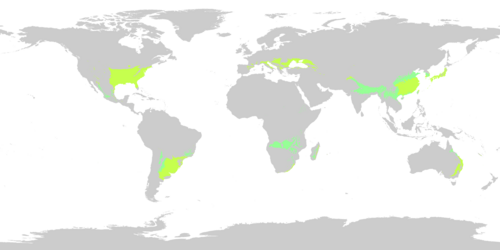
- Humid Subtropical (Cfa): Characterized by long, hot, and humid summers with frequent convective showers. These are often found on the leeward lower east coasts of continents, such as the southeastern United States, eastern Australia, and parts of East Asia.
- Monsoon Subtropical (Cwa): Found in areas like southeast China and North India, these regions experience a much sharper wet-dry season, with very heavy summer rainfall.
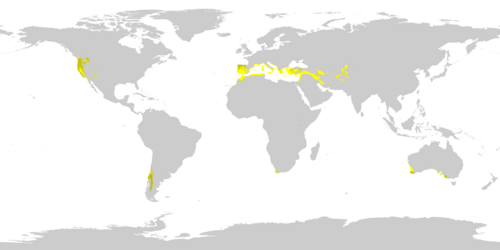
- Mediterranean (Csa, Csb): These climates feature a unique pattern of dry summers and wet winters. They are typically found on the western edges of continents, such as the Mediterranean basin, coastal California, and central Chile.
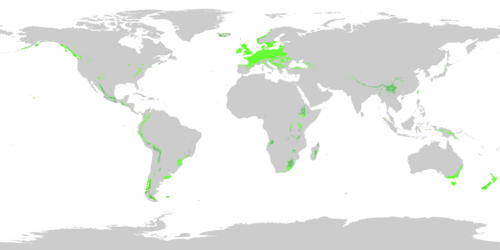
- Subtropical Highland (Cwb, Cfb): Found in mountainous areas, these climates offer mild temperatures year-round. Cfb types have even rainfall throughout the year, while Cwb types show significant monsoon influence.
The Middle Latitude Zone
Situated between 35° and 66.5° latitude, this zone receives roughly equal climatic influence from both the polar and tropical regions. It is home to two primary climate types:
- Oceanic Climates (Cfb): Driven by cool, high-latitude oceans, these climates feature mild summers, cool winters, and relatively even precipitation throughout the year. Common in northwestern Europe and New Zealand.
- Humid Continental Climates: Influenced by large landmasses, these regions experience more extreme seasonal shifts, including hot summers and cold winters. They are found in southeastern Canada, the upper eastern United States, and parts of Eastern Europe and East Asia.
The Subpolar Zone
Located on the poleward edge of the temperate zone, subpolar climates are heavily influenced by polar air masses. While they still maintain four distinct seasons, they are significantly cooler than the subtropics.
Subpolar Oceanic (Cfc) climates are the cooler variants of oceanic climates, often seeing more frequent snowfall. These are found in places like coastal Iceland, Scotland, and the Aleutian Islands. In rare high-altitude locations, such as the Altiplano, a cold variant of the monsoon-influenced highland climate (Cwc) can occur.
Human and Biological Significance
Temperate zones are central to human civilization. Because of the lack of extreme temperatures and the presence of large landmasses, the vast majority of the world's population lives in these regions. This high density has led to massive urbanization, which in turn creates urban heat islands—areas where cities are warmer than surrounding rural land due to asphalt absorption and fossil fuel combustion.
From an ecological standpoint, these regions support immense biodiversity. For example, southern Africa is home to approximately 24,000 described taxa. Furthermore, the reliable rainfall and warm summers of temperate zones make them ideal for large-scale agriculture, provided that extreme seasonal weather events are avoided.
Summary of Temperate Climate Types
| Climate Type | Köppen Code | Key Characteristics | Typical Regions |
|---|---|---|---|
| Humid Subtropical | Cfa | Hot, humid summers; mild winters | SE United States, East Asia, SE Australia |
| Mediterranean | Csa/Csb | Dry summers; wet winters | Mediterranean Basin, California, Chile |
| Oceanic | Cfb | Mild summers/winters; even rainfall | NW Europe, New Zealand |
| Humid Continental | Dfa/Dfb | Severe seasonal temperature swings | Canada, Eastern US, Eastern Europe |
Frequently Asked Questions
What is the main difference between temperate and tropical climates?
The primary difference lies in seasonal variation. Tropical climates have very small temperature fluctuations throughout the year, whereas temperate climates experience much wider temperature ranges and distinct seasonal changes.
How is a "temperate" climate defined scientifically?
Under the Köppen classification, a temperate (C) climate is defined by having a mean temperature in the coldest month that is above −3 °C (26.6 °F) but below 18 °C (64.4 °F).
Why are cities often warmer than the surrounding countryside?
This is due to urbanization factors: buildings and asphalt absorb more heat than natural landscapes, and the burning of fossil fuels from vehicles and heating adds extra warmth to the local environment.
Where are Mediterranean climates located?
They are typically found on the western edges of continents, such as in the Mediterranean basin, coastal California, central Chile, the Western Cape of South Africa, and southern/western Australia.
What characterizes a Subtropical Highland climate?
These climates occur in mountainous areas and feature mild temperatures year-round. Depending on the specific classification (Cfb or Cwb), they may have even rainfall or be influenced by monsoon patterns with wet summers and dry winters.