Humid Continental Climate
A humid continental climate is a distinct climatic region characterized by four well-defined seasons and significant temperature swings throughout the year. Defined by Russo-German climatologist Wladimir Köppen in 1900, this climate type is known for its warm to hot, often humid summers and cold, snowy winters. While precipitation generally occurs year-round, some regions within this zone experience specific dry seasons.
These climates are primarily found in the Northern Hemisphere between latitudes 40° N and 60° N, spanning the central and northeastern portions of North America, Europe, and Asia. Due to the vast ocean areas and smaller land masses in the Southern Hemisphere, this climate is rare south of the equator, appearing only in isolated high-altitude locations.
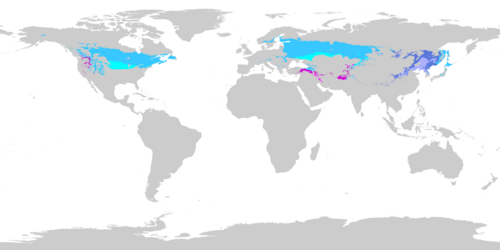
Key Facts
- Defining Feature: Large seasonal temperature differences with at least four months averaging 10 °C (50 °F) or higher.
- Winter Threshold: The coldest month must average below 0 °C (32 °F) or −3 °C (26.6 °F), depending on the specific isotherm used.
- Geography: Predominantly located in North America, Europe, and Asia.
- Snowfall: While not a formal requirement for classification, winter snow is nearly guaranteed.
- Subtypes: Divided into hot-summer (Dfa, Dwa, Dsa) and warm-summer (Dfb, Dwb, Dsb) variations.
The Köppen Classification System
To be classified as a humid continental climate, a location must meet specific temperature and moisture criteria. It cannot be arid or semi-arid. The temperature thresholds are based on biological and physical markers: the 10 °C (50 °F) average is roughly the minimum required for tree growth and reproduction, while the −3 °C (27 °F) isotherm in Europe often marks the southern limit of winter snowpack.
The classification uses a three-letter code to provide detail on precipitation and heat:
- Second Letter (Precipitation): An "s" denotes a dry summer, where the driest month in the high-sun half of the year has less than 30–40 mm of rainfall and is one-third or less of the wettest month's precipitation.
- Third Letter (Summer Heat): An "a" indicates a hot summer (warmest month averages ≥ 22 °C / 71.6 °F), while a "b" indicates a warm summer (warmest month < 22 °C / 71.6 °F).
Hot Summer Subtype
The hot summer version of this climate features a warmest month averaging at least 22 °C (71.6 °F), typically occurring in July or August. Daytime highs often reach the high 20s to low 30s °C (80s °F), while January afternoons frequently drop to or below freezing. The frost-free period in these regions generally lasts between 4 and 7 months.
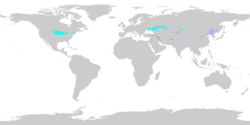
Cities such as Chicago (USA), Shenyang (China), Rostov-on-Don (Russia), and Sapporo (Japan) exemplify this subtype, though Sapporo's specific classification is Köppen Dfa.
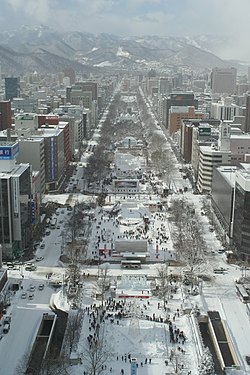
Warm Summer Subtype
Also known as a hemiboreal climate, the warm summer subtype is more widespread than the hot summer version. In these regions, the warmest month averages below 22 °C (72 °F), with daytime highs typically ranging from 21–28 °C (70–82 °F). Winters are generally colder, often falling well below the −3 °C or 0 °C isotherms, and the frost-free period is shorter, typically lasting 3 to 5 months.
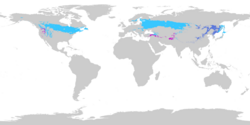
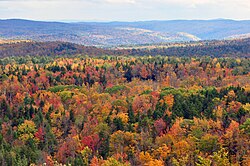
This subtype covers vast areas, including the northern United States (from North Dakota to Maine), southern Ontario, Quebec, and the Canadian Maritimes. In Europe, it extends from Central Europe (Germany, Poland, Czech Republic) through Eastern Europe (Ukraine, Belarus, Russia) and into the Nordic countries, reaching as far north as Bodø, Norway (67°N). It is also found in northern Japan and high-altitude regions like the Cairngorm Mountains in Scotland.
Climate Summary Table
| Feature | Hot Summer (Dfa/Dwa/Dsa) | Warm Summer (Dfb/Dwb/Dsb) |
|---|---|---|
| Warmest Month Avg | ≥ 22 °C (71.6 °F) | < 22 °C (72 °F) |
| Frost-Free Period | 4 to 7 months | 3 to 5 months |
| Common Latitudes | Lower range of 40°N–60°N | Upper range of 40°N–60°N |
| Alternative Name | N/A | Hemiboreal Climate |
Frequently Asked Questions
What defines a humid continental climate?
It is defined by having a coldest month average below 0 °C or −3 °C and at least four months with average temperatures at or above 10 °C, while not being arid or semi-arid.
Why is this climate rare in the Southern Hemisphere?
The Southern Hemisphere has larger ocean areas and smaller land masses at the relevant latitudes, which leads to greater maritime moderation and prevents the extreme seasonal temperature swings required for this classification.
What is a hemiboreal climate?
Hemiboreal is another term used to describe the warm-summer (Dfb, Dwb, Dsb) subtypes of the humid continental climate.
How does the maritime influence affect these regions?
Areas closer to the sea, such as Nova Scotia, Newfoundland, and Scandinavia, experience a heavier maritime influence. This results in relatively cool summers and winters that stay just below the freezing mark, making them comparable to oceanic climates.
Is snowfall a requirement for this climate type?
While snowfall is not used as a formal metric in the Köppen definition, it is almost always present, occurring either intermittently near coastal margins or persistently in the interior of the zone.