Voting Rights Act of 1965
The Voting Rights Act of 1965 (VRA) is a landmark piece of federal legislation designed to enforce the Fifteenth Amendment to the United States Constitution, which prohibits the federal government and states from denying a citizen the right to vote based on race, color, or previous condition of servitude. Enacted during a period of intense civil rights activism, the act sought to dismantle systemic barriers that prevented African Americans and other minorities from exercising their democratic rights.
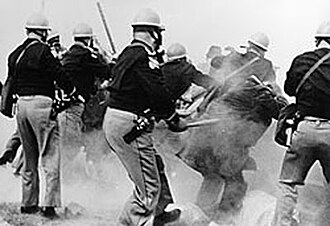
The road to the VRA was marked by significant struggle and public outcry. Events such as the "Bloody Sunday" attack on voting rights marchers in Selma, Alabama, highlighted the violent resistance to racial equality and galvanized national support for federal intervention in election administration.
Key Facts
- Effective Date: August 7, 1965.
- Signed By: President Lyndon B. Johnson.
- Primary Purpose: To enforce the Fifteenth Amendment and eliminate discriminatory voting practices.
- Key Mechanism: Established "preclearance" for jurisdictions with a history of discrimination.
- Major Legal Shift: The 2013 Supreme Court case Shelby County v. Holder declared the coverage formula unconstitutional.
Legislative History
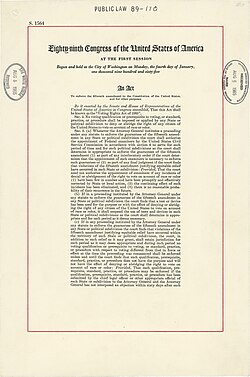
The act was introduced in the Senate as S. 1964 by Mike Mansfield (D-MT) on March 17, 1965. It moved through the legislative process with significant bipartisan support, reflecting a national consensus on the need to end racial disenfranchisement.
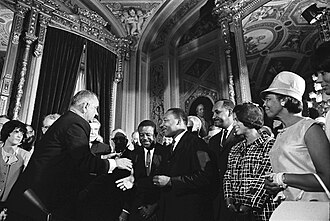
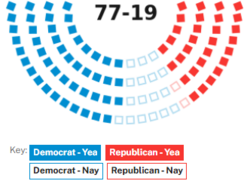
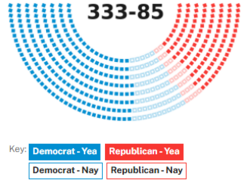
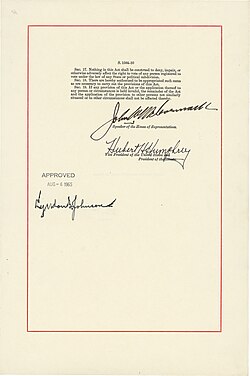
The Senate passed the bill on May 26, 1965, with a vote of 77–19. The House of Representatives passed it with amendments on July 9, 1965, by a vote of 333–85. President Lyndon B. Johnson signed the act into law on August 6, 1965, alongside prominent civil rights leaders.
Legislative Breakdown
The voting patterns in both chambers demonstrated a strong mandate for the legislation, as shown in the party breakdowns of the time.
Core Provisions and Mechanisms
The VRA introduced several powerful tools to ensure fair access to the ballot. At its core, it established a general prohibition against any voting law that results in discrimination.
The Coverage Formula and Preclearance
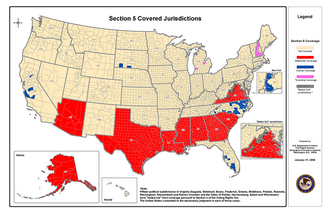
One of the most significant features was the coverage formula. This formula identified specific states and counties with a history of discriminatory tests or devices. These jurisdictions were subject to preclearance, meaning they could not change their voting laws without prior approval from the U.S. Attorney General or a federal court to ensure the changes were not discriminatory.
Federal Oversight
To provide immediate relief, the act allowed for the appointment of federal examiners and observers to monitor registration and election processes, ensuring that eligible voters were not intimidated or illegally turned away.
Bilingual Election Requirements
Recognizing that language can be a barrier to voting, the act included provisions for bilingual election materials. These requirements apply when a single language minority group has an English-illiteracy rate higher than the national average and comprises a significant portion of the population.
Amendments and Evolution
The VRA was not a static document; it was updated several times to address emerging challenges and expand protections:
- 1970 Amendments: Extended several provisions of the act.
- 1975 Amendments: Expanded the act to protect language minorities.
- 1982 Amendments: Strengthened the "results test" for proving discrimination.
- 1992 Language Assistance Act: Further refined bilingual requirements.
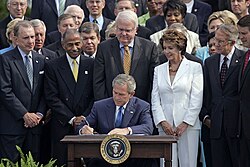
- 2006 Amendments: Signed by President George W. Bush to reauthorize and strengthen the act.
Legal Impact and Constitutionality
The VRA has been the subject of numerous Supreme Court cases. While early rulings like South Carolina v. Katzenbach (1966) upheld its constitutionality, later decisions have narrowed its scope.
The most pivotal recent ruling was Shelby County v. Holder (2013), in which the Supreme Court declared the coverage formula used for preclearance unconstitutional. This decision effectively ended the preclearance requirement for most jurisdictions, shifting the burden of proof back to those challenging discriminatory laws.
Racial Gerrymandering
The act has also been central to cases regarding racial gerrymandering—the practice of drawing electoral district boundaries to dilute the voting power of racial minorities. Cases such as Thornburg v. Gingles (1986) and Shaw v. Reno (1993) have shaped how the courts evaluate the legality of district maps.
Summary of the Voting Rights Act
| Feature | Details |
|---|---|
| Public Law | Pub. L. 89–110 |
| Codification | Title 52—Voting and Elections |
| Key Mechanism | Preclearance (Section 5) |
| Key Formula | Coverage Formula (Section 4) |
| Major Court Case | Shelby County v. Holder (2013) |
| Related Laws | Civil Rights Act of 1964, NVRA (1993), HAVA (2002) |
Frequently Asked Questions
What was the primary goal of the Voting Rights Act of 1965?
The primary goal was to enforce the Fifteenth Amendment by outlawing discriminatory voting practices, such as literacy tests, that were used to prevent racial minorities from voting.
What is "preclearance"?
Preclearance was a requirement that certain jurisdictions with a history of discrimination obtain federal approval before changing any voting laws to ensure the changes would not have a discriminatory effect.
How did Shelby County v. Holder change the VRA?
The Supreme Court ruled that the formula used to determine which jurisdictions were subject to preclearance was unconstitutional, effectively stopping the preclearance process.
Who signed the Voting Rights Act into law?
The act was signed into law by President Lyndon B. Johnson on August 6, 1965.
Does the VRA protect non-English speakers?
Yes, through the Voting Rights Language Assistance Act of 1992 and earlier amendments, the VRA requires bilingual election materials in areas with significant language-minority populations.