Disfranchisement in the Post-Reconstruction American South
Following the Reconstruction era, the Southern United States witnessed a systematic effort to strip Black citizens of their right to vote. Through a combination of new state constitutions, restrictive laws, and discriminatory practices, former Confederate states worked to neutralize the political power of African Americans. These measures were specifically designed to circumvent the Fifteenth Amendment, ratified in 1870, which prohibited the government from denying a citizen the right to vote based on race.
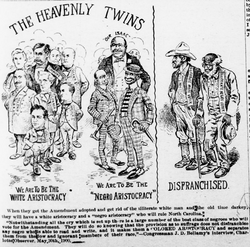
To avoid direct conflict with the U.S. Constitution, many of these laws were written to appear racially neutral on paper. However, in practice, they were selectively enforced by white officials to ensure that Black voters remained excluded from the democratic process.
!["The two platforms". From a series of racist posters attacking Radical Republican supporters of Black suffrage, issued during the 1866 Pennsylvania gubernatorial race. The poster specifically characterizes Democratic candidate Hiester Clymer's platform as "for the White Man", represented here by the idealized head of a young White man (Clymer ran on a platform of white supremacy). In contrast, a stereotyped Black man's head represents the platform of Clymer's Republican opponent John White Geary, stated to be "for the Negro."[1][nb 1]](/images/fb/49/fb498fe06e3310a1d3915c4805c729c90d4b8d5eb80e00897b70e44514bf5ee9.jpg)
Key Facts
- Timeline: The most aggressive legal disfranchisement occurred between 1890 and 1908.
- Methods: Primary tools included poll taxes, subjective literacy tests, and "grandfather clauses."
- Political Impact: These laws nearly eliminated the Republican Party in the South, establishing one-party Democratic control for decades.
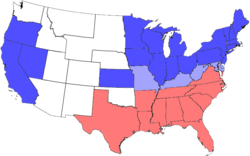
- Scope: While most prevalent in the former Confederacy, efforts were also seen in Maryland, Kentucky, and Oklahoma.
- Casualties: Beyond Black citizens, these laws also disenfranchised many poor white voters.
The Path to Disfranchisement
During Reconstruction, African Americans held significant political influence. In Mississippi and South Carolina, they constituted absolute majorities of the population. By the 1868 presidential election, Black voters were instrumental in electing General Ulysses S. Grant, contributing approximately 700,000 votes.
Resistance grew among Southern whites who feared Black political domination. Initially, this resistance took the form of domestic terrorism—led by groups like the Ku Klux Klan—and electoral fraud. However, after the Compromise of 1877 led to the withdrawal of federal military forces from the South, Southern Democrats (known as "Redeemers") regained control of state governments.
The Shift to Legal Suppression
By the late 19th century, Southern Democrats became alarmed by a political alliance between Republicans and Populists. To secure their power, they shifted from violence to legislation. Between 1890 and 1908, ten of the eleven Southern states rewrote their constitutions to include barriers to suffrage.
Mechanisms of Voter Suppression
State governments employed several sophisticated methods to prevent Black citizens from registering to vote while protecting the franchise for white citizens.
Poll Taxes
A poll tax was a fee required for voter registration. In Texas, this fee ranged from $1.50 to $1.75—a significant sum for the working class at the time. Georgia implemented a cumulative poll tax, requiring men to pay for every year they had been eligible since age 21.
Literacy Tests and the Grandfather Clause
Many states implemented literacy tests. Despite rising literacy rates among Black citizens—reaching a majority by 1900—white registrars used subjective judgment to fail educated Black applicants. To ensure illiterate white voters were not accidentally disenfranchised, some states introduced grandfather clauses, which exempted voters from these tests if their ancestors had voted before a certain date.
White Primaries
Because the Democratic Party dominated the South, the only competitive elections occurred during the primaries. Democratic parties in nine states established "white primaries," barring minorities from participating. This effectively removed Black citizens from the political decision-making process entirely.
Regional Impact and Case Studies
| State | African American Population | % of Population | Year of Law/Constitution |
|---|---|---|---|
| Mississippi | 910,060 | 58.66% | 1890 |
| South Carolina | 782,509 | 58.38% | 1895 |
| Louisiana | 652,013 | 47.19% | 1898 |
| Georgia | 1,045,037 | 46.70% | 1908 |
| Alabama | 827,545 | 45.26% | 1901 |
| Virginia | 661,329 | 35.69% | 1902 |
North Carolina and Virginia
In North Carolina, the effect was a near-total elimination of Black voters by 1904, with an estimated 75,000 Black men losing their vote. In Virginia, the 1902 constitution was ratified by the legislature without a popular vote, resulting in the total voting population falling by nearly half.
Texas and Oklahoma
The Terrell Election Law of 1902 in Texas used poll taxes to disenfranchise almost all African Americans, most Mexican Americans, and many poor whites. In Oklahoma, despite a smaller Black population (under 10%), similar restrictive rules were passed after the Supreme Court invalidated "grandfather clauses" in the 1915 case Guinn v. United States.
The Border States
The border states—Delaware, Maryland, West Virginia, Kentucky, and Missouri—also implemented racial segregation. However, they never achieved the same degree of total Black disfranchisement as the former Confederate states. This was partly due to lower percentages of African American populations in these regions.
Legacy and Modern Context
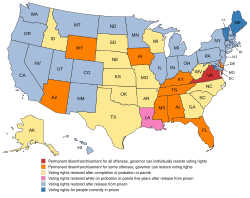
The era of legal disfranchisement created a one-party South that lasted until the mid-20th century. It wasn't until the Voting Rights Act of 1965 that federal enforcement finally began to dismantle these systemic barriers.
Frequently Asked Questions
What was the purpose of the Fifteenth Amendment?
Ratified in 1870, the Fifteenth Amendment was designed to protect the right to vote by prohibiting states from denying suffrage based on race, color, or previous condition of servitude.
How did the "grandfather clause" work?
The grandfather clause allowed people to bypass literacy tests if their ancestors had been eligible to vote before a specific date, effectively exempting white voters while still blocking Black voters.
What were "white primaries"?
White primaries were rules adopted by the Democratic Party in several Southern states that excluded Black and minority voters from primary elections, which were the only meaningful contests in a one-party system.
Did these laws affect anyone other than Black citizens?
Yes. Because poll taxes and literacy tests were based on wealth and education, many poor white citizens were also disenfranchised by these measures.
When did these systemic barriers finally begin to collapse?
While some legal challenges occurred earlier, the widespread collapse of these systems happened in the late 1960s following the passage and enforcement of the federal Voting Rights Act of 1965.