Cotton Club: The Legacy of Harlem's Most Famous Nightclub
The Cotton Club stands as one of the most paradoxical landmarks in American cultural history. Operating during the height of the Prohibition era and the Jim Crow era of racial segregation, this New York City venue became a global symbol of jazz and sophistication while simultaneously enforcing strict racial boundaries. While it launched the careers of some of the greatest African American artists of the 20th century, it remained, for much of its existence, a whites-only establishment.
From its origins in the heart of Harlem to its later years in the midtown Theater District, the club served as a high-profile stage where the brilliance of Black musicians met the expectations of a wealthy white clientele.
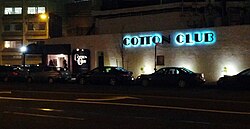
Key Facts
- Locations: 142nd Street and Lenox Avenue in Harlem (1923–1936) and later the Broadway Theater District (1936–1940).
- Ownership: Founded as Club Deluxe by Jack Johnson; later acquired by bootlegger Owney Madden.
- Racial Policy: Primarily a whites-only venue for patrons, despite featuring exclusively Black performers.
- Musical Impact: Served as a critical launchpad for Duke Ellington, Cab Calloway, and Louis Armstrong.
- Cultural Influence: Known for its lavish musical revues and "Celebrity Nights" featuring figures like George Gershwin and Langston Hughes.
The Origins and the Harlem Years
The venue began in 1920 as the Club Deluxe, an intimate supper club opened by heavyweight boxing champion Jack Johnson. In 1923, the club was acquired by Owney Madden, a prominent gangster and bootlegger, who renamed it the Cotton Club. Madden utilized the venue as a strategic outlet to sell his illegal beer to the Prohibition-era crowd.
![A 1933 map of nightclubs in Harlem, showing the Cotton Club and others such as the Savoy Ballroom and Smalls Paradise.[42]](/images/5c/6e/5c6e034bb64d46cc61ded77bbdda8fc5f0763a4d29793b1b3d4f86c1a69f4071.jpg)
The club became famous for its musical revues—large-scale productions featuring dancers, singers, and comedians, often titled "Cotton Club Parade" followed by the year. These shows were designed as prototypes for potential Broadway hits. The house band played a pivotal role in these productions, most notably Duke Ellington's orchestra, which held the residency from December 4, 1927, to June 30, 1931.
The Rise of Duke Ellington and Cab Calloway
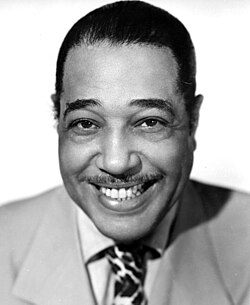
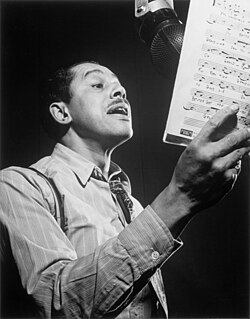
Duke Ellington used the club to experiment with orchestral arrangements and "jungle music"—a style tailored for white audiences. Through radio broadcasts on WHN, WEAF, and the NBC Red Network, Ellington gained national exposure and composed over 100 pieces during his tenure. Following Ellington, Cab Calloway brought his "Brown Sugar" revue to the club in 1930, further cementing the venue's reputation for high-energy jazz.
Star Performers and Innovations
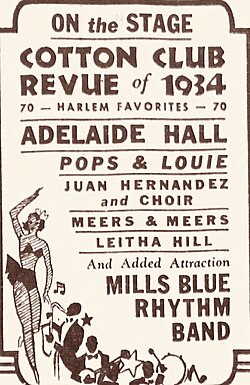
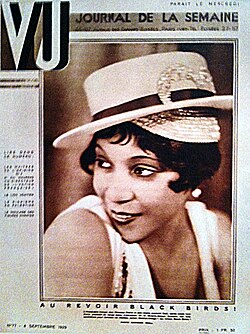
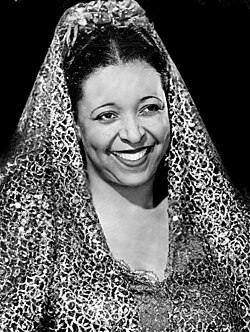
The club featured a roster of legendary talent, including vocalists like Adelaide Hall and Ethel Waters, and dancers such as the Nicholas Brothers and Bill "Bojangles" Robinson. In 1934, Adelaide Hall starred in the highest-grossing show in the club's history, which attracted over 600,000 customers. This production was notable for the first-ever use of a dry-ice machine to create a fog effect on stage during the song "Ill Wind."
The Contradictions of the Cotton Club
Despite the talent on stage, the Cotton Club was a site of deep racial contradiction. It was a whites-only establishment, with rare exceptions for Black celebrities. The club often leaned into racist stereotypes, using imagery of "savages" in jungles or plantation settings in its menus and decor to appeal to the fantasies of its white patrons.
The segregation extended to the performers. Chorus girls were subject to strict physical requirements—they had to be light-skinned, at least 5'6" tall, and under 21. Black performers were prohibited from mixing with the clientele and often retreated to nearby basements to socialize and drink after their sets.
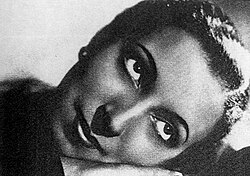
Langston Hughes, a central figure of the Harlem Renaissance, was one of the few Black patrons allowed inside. He later criticized the venue as a "Jim Crow club for gangsters and monied whites," highlighting the tension between the art produced and the environment in which it was consumed.
The Move to Midtown and Final Years
Following a race riot in Harlem in 1935, the club closed temporarily and reopened in 1936 at Broadway and 48th Street in the heart of the Great White Way (the Broadway Theater District). This new location featured even more extravagant productions. Bill "Bojangles" Robinson was paid $3,500 a week, the highest salary ever paid to a Black entertainer in a Broadway production at that time.
The club eventually closed permanently in 1940. This shutdown was driven by rising rents, shifting public tastes, and a federal investigation into tax evasion among Manhattan nightclub owners. The space was later occupied by the Latin Quarter before the building was demolished in 1989.
Summary of the Cotton Club Era
| Category | Harlem Era (1923–1936) | Midtown Era (1936–1940) |
|---|---|---|
| Primary Location | 142nd St & Lenox Ave | Broadway & 48th St |
| Key House Bands | Duke Ellington, Cab Calloway | Cab Calloway, Bill Robinson |
| Social Dynamic | Strict segregation; whites-only patrons | Transitioned toward broader Broadway appeal |
| Defining Feature | "Cotton Club Parade" revues | Extravagant high-salary productions |
Frequently Asked Questions
Was the Cotton Club open to Black patrons?
For most of its history, the Cotton Club was a whites-only establishment. While it employed Black musicians and dancers, Black people were generally not allowed to enter as customers, with rare exceptions for high-profile celebrities. It did briefly open its doors to Black patrons in June 1935 for a gala event.
Who was the most famous musician associated with the club?
Duke Ellington is perhaps the most influential musician associated with the club. His residency from 1927 to 1931 allowed him to develop his signature orchestral style and gain national fame through radio broadcasts.
Why did the Cotton Club move from Harlem to Midtown?
The club closed in Harlem following a race riot in 1935. It reopened in 1936 in the Broadway Theater District to capitalize on the center of New York's entertainment scene.
What happened to the original Cotton Club building?
The midtown location was eventually occupied by the Latin Quarter nightclub. The building was ultimately torn down in 1989 to make way for a hotel.
Were there other Cotton Clubs outside of New York?
Yes. Branches or similarly named clubs existed in Chicago (run by Ralph Capone), Culver City, Las Vegas, Portland, Lubbock, and Colorado Springs. Some of these, like the Lubbock location, were integrated.