Cozy Cole: The Swing Era Drummer Who Charted the Beat
William Randolph "Cozy" Cole was more than just a timekeeper; he was a powerhouse of the Swing era—a genre of jazz characterized by a strong rhythmic drive and danceable tempos. From his early days in New Jersey to his status as a chart-topping recording artist, Cole's career spanned five decades, leaving an indelible mark on the evolution of jazz percussion.
Key Facts
- Full Name: William Randolph Cole
- Active Years: 1930s–1970s
- Major Hits: "Topsy II" (reached No. 1 on the R&B chart and No. 3 on the Billboard Hot 100)
- Notable Collaborations: Cab Calloway, Louis Armstrong, and Jelly Roll Morton
- Legacy: Influenced rock drummers like Cozy Powell and taught Philly Joe Jones
- Honors: Honorary Doctor of Musical Arts from Capital University (1978)
Early Career and the Rise of a Virtuoso
Born in East Orange, New Jersey, William Randolph Cole entered the professional music scene in 1928 with Wilbur Sweatman. By 1930, he was performing with Jelly Roll Morton's Red Hot Peppers, where he recorded an early drum solo on the track "Load of Cole," signaling his intent to move the drums from the background to the spotlight.
Throughout the 1930s, Cole honed his craft by playing with some of the most influential figures of the era. His resume included stints with Blanche Calloway (1931–33), Benny Carter (1933–34), Willie Bryant (1935–36), and Stuff Smith's small combo (1936–38). This period of intense collaboration culminated in his high-profile tenure with the Cab Calloway Orchestra from 1938 to 1942.
Breaking Barriers and Global Performances
In 1942, Cole achieved a significant milestone when he was hired by CBS Radio music director Raymond Scott. He became a member of network radio's first integrated orchestra, a pioneering step toward racial integration in professional broadcasting.
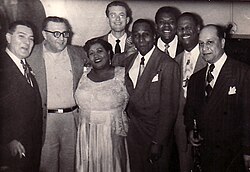
Following this, Cole joined Louis Armstrong's All Stars. One of the highlights of this partnership was the ninth Cavalcade of Jazz concert on June 7, 1953, held at Wrigley Field in Los Angeles. This massive event, produced by Leon Hefflin, Sr., featured Cole alongside Velma Middleton and other jazz giants such as Nat "King" Cole and Earl Bostic.
Commercial Success and the "Topsy" Hits
While many jazz musicians remained niche artists, Cozy Cole achieved mainstream commercial success. His recording of "Topsy II," released by the Brooklyn-based Love Records, became a massive hit. The track, which featured a prominent drum solo, sold over one million copies, earned a gold disc, and peaked at No. 1 on the R&B chart and No. 3 on the Billboard Hot 100. It also reached No. 29 in the UK Singles Chart in 1958.
Cole continued to find success with "Turvy II," which reached No. 36 in 1959. His ability to blend technical proficiency with popular appeal made him one of the few drummers of his time to consistently enter the Billboard charts.
Later Years and Lasting Influence
In the 1950s and 60s, Cole was a fixture at the Metropole in New York City, where he frequently performed drum duets with fellow legend Gene Krupa. He also performed at Peacock Alley in St. Louis with his wife, entertainer Lee Parker.
Beyond the stage, Cole's influence extended to the next generation of musicians. He was the teacher of Philly Joe Jones and served as an inspiration for rock drummers; most notably, Cozy Powell adopted his nickname as a tribute to Cole. In 1978, Capital University in Columbus recognized his contributions to music with an honorary Doctor of Musical Arts degree.
Cozy Cole passed away from cancer on January 29, 1981, in Columbus, Ohio, at the age of 71.
Career Summary
| Period/Year | Affiliation/Achievement | Key Detail |
|---|---|---|
| 1930 | Jelly Roll Morton | Recorded early solo on "Load of Cole" |
| 1938–1942 | Cab Calloway Orchestra | Established himself as a premier swing drummer |
| 1942 | CBS Radio | Joined first integrated network orchestra |
| 1953 | Cavalcade of Jazz | Performed at Wrigley Field with Louis Armstrong |
| 1958 | "Topsy II" | Gold disc; No. 1 R&B / No. 3 Billboard Hot 100 |
| 1978 | Capital University | Awarded honorary Doctor of Musical Arts |
Frequently Asked Questions
Which famous musicians did Cozy Cole work with?
Cozy Cole collaborated with some of the most iconic names in jazz, including Cab Calloway, Louis Armstrong, Jelly Roll Morton, Benny Carter, and Earl Hines.
What was Cozy Cole's most successful song?
His most successful recording was "Topsy II," which sold over one million copies, earned a gold disc, and reached No. 1 on the R&B chart and No. 3 on the Billboard Hot 100.
How did Cozy Cole influence rock music?
Cole is cited as an influence by several contemporary rock drummers. Specifically, drummer Cozy Powell took his professional nickname "Cozy" from William "Cozy" Cole.
What was Cozy Cole's role in radio history?
In 1942, he became part of the first integrated orchestra on network radio after being hired by CBS music director Raymond Scott.
Who was one of Cozy Cole's most notable students?
Cozy Cole was the teacher of the renowned jazz drummer Philly Joe Jones.