Duke Ellington: The Architect of American Jazz
Edward Kennedy "Duke" Ellington was more than just a musician; he was a transformative force in 20th-century music. As a pianist, composer, and bandleader, Ellington led his eponymous jazz orchestra from 1924 until his death in 1974. His influence was so profound that music critic Ralph J. Gleason described him as "America's most important composer." By blending the improvisational spirit of jazz with the structural complexity of orchestral music, Ellington redefined the boundaries of the genre.
Key Facts
- Full Name: Edward Kennedy "Duke" Ellington.
- Active Years: 1914–1974.
- Primary Roles: Pianist, composer, songwriter, bandleader, arranger, and conductor.
- Major Honors: Presidential Medal of Freedom (1969) and a posthumous Special Pulitzer Prize (1999).
- Grammy Success: Won 14 Grammy Awards from 25 nominations.
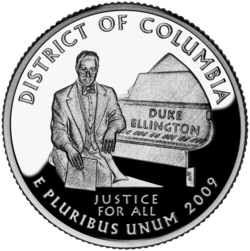
- Legacy: First African American to appear alone on a circulating U.S. coin (2009).
Musical Journey and Career Evolution
Ellington's career spanned six decades, evolving from the early days of jazz into the sophisticated era of swing (a style of jazz characterized by a strong rhythmic pulse) and orchestral jazz. His early career was marked by a pivotal engagement at the Cotton Club, which helped propel him to national fame.
Throughout the 1930s, Ellington navigated various recording contracts, signing exclusively with Brunswick from 1932 to 1936, with a brief transition to Victor during 1933–1934. His compositions became worldwide hits, often featuring legendary collaborators.
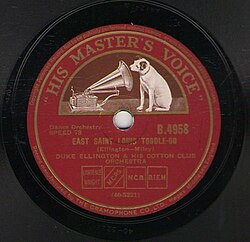
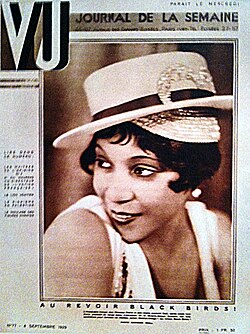
One of his most enduring collaborations was with Adelaide Hall, whose recording of "Creole Love Call" in 1927 became a global sensation.
Later Years and Final Works
Even in his final years, Ellington continued to push creative boundaries. Between 1972 and 1974, he collaborated with Maurice Peress on Queenie Pie, his only opera. The work was inspired by an idea Ellington had decades earlier to write about a Black beautician in the 1930s.
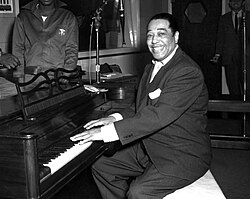
![Ellington at the Hurricane Club, Broadway & West 51st Street, New York City,[57] May 1943](/images/9a/63/9a63cf9ce4f086be0f197f45731a7a515e777535fcf1df95e980a2aad1ce299f.jpg)
Personal Life and Family
Ellington married his high school sweetheart, Edna Thompson, on July 2, 1918. They had one child, Mercer Kennedy Ellington, born in 1919. Mercer followed in his father's footsteps, playing trumpet and piano, leading his own band, and serving as Duke's business manager. After Duke's passing, Mercer kept the Ellington band active for another 20 years.
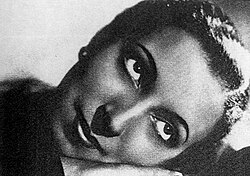
Ellington's personal life was complex. In 1938, he began a relationship with Beatrice "Evie" Ellis, a Cotton Club employee. Later, in the early 1960s, he formed a relationship with Fernanda de Castro Monte. Ellington provided financial support to both women for the remainder of his life.
Awards, Honors, and Global Recognition
Ellington's contributions to music earned him the highest honors available in both the United States and abroad. He was a recipient of the French Legion of Honour in 1973 and the Presidential Medal of Freedom in 1969.
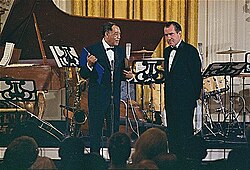
His cinematic contributions were also recognized; he won three Grammy Awards in 1959 for his work on the film Anatomy of a Murder.
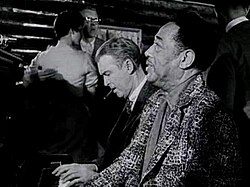
The following table summarizes his most prestigious accolades:
| Year | Award/Honor | Significance |
|---|---|---|
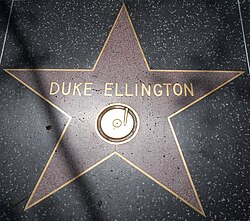
| 1960 | Hollywood Walk of Fame | Contribution to recording industry |
| 1966 | Grammy Lifetime Achievement Award | Career-long excellence in music |
| 1969 | Presidential Medal of Freedom | Highest US civilian award |
| 1973 | Legion of Honour | Highest French civilian honor |
| 1999 | Special Pulitzer Prize | Lifetime contributions to music and culture |
Death and Lasting Legacy
Duke Ellington passed away on May 24, 1974, at the age of 75, due to complications from pneumonia and lung cancer. His funeral at the Cathedral of St. John the Divine was attended by over 12,000 people, including Ella Fitzgerald, who described him as a "genius."
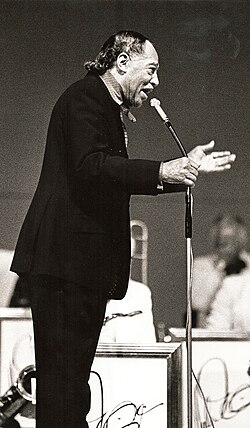
Today, Ellington is memorialized through various landmarks in Washington, D.C., including the Duke Ellington Building and Duke Ellington Park. He is also honored with a star on the Hollywood Walk of Fame.
In 2009, the U.S. Mint released a Washington, D.C. quarter featuring Ellington, marking the first time an African American appeared alone on a circulating U.S. coin.
Frequently Asked Questions
What was Duke Ellington's primary instrument?
Duke Ellington was a master pianist, though he is equally famous as a composer, arranger, and bandleader.
How many Grammy Awards did Duke Ellington win?
He earned a total of 14 Grammy Awards between 1959 and 2000, including three awarded posthumously.
Did Duke Ellington write any operas?
Yes, he worked on his only opera, Queenie Pie, between 1972 and 1974 in collaboration with Maurice Peress.
What is the significance of the 2009 U.S. quarter?
The 2009 Washington, D.C. quarter is significant because Duke Ellington was the first African American to be featured individually on a circulating U.S. coin.
Who was Mercer Ellington?
Mercer Ellington was Duke's only son. He was a musician (trumpet and piano) and business manager who led the Ellington band for 20 years after his father's death.