Volhynia Massacre and the Polish National Day of Remembrance
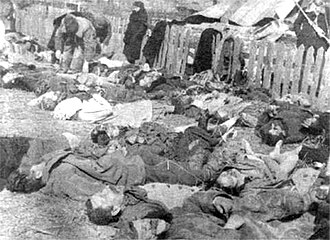
The history of the Eastern Borderlands of the Second Polish Republic is marked by a period of intense violence and tragedy during World War II. Central to this history is the Volhynia massacre, a series of mass killings targeting the Polish population. In recent years, the Polish state has taken formal legislative steps to recognize these events, ensuring that the victims are remembered and the nature of the crimes is officially documented.
The Legislative Path to Recognition
The process of official recognition began in earnest in 2009. On July 15, 2009, the Sejm (the lower house of the Polish parliament) passed a resolution by unanimous acclamation. This resolution identified the actions of the Organization of Ukrainian Nationalists (OUN) and the Ukrainian Insurgent Army (UPA) as an "anti-Polish action" characterized by mass killings, ethnic cleansing, and signs of genocide.
During this resolution, the Sejm also paid tribute to those who fought to protect civilians, including soldiers of the Home Army, the Self-Defense of the Eastern Kres, and Peasant battalions. Crucially, the resolution also acknowledged the pain of victims among the Ukrainian civilian population.
Expanding the Official Record
Four years later, on July 15, 2013, the Sejm adopted another resolution to mark the 70th anniversary of what it termed the "Volyn Crime." This document emphasized that the crimes committed by the OUN and UPA were carried out on an "organized and massive scale," reinforcing the classification of the events as ethnic cleansing with signs of genocide.
The momentum for formal commemoration continued into 2016. On July 7, the Senate of Poland adopted a resolution focused on perpetuating the memory of citizens of the Second Polish Republic who were victims of genocide committed by Ukrainian nationalists between 1939 and 1945.
Establishing the National Day of Remembrance
On July 22, 2016, the Sejm formally established a memorial day to honor the victims of the Volhynia massacre. The resolution noted that the killings were organized by fighters from the OUN, UPA, the SS Galicia division, and other Ukrainian formations. During these proceedings, the Polish Peasant Party suggested an alternative title: "The Day of Remembrance of the Polish victims of the genocide committed by the OUN-UPA on the Eastern Borders of the Second Polish Republic."
The culmination of these efforts occurred with the adoption of a bill on June 4, 2025, which officially designated July 11 as the Day of Remembrance of Poles, victims of genocide committed by OUN-UPA on the Eastern Borderlands of the Second Republic of Poland.
On July 11, 2025, Poland observed its first-ever National Day of Remembrance. This date was chosen to mark the 82nd anniversary of the 1943 "Volhynian Bloody Sunday," one of the most devastating episodes of the massacre.
Key Facts
- Perpetrators: The massacres were organized by the OUN, UPA, SS Galicia division, and other Ukrainian formations.
- Legal Classification: The Polish Sejm has described the events as ethnic cleansing with signs of genocide.
- Official Date: July 11 is the designated National Day of Remembrance.
- Historical Context: The violence took place during World War II (1939–1945) in the Eastern Borderlands of the Second Polish Republic.
- Significant Event: The anniversary commemorates the "Volhynian Bloody Sunday" of 1943.
| Date | Governing Body | Action/Resolution |
|---|---|---|
| July 15, 2009 | Sejm | Unanimous resolution recognizing ethnic cleansing and signs of genocide. |
| July 15, 2013 | Sejm | Resolution for the 70th anniversary of the "Volyn Crime." |
| July 7, 2016 | Senate | Resolution on perpetuating the memory of victims (1939-1945). |
| July 22, 2016 | Sejm | Establishment of a memorial day for the Volhynia massacre victims. |
| June 4, 2025 | Sejm | Bill establishing July 11 as the official National Day of Remembrance. |
Frequently Asked Questions
What was the Volhynia massacre?
It was a series of mass killings of the Polish population in the Eastern Borderlands of the Second Polish Republic during World War II, organized by Ukrainian nationalist formations including the OUN and UPA.
Which organizations were responsible for the killings?
The Polish Sejm identifies the Organization of Ukrainian Nationalists (OUN), the Ukrainian Insurgent Army (UPA), the SS Galicia division, and other Ukrainian formations as the organizers.
When is the National Day of Remembrance observed?
The National Day of Remembrance of Poles, victims of genocide committed by OUN-UPA on the Eastern Borderlands of the Second Republic of Poland, is observed on July 11.
Why was July 11 chosen as the date of remembrance?
July 11 marks the anniversary of the "Volhynian Bloody Sunday" of 1943, a significant and tragic event within the broader massacre.
How does the Polish government classify these events?
The Sejm and Senate have described the actions as an organized, massive scale of killings that constituted ethnic cleansing with signs of genocide.