Anti-Italianism: A History of Prejudice and Discrimination
Anti-Italianism, also known as Italophobia, refers to a negative attitude toward Italians or individuals of Italian ancestry. This prejudice often manifests through discrimination, harmful stereotypes, and systemic hostility. Rooted in a combination of xenophobia, anti-Catholic sentiment, and economic competition over job security, these attitudes emerged prominently in countries that received large numbers of Italian immigrants during the late 19th and early 20th centuries, as well as in the post-WWII era. Conversely, the admiration of Italian people and culture is known as Italophilia.
Anti-Italianism in the United States
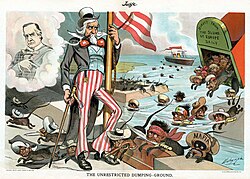
In the United States, hostility toward Italians grew during the massive waves of immigration in the early 20th century. Many of these immigrants came from agrarian backgrounds and were Catholic, placing them at odds with the nation's predominantly Protestant majority. Because many newcomers lacked formal education and competed for low-paying jobs and housing, they became targets of significant social friction.
This prejudice was deeply intertwined with a long-standing anti-Catholic tradition in America, inherited from centuries of European religious conflict. While the nativist movements of the 1840s and 1850s—which targeted Irish and German Catholics—had faded by 1880, Italian immigrants faced a similar wall of animosity. Unlike previous groups, Italians often arrived without established religious leadership to help them integrate. To address this, Pope Leo XIII sent missionaries, including Sister Francesca Cabrini, to establish parishes like Our Lady of Pompeii in New York City to support these communities.
Public perception was further damaged by the Black Hand racket, a criminal element in some eastern cities that used extortion and intimidation to extract money from wealthy immigrants and shop owners. Later, in the 1920s and 1930s, hundreds of individuals fled to the U.S. to escape the Fascist government's crackdown on the Mafia in Sicily, further complicating the image of the Italian immigrant.
Violence and Systemic Persecution
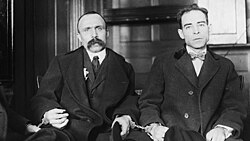
The prejudice against Italians often escalated into state-sanctioned or mob violence. One of the most infamous cases was the 1920 trial of Sacco and Vanzetti in Massachusetts. Accused of robbery and murder, the two Italian immigrants were subjected to a trial heavily biased by their anarchist political views. Despite global protests, they were executed. Decades later, in 1977, Governor Michael Dukakis declared a memorial day for them, stating they had been unfairly convicted.
The Ku Klux Klan (KKK) also integrated anti-Italianism into its ideology after 1915. The group targeted Southern Europeans to maintain the dominance of White Anglo-Saxon Protestants. This activity was not limited to the South; the KKK was active in northern and midwestern cities, reaching a peak of influence in 1925. In Vineland, New Jersey, where Italians made up 20% of the population, the KKK sparked mass protests in 1933 before eventually losing its power in the city.
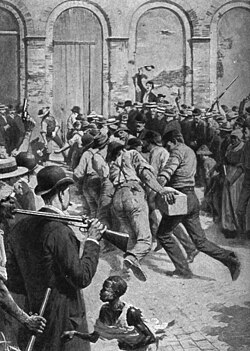
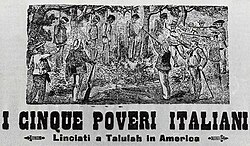
Other violent outbursts occurred throughout the era, including the 1899 lynchings in Tallulah.
Media Stereotypes and the "Mobster" Myth
Stereotyping has persisted long after the era of mass immigration, particularly in cinema. A study by the Italic Institute of America (1996–2001) analyzed 2,000 films and found that more than two-thirds portrayed Italian-Americans negatively. Since the release of The Godfather in 1972, an average of nine films per year have featured Italian-Americans as mobsters.
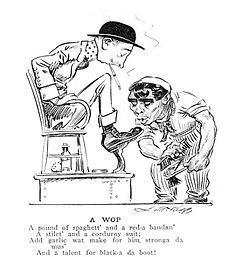
However, statistics suggest these portrayals are vastly disproportionate. According to 2015 FBI data, there were approximately 3,000 members and associates of Italian-American organized crime. In a population of roughly 18 million Italian-Americans, this means only one in 6,000 is active in organized crime.
Global Manifestations of Italophobia
United Kingdom
In the UK, anti-Italian sentiment was linked to political movements. Nancy Mitford's 1935 novel Wigs on the Green satirized British fascists and the Italians who supported them. When Mussolini allied with Hitler in 1940, the British government ordered the internment of "enemy aliens." This led to nationwide riots in June 1940 and the arrest of thousands of Italian men between the ages of 17 and 60.
Libya, Yugoslavia, and East Africa
In Libya, ethnic Italians constituted about 18% of the population during the colonial era. Following the rise of independence movements and the seizure of power by Muammar Gaddafi, all remaining ethnic Italians were expelled in 1970 during the "Day of Revenge."
In Yugoslavia, the Treaty of Peace with Italy (1947) shifted territories in Istria and Dalmatia to Yugoslav control. Under Josip Broz Tito, up to 350,000 ethnic Italians left the region due to economic insecurity and ethnic hatred. Some scholars note a drastic drop in the Dalmatian Italian population from 45,000 in 1848 to just 300 in modern times, citing democide and ethnic cleansing.
In the late 1940s, Somalia and Ethiopia also saw violent anti-Italian sentiment. In January 1948, a nationalist rebellion in Mogadishu resulted in the deaths of 54 Italians, primarily women and children.
France
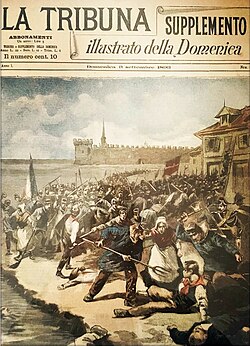
France experienced early violence in August 1893 during the massacre at Aigues-Mortes. Italian immigrant workers were attacked by French villagers and laborers; death toll estimates range from 8 to 150 people.
Key Facts
- Definition: Anti-Italianism (Italophobia) is prejudice and discrimination against people of Italian descent.
- US Drivers: Driven by anti-Catholicism, xenophobia, and competition for low-wage labor.
- Sacco and Vanzetti: A landmark case of judicial bias where two Italian anarchists were executed despite evidence of a mishandled trial.
- Media Bias: Over 66% of films studied by the Italic Institute of America portrayed Italian-Americans negatively.
- Crime Statistics: Only about 1 in 6,000 Italian-Americans are involved in organized crime, contradicting common cinematic tropes.
- Global Impact: Resulted in mass expulsions in Libya (1970) and ethnic cleansing in Yugoslavia post-WWII.
| Location | Event/Period | Nature of Incident | Impact |
|---|---|---|---|
| France | 1893 | Aigues-Mortes Massacre | 8 to 150 deaths |
| USA | 1920s | Sacco and Vanzetti Trial | Wrongful execution |
| UK | 1940 | WWII Internment | Thousands of men arrested |
| Libya | 1970 | Day of Revenge | Expulsion of all ethnic Italians |
| Yugoslavia | Post-1947 | Ethnic Cleansing | Up to 350,000 displaced |
Frequently Asked Questions
What is the difference between Anti-Italianism and Italophobia?
They are essentially the same; both terms describe negative attitudes, prejudice, and discrimination directed toward Italians or people of Italian ancestry.
Why were Italian immigrants targeted in the United States?
They were targeted due to their Catholic faith (which clashed with the Protestant majority), their lack of formal education, and the economic competition they created for low-paying jobs and housing.
How accurate is the "Mafia" stereotype in media?
It is highly inaccurate. While organized crime exists, 2015 FBI statistics show that only about 1 in 6,000 Italian-Americans are involved in such activities, yet a vast majority of films continue to use the mobster trope.
Who were Sacco and Vanzetti?
They were two Italian immigrants and anarchists tried for robbery and murder in Massachusetts in 1920. Their trial is widely regarded by historians as biased and mishandled due to their ethnicity and political beliefs.
What happened to Italians in Libya in 1970?
Following the seizure of power by Muammar Gaddafi, all remaining ethnic Italians were expelled from the country on October 7, 1970, an event originally called the "Day of Revenge."