Deportation of Soviet Koreans: The 1937 Forced Migration to Central Asia
In the autumn of 1937, one of the most sweeping ethnic cleansing operations in Soviet history took place. Nearly 172,000 Koryo-saram (also known as Koryoin or Soviet Koreans) were forcibly removed from their homes in the Russian Far East and transported thousands of kilometers to the unpopulated regions of Central Asia. This operation, carried out by the NKVD (the Soviet secret police), was a calculated move by the Stalinist regime to secure its borders through a policy of "frontier cleansing."
The deportees were loaded into 124 trains and moved approximately 6,400 kilometers (4,000 miles) to the Kazakh SSR and Uzbek SSR. The official justification was the fear of Japanese espionage, as Koreans were then subjects of the Empire of Japan, a geopolitical rival of the Soviet Union. However, the operation targeted entire families regardless of their individual loyalty to the state.
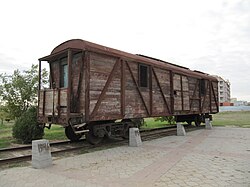
Key Facts
- Date: September–October 1937.
- Victims: Approximately 172,000 Soviet Koreans.
- Perpetrators: The NKVD, under orders from Joseph Stalin and Vyacheslav Molotov.
- Destinations: Kazakh SSR and Uzbek SSR.
- Mortality: Estimated between 16,500 and 50,000 deaths (10–25% mortality rate).
- Primary Motive: Prevention of Japanese espionage and "frontier cleansing."
Historical Background: Koreans in the Far East
Korean migration to the Primorsky Krai region began in the early 1860s. By the 1880s, thousands of Koreans had settled in Cossack villages. A 1884 treaty granted citizenship and land to those already present, though subsequent arrivals faced stricter limits. Following the 1917 Bolshevik Revolution, migration increased as many Koreans fled the Japanese occupation of their homeland.
By the 1920s, over 100,000 Koreans lived in Primorsky Krai. While some were granted citizenship, the majority remained landless. The relationship between the Soviet state and the Korean community soured in the 1920s; a proposed autonomous Korean ASSR was rejected, and small-scale deportations began as early as 1925 to discourage further immigration.
Throughout the early 1930s, anti-Korean violence rose, prompting 50,000 people to flee to Manchuria and Korea. A 1928 decree specifically aimed to remove Koreans from the border areas to make room for Slavic settlers, primarily demobilized Red Army soldiers.
Resolution No. 1428-326cc: The Order for Mass Removal
The formal mechanism for the mass deportation was Decree No. 1428-326сс, adopted on August 21, 1937. Signed by Joseph Stalin and Vyacheslav Molotov, the decree mandated that the relocation be completed by January 1, 1938. While the decree allowed deportees to take movable property and livestock and promised compensation for abandoned assets, the reality was far more brutal.
The NKVD viewed ethnic minorities as a potential "fifth column"—a group within a country that supports an enemy. Consequently, the state did not attempt to distinguish between actual spies and loyal citizens. By October 25, 1937, NKVD official Nikolay Yezhov reported that 36,442 families had been removed. It is estimated that 2,500 Koreans were arrested and likely executed during the operation for protesting their removal.
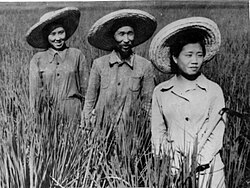
Life in Exile and the Human Cost
The transition to Central Asia was catastrophic. Deportees faced starvation, exposure, and deadly outbreaks of typhus and malaria. Because they were neither classified as "special settlers" nor officially "exiled" (since the state claimed the move was not punitive), their legal status remained ambiguous for years.
It was not until March 1947 that a directive allowed banished Koreans to obtain passports, though these documents restricted their movement to within Central Asia, barring them from returning to the border regions of the Far East.
| Metric | Details/Estimates |
|---|---|
| Total Deported | ~172,000 people |
| Estimated Deaths | 16,500 to 50,000 |
| Mortality Rate | 10% to 25% |
| Distance Traveled | 6,400 km (4,000 mi) |
| Primary Causes of Death | Hunger, exposure, typhus, malaria |
Aftermath and Rehabilitation
Following Stalin's death in 1953, Nikita Khrushchev began a process of de-Stalinization. While he condemned ethnic deportations in his 1956 "secret speech," he failed to specifically mention the Koreans. The community continued to petition for rehabilitation throughout the late 1950s, but it was not until 1982 that Yuri Andropov acknowledged the unequal rights of Soviet Koreans.
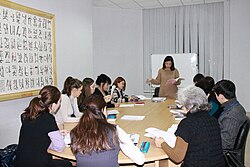
The cultural toll was immense. The deportation severed the community's connection to their ancestral lands and traditions. In 1970, roughly 64% to 74% of Soviet Koreans spoke the language; by the early 2000s, that number plummeted to 10%.
Legal recognition finally arrived in the late Soviet era. In 1989, the Supreme Council of the Soviet Union declared the deportations "illegal and criminal." In 1991, the Russian SFSR denounced the policy as "defamation and genocide," and a 1993 decree officially rehabilitated Soviet Koreans, theoretically allowing their return to the Far East.
Modern Analysis: Primordialism and Ethnicity
Historians analyze this event through the lens of primordialism—the belief that ethnic groups possess permanent, inherent traits. In the 1930s, the Stalinist regime shifted toward this view, equating ethnicity with political loyalty. Because the state viewed nationality as a primordial trait, any person of Korean descent was automatically suspected of loyalty to a non-Soviet power, regardless of their actual ideology or citizenship.
Frequently Asked Questions
Why were the Soviet Koreans deported in 1937?
The official reason was to prevent the infiltration of Japanese spies into the Soviet Far East. Because Koreans were subjects of the Empire of Japan, the Soviet government viewed them as a security risk and a potential "fifth column."
Where were the Koreans sent?
They were forcibly relocated from the Primorsky Krai in the Russian Far East to unpopulated areas of the Kazakh SSR and the Uzbek SSR in Central Asia.
How many people died during the deportation?
Estimates vary, but population statistics suggest between 16,500 and 50,000 people died due to starvation, exposure, and diseases like typhus and malaria, representing a mortality rate of 10% to 25%.
When was the deportation officially recognized as illegal?
The Supreme Council of the Soviet Union declared the deportations "illegal and criminal" on November 14, 1989, and the Russian Federation issued a formal decree of rehabilitation on April 1, 1993.
What is the current population of Koreans in these regions?
As of 2013, the Korean Ministry of Foreign Affairs reported 176,411 Koreans living in the Russian Federation, 173,832 in Uzbekistan, and 105,483 in Kazakhstan.