Korean People: Demographics, Diaspora, and Cultural Heritage
The Korean people, also known as the Korean ethnic group, constitute a distinct population primarily concentrated on the Korean Peninsula. With a total global population of approximately 82 million, they possess a rich history characterized by a strong sense of ethnic identity, a unique linguistic heritage, and a complex modern history of migration and division.
The population is split between two sovereign states: South Korea and North Korea. Beyond the peninsula, a significant global diaspora has established vibrant communities across the Americas, Asia, and Europe, carrying their cultural traditions to every corner of the globe.
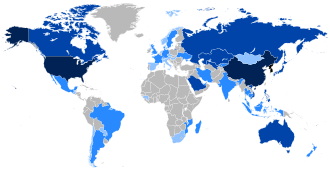
Key Facts
- Total Population: Approximately 82 million people.
- Primary Regions: South Korea (c. 52.1 million) and North Korea (c. 26.3 million).
- Global Diaspora: Approximately 7.3 million people as of 2021.
- Primary Language: Korean, with minority groups speaking Jeju and Korean Sign Language.
- Religious Landscape: Predominantly irreligious, with significant Buddhist, Christian, and Korean shamanic influences.
Demographic Distribution
The vast majority of the Korean population resides within the borders of the two Koreas. As of 2024, South Korea's population stands at approximately 52,081,799, while North Korea's population is estimated at 26,298,666.
The Korean diaspora refers to ethnic Koreans living outside the peninsula. This global community is diverse, ranging from voluntary economic migrants to those displaced by historical conflict and political forced migration.
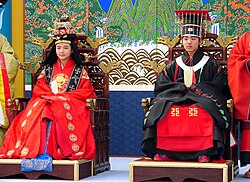
Major Diaspora Hubs
The largest overseas populations are found in the United States and China. The United States hosts over 2.6 million ethnic Koreans, while China is home to approximately 2.35 million. Other significant populations reside in Japan, Canada, and Uzbekistan.
| Country | Estimated Population |
|---|---|
| United States | 2,633,777 |
| China | 2,350,422 |
| Japan | 818,865 |
| Canada | 237,364 |
| Uzbekistan | 175,865 |
| Russia | 168,526 |
| Australia | 158,103 |
| Vietnam | 156,330 |
Historical Migration and Ethnic Groups
The movement of the Korean people has been shaped by geopolitical shifts. In Central Asia, populations in Uzbekistan and Kazakhstan, as well as the Russian Far East, are known as Koryo-saram. These individuals are largely descendants of Koreans who were forcibly deported during the Stalin regime of the Soviet Union. Notably, the community in Uzbekistan represents the fifth-largest Korean population outside of Korea.
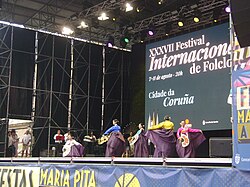
In Japan, the Zainichi Koreans are residents who maintained their Korean heritage following the colonial period. While historical estimates suggested tens of thousands of "semi-Koreans" (individuals of mixed Japanese-Korean parentage) immediately after the war, assimilation has led to a decrease in these numbers over time.
More recent migration trends saw growth in the 1980s in Indonesia, followed by significant increases in the Philippines and Vietnam during the 1990s and 2000s.
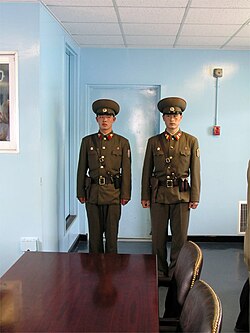
Culture and Language
The Korean people are unified by the Korean language, though regional variations exist, such as the Jeju language spoken on Jeju Island. The cultural identity is a blend of indigenous traditions, such as Korean shamanism, and adopted faiths, primarily Buddhism and Christianity, though a large portion of the modern population identifies as irreligious.
Frequently Asked Questions
What is the total global population of ethnic Koreans?
The total population is approximately 82 million, including those in South Korea, North Korea, and the global diaspora.
Who are the Koryo-saram?
Koryo-saram are ethnic Koreans living in the former Soviet Union, particularly in Uzbekistan, Kazakhstan, and Russia, many of whom are descendants of those forcibly deported during the Stalin era.
What are the largest diaspora communities outside of Korea?
The largest communities are located in the United States (over 2.6 million) and China (over 2.3 million).
What languages are spoken by the Korean people?
The primary language is Korean, though Jeju and Korean Sign Language are recognized as minority languages.
Who are the Zainichi Koreans?
Zainichi Koreans are ethnic Koreans residing in Japan, many of whom are descendants of those who arrived during the colonial period and have maintained their heritage despite pressures to assimilate.