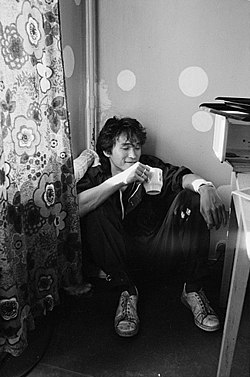
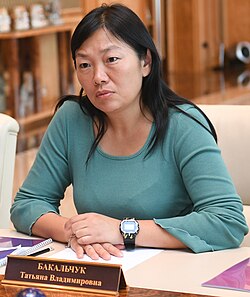
Koryo-saram: The Resilient History of Ethnic Koreans in the Former Soviet Union
The story of the Koryo-saram—ethnic Koreans residing in the former Soviet Union—is one of profound migration, forced displacement, and remarkable cultural preservation. Spanning from the Russian Far East to the steppes of Central Asia, this diaspora has maintained a unique identity that bridges Korean heritage with the diverse landscapes of Eurasia.
Today, approximately 500,000 Koryo-saram live across several independent states, primarily in Uzbekistan and Kazakhstan. While the use of the Korean language has declined in recent generations, their cultural footprint remains visible through cuisine, family names, and a shared history of resilience.
Key Facts
- Total Population: Approximately 500,000.
- Primary Regions: Uzbekistan, Kazakhstan, and Russia.
- Major Historical Event: The 1937 forced deportation to Central Asia.
- Cultural Legacy: Famous for morkovcha (Korean carrot salad).
- Languages: Predominantly Russian, with some Koryo-mar speakers.
A History of Migration and Displacement
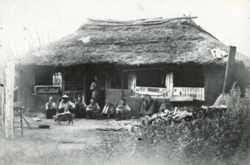
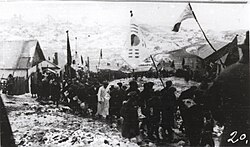
The roots of the Koryo-saram community in Russia date back to the late 19th century, when Koreans began settling in the Russian Far East. This movement accelerated after 1910 as many fled the Japanese colonization of Korea. During this era, the region became a hub for Korean independence activists, including notable figures such as Hong Beom-do and Chŏng Sangjin.
The 1937 Deportation
A defining and tragic turning point occurred in 1937, when the entire Korean population was forcibly deported to Central Asia. This mass movement dispersed the community throughout the Soviet Union, leading to significant populations in Siberia, Uzbekistan, and Kazakhstan. Despite this upheaval, the community managed to rebuild and establish roots in their new homes.
Demographics and Regional Presence
The distribution of Koryo-saram varies significantly by country. While Central Asia holds the largest numbers, substantial communities exist in Russia and Ukraine.
Russia and the Far East
In Russia, the population has seen shifts in location over the decades. While the 2002 census recorded over 148,000 Koreans, the 2010 census showed a shift toward European Russia, though the Far Eastern Federal District remains the region with the highest concentration. The Russian population includes a mix of descendants of the 1937 deportees, North Korean migrant laborers, and newer settlers from South Korea and China.
Central Asia: The Cultural Heartlands
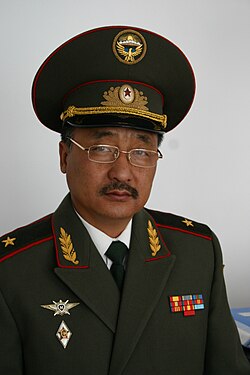
Uzbekistan and Kazakhstan host the largest Koryo-saram populations. In Kazakhstan, cultural life was historically centered in Almaty, which hosted the Koryo Ilbo (a Korean-language newspaper) and the Korean Theatre of Kazakhstan. In Kyrgyzstan, the population has remained relatively stable, supported by organizations like the Korean Centre of Education in Bishkye.
Ukraine and the Impact of Conflict
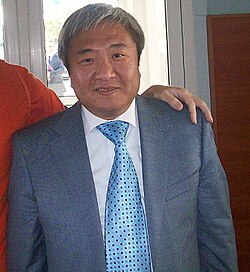
In Ukraine, the Korean community has historically been concentrated in cities like Kharkiv, Kyiv, and Odesa. Notable Korean-Ukrainians include former Zaporizhzhia mayor Oleksandr Sin. However, the 2022 Russian invasion of Ukraine has caused significant movement, with several thousand Korean-Ukrainians seeking safety in South Korea.
Cultural Identity and Cuisine
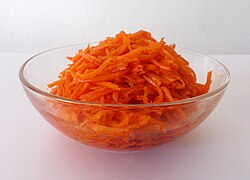
Despite the linguistic shift toward Russian, Koryo-saram have preserved many aspects of their heritage. Korean surnames remain a vital link to their ancestry. The community has also made a significant culinary impact; morkovcha, a spicy Korean carrot salad, has become a staple in grocery stores throughout the former Soviet Union.
Religion and Language
The religious landscape of the Koryo-saram is diverse, including Orthodox Christianity, Buddhism, Protestantism, Catholicism, and Islam. While the native Korean language (Koryo-mar) is becoming rarer, cultural organizations continue to promote Korean language and traditions.
Summary of Population by Region
| Country/Region | Approximate Population |
|---|---|
| Uzbekistan | 174,200 |
| Kazakhstan | 118,450 |
| Russia | 87,819 |
| Kyrgyzstan | 17,094 |
| Ukraine | 12,711 |
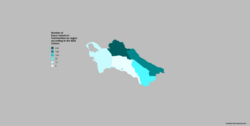
| Turkmenistan | 2,500 |
| Tajikistan | 634 |
Frequently Asked Questions
What is the meaning of the term Koryo-saram?
Koryo-saram refers to the ethnic Koreans who live in the former Soviet Union, a term that distinguishes them from Koreans living in South Korea or North Korea.
Why were Koreans deported to Central Asia in 1937?
The entire Korean population in the Soviet Union was forcibly deported to Central Asia in 1937, a move that fundamentally reshaped the community's geography and history.
Is the Korean language still spoken by Koryo-saram?
While many Koryo-saram speak Russian as their primary language, some elements of the Korean language and culture are still maintained through community organizations and family traditions.
What is morkovcha?
Morkovcha is a Korean-style carrot salad that has become highly popular and widely available in grocery stores across the former Soviet Union.
Are Koryo-saram moving to South Korea?
Yes, many Koryo-saram move to South Korea for economic or cultural reasons. Additionally, recent conflicts, such as the Russo-Ukrainian War, have prompted many Korean-Ukrainians to relocate to South Korea for safety.
![Community centers for Gwangju Koryoin Village, which is one of the largest ethnic enclaves of Koryo-saram in South Korea.[50] (2022)](/images/bf/42/bf42de70de9d55a8cb12edcce194a69dc01f62928a7937f473eadfc7c8157eb9.jpg)