Vitrified Forts: The Mystery of Ancient Glassy Walls
Across the landscapes of western and northern Europe, there exist enigmatic stone enclosures known as vitrified forts. These structures are defined by their walls, which have undergone vitrification—a process where intense heat transforms stone into a glass-like substance. While once believed to be unique to Scotland, these fascinating ruins have been identified in various regions, offering a glimpse into ancient engineering and the ritualistic destruction of the past.
These forts are typically situated on hilltops to maximize defensive advantages, with their overall shape often following the natural contours of the flat summits they enclose. The walls, referred to as vitrified ramparts, vary significantly in scale; some reach heights of over 12 feet (3.7 m) and are broad enough to resemble embankments. To bolster weak points, builders often employed double or triple walls, and in some instances, vast lines of ramparts made of unhewn, unvitrified stone blocks surround the central vitrified core.
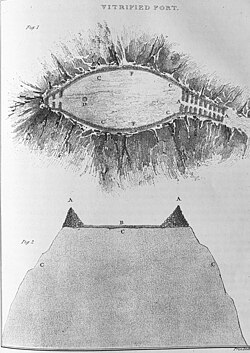
The Vitrification Process
The most striking feature of these forts is the absence of lime or cement. Instead, the structures are consolidated through the fusion of the rocks themselves. This fusion, caused by extreme heat, varies in intensity across different sites and even within the same wall:
- Partial Melting: Some stones are merely calcined or partially melted.
- Edge Fusion: Adjoining edges of stones are fused, cementing them firmly together.
- Glassy Coating: Rock fragments are enveloped in an enamel-like glassy coating, binding them into a uniform mass.
- Complete Vitrification: In rare cases, the entire length of the wall has been transformed into a single solid mass of vitreous substance.
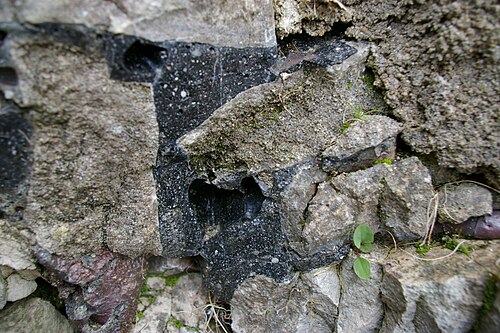
The Debate Over Purpose
The reason for this intense heating remains a subject of archaeological debate. Early antiquarians suggested that vitrification was a deliberate method to strengthen the walls. However, scientific analysis reveals that the heating process actually weakens the structural integrity of the stone. Furthermore, it is unlikely that battle damage caused the effect, as the level of heat required suggests carefully maintained fires rather than accidental blazes.
Current expert consensus suggests that vitrification was the result of deliberate destruction. This may have occurred after a site was captured by an enemy or as an act of ritual closure by the occupants at the end of the fort's active life. This phenomenon appears across different eras, found in both Iron Age and early medieval forts in Scotland.
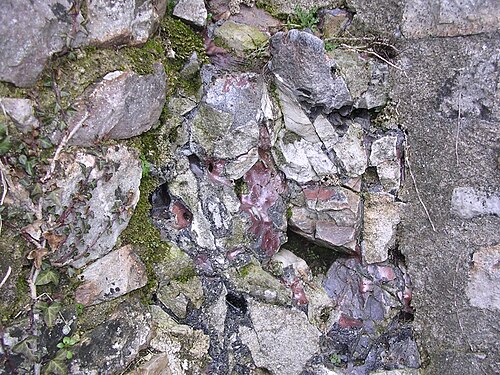
Key Facts
- Definition: Stone enclosures where walls have been fused into glass-like masses via intense heat.
- Distribution: Primarily found in Scotland, but also present in Ireland, France, Germany, Sweden, and Hungary.
- Structural Impact: Vitrification weakens the wall rather than strengthening it.
- Cause: Likely deliberate destruction or ritual closure rather than accidental fire or construction technique.
- Scale: Some walls exceed 12 feet (3.7 m) in height.
Global Distribution and Notable Sites
Since John Williams first described these ruins in 1777, over 70 examples have been documented in Scotland. While Scotland holds the highest concentration, these sites are found throughout Europe, including the Isle of Man, Ireland (County Londonderry and County Cavan), and various regions in Germany (such as Saxony and Thuringia) and France.
| Site Name | Location | Notable Feature |
|---|---|---|
| Dun Mac Sniachan | Argyll, Scotland | Largest area (245 m by 50 m) |
| Tap o' Noth | Aberdeenshire, Scotland | Subject of modern experimental archaeology |
| Sainte-Suzanne | Mayenne, France | Significant continental example |
| Broborg | Uppland, Sweden | Scandinavian vitrified hill-fort |
| Castle Hill | West Yorkshire, England | Rare English example |
Experimental Archaeology
The mystery of how these walls were vitrified was explored in the 1980 television series Arthur C. Clarke's Mysterious World. Archaeologist Ian Ralston attempted to recreate the process at Tap o' Noth by piling stones and lighting a massive bonfire, building on experiments conducted by V. Gordon Childe and Wallace Thorneycroft in the 1930s. While the experiment produced some partially vitrified stones, it failed to explain how such large-scale vitrification could be achieved across entire fortifications.
Frequently Asked Questions
Did vitrification make the forts stronger?
No. Although it was once believed that the process was intended to harden the walls, evidence shows that the intense heat actually weakens the stone structure.
Where are the most vitrified forts located?
The highest concentration is found in Scotland, with over 70 identified sites, though they also appear in France, Ireland, Germany, Sweden, and Hungary.
How was the vitrification achieved?
It was achieved through the application of intense heat, likely from large, carefully maintained fires that caused the rocks to melt and fuse together.
Why were these forts vitrified?
Experts believe the process was a form of deliberate destruction, either carried out by an invading force after capturing the fort or by the inhabitants as a ritual act to mark the end of the site's use.
Are these forts only from the Iron Age?
No, vitrification has been found in both Iron Age and early medieval forts, meaning the process does not have a single, specific chronological marker.