Israelites: Origins, Kingdoms, and the History of an Ancient People
The Israelites, also known as the Children of Israel, were an ancient Semitic-speaking people who inhabited the region of Canaan during the Iron Age. Closely associated with the Hebrews, they spoke Biblical Hebrew, an archaic form of the language. Their history is a complex tapestry of biblical narrative and archaeological evidence, tracing their journey from indigenous roots to the establishment of powerful regional kingdoms.
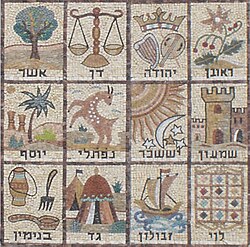
In biblical tradition, the Israelites were organized into the Twelve Tribes of Israel, which eventually coalesced into two distinct sovereign states: the Kingdom of Israel and the Kingdom of Judah. However, modern scholarship provides a broader perspective, suggesting that the Israelites emerged from indigenous Canaanite populations and other diverse groups within the ancient Near East.
![Ramesses III prisoner tiles depicting precursors of the Israelites in Canaan: Canaanites from city-states and a Shasu leader.[100][101][102]](/images/d2/eb/d2ebe62e4df39a4f480d33e2ccded38547f79e9e3b1f3c724b3c84fbda22d18b.png)
Key Facts
- Language: Spoke Biblical Hebrew, a Semitic language.
- Origins: Emerged from indigenous Canaanite populations and other Near Eastern peoples.
- Religion: Centered on the worship of Yahweh, an ancient Semitic god.
- Political Structure: Originally divided into Twelve Tribes, later forming the kingdoms of Israel and Judah.
- Major Conflicts: Conquered by the Neo-Assyrian Empire (c. 720 BCE) and the Neo-Babylonian Empire (c. 586 BCE).
The Emergence of Israelite Culture
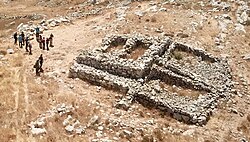
The development of the Israelites is characterized by their transition from highland settlements in Canaan to organized political entities. Their early culture was deeply intertwined with the surrounding Canaanite environment, though they eventually developed a distinct ethno-religious identity.
Central to this identity was their religion, which revolved around Yahweh. While Yahweh was an ancient Semitic deity, he held significantly less prominence in the broader Canaanite pantheon before becoming the focal point of Israelite faith.
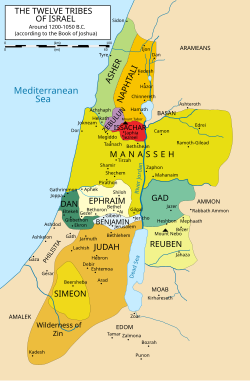
The Twelve Tribes and Territorial Allotment
According to biblical accounts, the land was divided among the Twelve Tribes. This territorial organization helped manage the population and resources of the region before the rise of a centralized monarchy.
The Rise and Fall of the Israelite Kingdoms
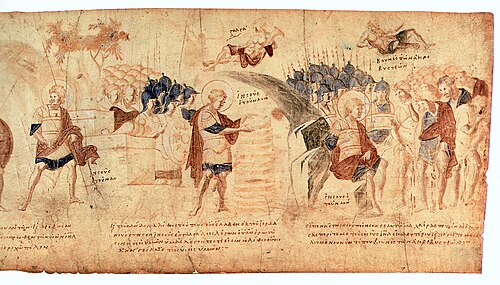
The political history of the Israelites is marked by a period of unification followed by a sharp division. The United Monarchy served as the foundation for the two subsequent kingdoms: Israel in the north and Judah in the south.
The Kingdom of Israel and the Assyrian Captivity
The northern Kingdom of Israel faced significant geopolitical pressure from the expanding Neo-Assyrian Empire. Around 720 BCE, the Assyrians conquered the kingdom, leading to the Assyrian captivity. Due to the resettlement policies of the Assyrian Empire, much of the northern population was irreversibly dispossessed.
![Part of the gift-bearing Israelite delegation of King Jehu, Black Obelisk, 841–840 BCE.[120]](/images/23/bd/23bd054938b8ff61f4d06000b6f70e23223325297cdd4e0d8944a4daa4572740.jpg)
The Kingdom of Judah and the Babylonian Exile
The southern Kingdom of Judah survived longer but eventually fell to the Neo-Babylonian Empire around 586 BCE. This conquest triggered the Babylonian captivity, during which the elite and many citizens were exiled to Babylon.
Return and Rehabilitation
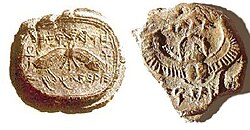
The trajectory of the Judahites differed from that of the northern tribes. Following the fall of Babylon in 539 BCE, the Achaemenid king Cyrus the Great permitted the exiled Judahites to return to their homeland and rehabilitate their country, laying the groundwork for future developments in the region.
![Map of the Holy Land, Pietro Vesconte, 1321, showing the allotments of the tribes of Israel. Described by Adolf Erik Nordenskiöld as "the first non-Ptolemaic map of a definite country"[79]](/images/f4/f5/f4f5308aa170b08e55ac2d116c58d8789c0ab01b156d38beec2ae7040ebbdb62.jpg)
Summary of Israelite History
| Period/Event | Approximate Date | Key Outcome |
|---|---|---|
| Emergence | Iron Age | Development from Canaanite populations |
| United Monarchy | Early Iron Age | Centralized rule over Israel and Judah |
| Assyrian Conquest | c. 720 BCE | Fall of Northern Kingdom; Assyrian captivity |
| Babylonian Conquest | c. 586 BCE | Fall of Southern Kingdom; Babylonian captivity |
| Persian Period | Post-539 BCE | Return of Judahites under Cyrus the Great |
Legacy and Descendants
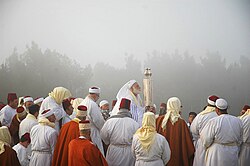
The legacy of the Israelites persists through various modern Levantine groups and other populations worldwide who claim Israelite ancestry. This includes genetic and cultural lineages that have evolved over millennia, from the Hellenistic and Roman periods to the present day.
Frequently Asked Questions
Who were the Israelites?
The Israelites were an ancient Semitic-speaking people of the Iron Age who lived in Canaan. They are associated with the Hebrews and are known for forming the kingdoms of Israel and Judah.
How did the Israelites originate?
While biblical narratives describe a specific lineage, modern scholarship suggests they emerged from indigenous Canaanite populations and other peoples of the ancient Near East.
What happened during the Assyrian and Babylonian captivities?
The Assyrian captivity occurred around 720 BCE after the fall of the Kingdom of Israel, resulting in widespread dispossession. The Babylonian captivity occurred around 586 BCE after the fall of the Kingdom of Judah, though the Judahites were later allowed to return by Cyrus the Great.
What was the primary religion of the Israelites?
Their religion centered on the worship of Yahweh, a Semitic god who was less prominent in the broader Canaanite religious system before the rise of Israelite identity.
What is the difference between the Kingdom of Israel and the Kingdom of Judah?
The Kingdom of Israel was the northern state, which was conquered by the Assyrians. The Kingdom of Judah was the southern state, which was conquered by the Babylonians but eventually saw its people return to the land.