Jewish People: A History of Identity, Diaspora, and Culture
The Jewish people are a distinct ethnoreligious group—a community defined by both a shared ancestral heritage and a common religious tradition. While often associated primarily with the religion of Judaism, Jewish identity encompasses a complex blend of ethnicity, nationality, and faith that has persisted across millennia and continents.
From their origins in the ancient Near East to the establishment of the modern State of Israel and the vast global diaspora, the Jewish experience is marked by a resilient commitment to cultural preservation and a profound connection to their ancestral homeland.
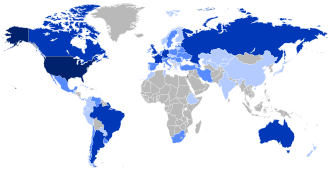
Key Facts
- Global Population: Approximately 15.2 million people (estimated up to 20 million when including those with one Jewish parent).
- Primary Population Centers: Israel and the United States hold the largest communities.
- Core Languages: Modern Hebrew, English, Russian, French, and Spanish; with Biblical Hebrew and Aramaic serving as sacred languages.
- Identity: Recognized as an ethnos (a people or nation) regardless of the existence of a sovereign state.
- Major Divisions: Historically divided into various ethnic and cultural groups, including Ashkenazi and Sephardic Jews.
Origins and Ancient History
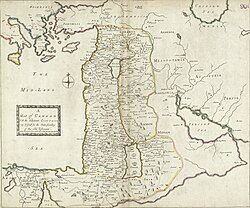
The roots of the Jewish people are found in the ancient Levant. Early biblical contemporaries, such as Abraham and Joseph, represent the earliest stages of Hebrew identity in the region of Canaan.
![Egyptian depiction of the visit of Western Asiatics in colorful garments, labeled as Aamu. The painting is from the tomb of a 12th dynasty official Khnumhotep II at Beni Hasan, and dated to c. 1900 BCE. Their nearest Biblical contemporaries were the earliest of Hebrews, such as Abraham and Joseph.[93][94][95][96]](/images/0f/51/0f51360d501849f1f2a043b9ca077a72382bf39e625896a099a3ca31aa70d160.jpg)
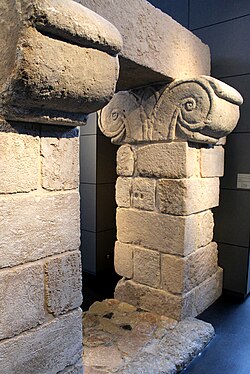
The development of the kingdoms of Israel and Judah established the foundational political and social structures of the people. Archaeological evidence, such as the royal fort gate at Hazor, points to the sophistication of these early societies during the 9th century BCE.
![Depiction of King Jehu, tenth king of the northern Kingdom of Israel, on the Black Obelisk of Shalmaneser III, 841–840 BCE.[127] This is "the only portrayal we have in ancient Near Eastern art of an Israelite or Judaean monarch".[128]](/images/76/fe/76fe4f39365aca59c23373c53cc0a47c64b6a2323a220b84bb720ddde95c4fe0.jpg)
The Second Temple Period and Roman Conflict
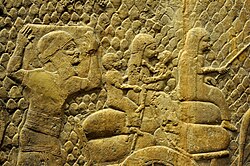
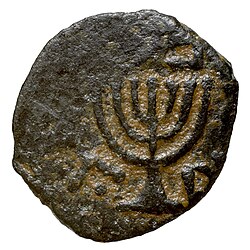
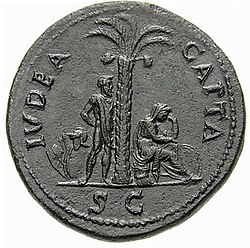
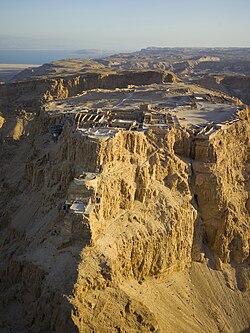
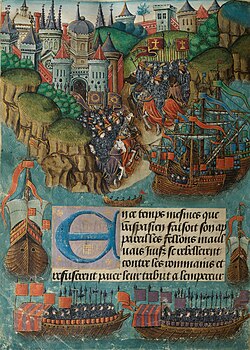
The Second Temple period was a pivotal era of religious and national consolidation. However, this period also saw intense conflict with the Roman Empire. Following Jewish uprisings, the Romans destroyed the Second Temple in 70 CE and eventually expelled many from the land, leading to a widespread dispersion known as the Diaspora.
The Diaspora and Global Migration
For centuries, Jewish communities lived as minorities across the globe, adapting to various cultures while maintaining their distinct identity through the Hebrew language and religious practice. This period was characterized by both cultural flourishing and severe persecution.
Middle Ages and Early Modern Period
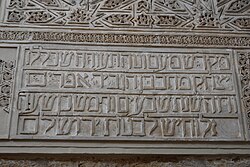
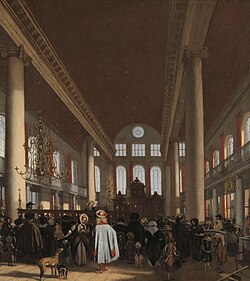
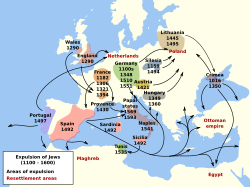
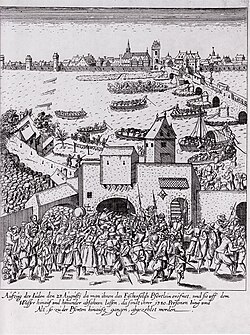
In Europe and North Africa, Jewish populations faced cycles of acceptance and expulsion. While some found stability in the Islamic world of Spain, others faced systemic persecution and forced migrations across Europe between 1100 and 1600.
Modern Era and the State of Israel
The 19th and 20th centuries saw massive shifts in population. Millions of Jews fled pogroms—organized massacres—in the Russian Empire, seeking safety in the United States and other Western nations. The horrors of the Holocaust further decimated European populations, leading to a renewed drive for a sovereign homeland.
![In this Rosh Hashana greeting card from the early 1900s, Russian Jews, packs in hand, gaze at the American relatives beckoning them to the United States. Over two million Jews fled the pogroms of the Russian Empire to the safety of the U.S. between 1881 and 1924.[302]](/images/1c/67/1c6784922f1da6e1c9c909765c288e1b28cd83946577d6c08c25580d8d45c4d6.jpg)
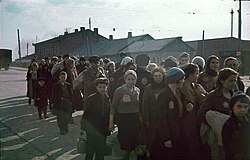
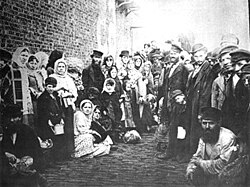
The establishment of the State of Israel provided a national center for the Jewish people, though significant populations remain in the diaspora, particularly in North America.

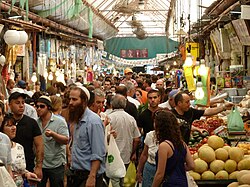
Culture, Language, and Identity
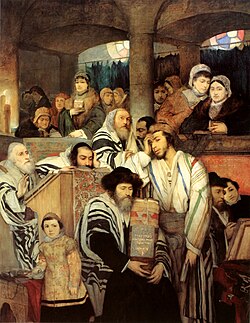
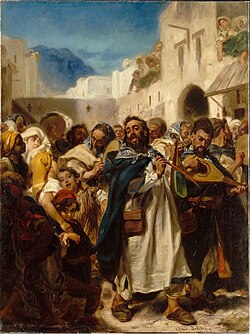
The cornerstone of Jewish national identity has historically been the Hebrew language and alphabet. Over time, various diaspora communities developed their own hybrid languages, such as Yiddish (a blend of German and Hebrew) and Ladino (a blend of Spanish and Hebrew).
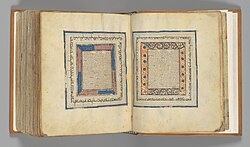
Cultural expression varies by ethnic division. Ashkenazi Jews, primarily from Central and Eastern Europe, and Sephardic Jews, primarily from Spain and North Africa, developed distinct liturgical and social traditions.
Demographic Overview
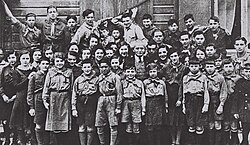
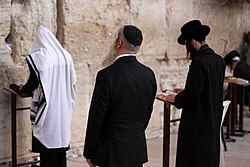
Today, the Jewish population is distributed globally, with the highest concentrations in Israel and the United States. The following table summarizes the estimated populations in key regions.
| Region/Country | Estimated Population |
|---|---|
| Israel (incl. occupied territories) | 7,300,000 – 7,455,200 |
| United States | 6,300,000 – 7,500,000 |
| France | 438,500 – 550,000 |
| Canada | 400,000 – 450,000 |
| United Kingdom | 312,000 – 330,000 |
| Argentina | 171,000 – 240,000 |
| Russia | 132,000 – 290,000 |
![A menorah dominating the main square in Birobidzhan. An estimated 70,000 Jews live in Siberia.[303]](/images/7f/d7/7fd7e067d425d9b96d1d60286338f92306ab659ae9b32aa7fc987fb76e593e9f.jpg)

Frequently Asked Questions
What is the difference between a Jew and a follower of Judaism?
A Jew is a member of an ethnoreligious group, meaning identity can be based on ancestry (ethnicity) or faith (religion). While most Jews follow Judaism, some may be irreligious but still identify as Jewish due to their heritage.
What are the main ethnic divisions within the Jewish people?
The two most prominent divisions are Ashkenazi Jews, who originate from Central and Eastern Europe, and Sephardic Jews, who originate from the Iberian Peninsula and North Africa.
What languages are historically associated with Jewish identity?
Biblical Hebrew and Aramaic are the sacred languages. In the diaspora, communities developed Yiddish and Ladino, while modern Jews predominantly speak the languages of their respective countries, with Modern Hebrew being the primary language of Israel.
What is the Diaspora?
The Diaspora refers to the dispersion of the Jewish people from their ancestral homeland in Israel to various parts of the world, a process that accelerated after the Roman destruction of Jerusalem.
How large is the global Jewish population?
The total population is estimated at approximately 15.2 million, though this number can rise to 20 million when including individuals with at least one Jewish parent.