Ashkenazi Jews: History, Genetics, and Global Distribution
The Ashkenazim (singular: Ashkenazi) represent a diverse Jewish diaspora group whose ancestral roots are primarily tied to Central and Eastern Europe. With an estimated global population of 10 to 13 million, they have shaped a distinct cultural, linguistic, and religious identity over centuries of migration and adaptation.
From the development of the Yiddish language to the establishment of vibrant communities in the Americas and Israel, the Ashkenazi experience is a testament to resilience in the face of systemic persecution and the enduring strength of communal tradition.
Key Facts
- Estimated Population: 10–13 million people worldwide.
- Primary Languages: Hebrew, Yiddish, English, Russian, German, French, and Ukrainian.
- Core Regions: Historically Central and Eastern Europe; currently high concentrations in the United States and Israel.
- Genetic Heritage: A complex blend of Middle Eastern and European ancestries.
- Cultural Markers: Distinct liturgy, customs, and the use of Yiddish (a fusion of German, Hebrew, and Aramaic).
Historical Evolution
Early Communities and Antiquity
The origins of the Ashkenazi population are linked to the Jewish-Roman Wars and the subsequent movement of Jewish populations during late antiquity. Early communities began to establish themselves in Europe, moving from the Mediterranean toward the Rhine Valley and beyond.
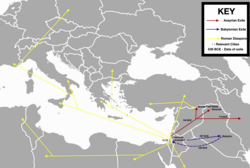
The Middle Ages and the Rise of Ashkenaz
During the Early and High Middle Ages, Jewish life in Europe was characterized by both growth and extreme volatility. In Germany, the region known as "Ashkenaz" became a center of Jewish learning and commerce. However, this period also saw the rise of mandatory identifiers, such as the yellow badge, and violent pogroms.
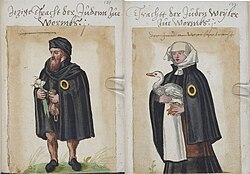
The Old Synagogue in Erfurt, Germany, stands as a physical reminder of this era, believed to be the oldest intact synagogue building in Europe.
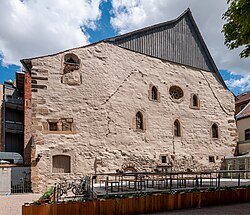
The Late Middle Ages were marked by severe persecution, including mass killings. Woodcuts from the 15th century depict the brutal reality of these events, such as the burning of Jews in Deggendorf in 1338.
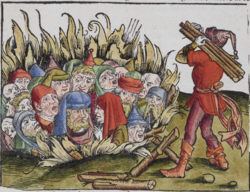
Expansion into Eastern Europe
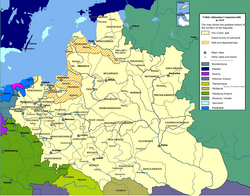
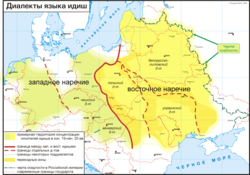
As conditions shifted, many Jews migrated eastward into the Polish-Lithuanian Commonwealth, where they found a period of relative stability and growth. This expansion led to the development of distinct Eastern and Western Ashkenazi dialects and customs.
The Modern Era and the Holocaust
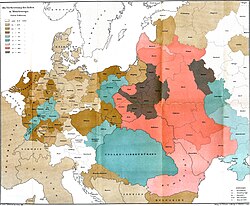
By the 19th century, Ashkenazi populations were widely distributed across Central Europe. However, the 20th century brought the catastrophe of the Holocaust, which decimated Jewish communities across the continent. In the aftermath, survivors migrated in large numbers to the United States and the newly established State of Israel.
Global Distribution and Demographics
Today, the Ashkenazi population is concentrated primarily in North America and Israel. In Israel, Ashkenazi Jews comprised approximately 80% of the Jewish population by 1948, prior to the arrival of larger numbers of Sephardic and Mizrahi Jews.
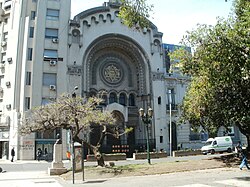
The following table provides a snapshot of the Ashkenazi population relative to the total Jewish population in key countries.
| Country | Total Jewish Population | Ashkenazi Population |
|---|---|---|
| United States | 6,300,000–7,500,000 | 5,700,000–6,750,000 |
| Israel | 7,300,000–7,455,200 | 3,200,000–3,750,000 |
| Canada | 400,000–450,000 | 350,000 |
| United Kingdom | 312,000–330,000 | 273,000 |
| France | 438,500–550,000 | 180,000–240,000 |
| Argentina | 171,000–240,000 | 147,000 |
Genetics and Ancestry
Modern genetic research uses PCA plots (Principal Component Analysis) to visualize the relationship between Ashkenazi Jews and other global populations. These studies generally indicate a mixed ancestry consisting of Middle Eastern and European lineages.
![A PCA plot of samples from Ashkenazi and other Jewish populations, as well as HGDP's Middle Eastern and European populations.[5]](/images/fd/8c/fd8cd1a9ef896491459504294d0903e0184770d1f31e5da14ff94ea13af519ab.png)
Various studies have attempted to quantify this split. For example, some research suggests a Middle Eastern contribution of roughly 23.8% and a European contribution of 72.1%, while other studies, such as Agranat-Tamir et al. (2020), suggest a higher Middle Eastern component of 59%.
Research into maternal lineages (mitochondrial DNA) has suggested that many Ashkenazi maternal ancestors may have been European women who converted to Judaism, while paternal lineages (Y-chromosomal DNA) show stronger links to the Levant.
Cultural and Religious Life
Ashkenazi identity is deeply tied to Ashkenazic liturgy—the specific prayers and musical traditions used in their synagogues. Community life was historically organized around the chevra kadisha, or burial society, which ensured that all members were buried according to Jewish law.
![Prague's chevra kadisha, or burial society (oil, c. 1800)[159]](/images/15/80/1580a241c8945a100b67e364068a4a0e34a75a76815fe42213677cc86af8fe45.jpg)
Frequently Asked Questions
What is the difference between Ashkenazi and Sephardic Jews?
The primary difference is geographic and cultural. Ashkenazim historically settled in Central and Eastern Europe (Germany, Poland, Russia), while Sephardim settled in the Iberian Peninsula (Spain, Portugal) and later North Africa and the Middle East.
What is Yiddish?
Yiddish is the historical language of Ashkenazi Jews, combining elements of High German with Hebrew, Aramaic, and various Slavic languages.
Where do most Ashkenazi Jews live today?
The largest populations are currently found in the United States and Israel.
What does genetic research say about Ashkenazi origins?
Most studies conclude that Ashkenazi Jews possess a mixture of Levantine (Middle Eastern) and European DNA, though the exact percentages vary by study.
What is the significance of the "Ashkenaz" name?
The term "Ashkenaz" is the biblical name for a region associated with Central Europe, specifically Germany, which became the heartland of this Jewish community in the Middle Ages.