Litvaks: The History and Heritage of Lithuanian Jews
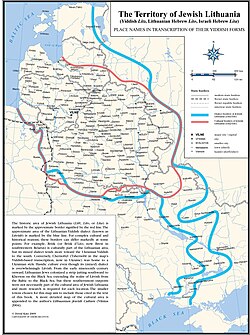
The Litvaks (Yiddish: Litvakes; Hebrew: Lita'im) are a distinct group of Ashkenazi Jews who historically resided in the territory of the former Grand Duchy of Lithuania. This expansive region once encompassed present-day Lithuania, Belarus, Latvia, and parts of Poland, Russia, and Ukraine. Known for their intellectual rigor and commitment to scholarly study, the Litvaks played a pivotal role in shaping Jewish religious and academic life in Eastern Europe.
The term "Litvak" originates from a Polish word for a man from Lithuania. While it initially described a geographic origin, it evolved into a cultural and religious identifier. Today, the term is often used more broadly to describe Haredi (ultra-Orthodox) Jews who follow a non-Hasidic, Ashkenazi style of learning, regardless of their specific ancestral roots.
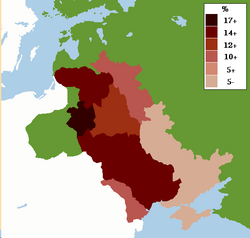
Key Facts
- Geographic Origin: The former Grand Duchy of Lithuania (modern Lithuania, Belarus, Latvia, and parts of Poland, Russia, and Ukraine).
- Intellectual Focus: Strong emphasis on highly intellectual Talmud study and the yeshiva (traditional Jewish academy) system.
- Religious Identity: Historically associated with the Misnagdim, those who opposed the Hasidic movement.
- Tragedy: Over 90% of the Litvak population was murdered during the Holocaust.
- Cultural Marker: A distinct dialect of Yiddish known as Litvishe.
The Intellectual Heartland: Vilna and the Yeshivot
The city of Vilna (modern-day Vilnius) served as the spiritual and intellectual center for Litvaks, earning it the reputation of a world capital for Talmudic learning. This legacy was largely driven by the Vilna Gaon (Rabbi Elijah ben Solomon Zalman, 1720–1797), whose genius and scholarship cemented the city's status.
The Lithuanian approach to Judaism was characterized by a deep focus on theoretical study. The Volozhin yeshiva became the gold standard for Jewish education, influencing numerous later institutions such as Ponevezh, Telshe, Mir, Kelm, and Slabodka. This academic tradition eventually migrated to the United States, giving rise to influential institutions like Yeshiva Rabbi Chaim Berlin and Beth Medrash Govoha in Lakewood.
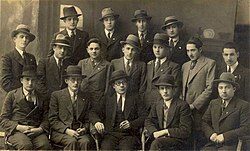
Misnagdim vs. Hasidim
A defining feature of Litvak identity was the tension between the Misnagdim ("opponents") and the Hasidim. The Misnagdim feared that the Kabbalistic beliefs of the Hasidic movement could lead to heresy and threatened traditional Halachic (Jewish law) observance. This divide was not just religious but cultural; Litvaks were often perceived as stoic and intellectual, while Galitzianer Jews (from Galicia) were seen as more emotional and spontaneous.
Language, Culture, and Genetics
The Litvaks spoke Litvishe Yiddish, a dialect used across Lithuania, Belarus, Latvia, Estonia, and northeastern Poland. One of its most distinguishing features is the pronunciation of the vowel holam as [ej]. This linguistic boundary often helps historians map the extent of the Litvak settlement area.
Cultural differences also extended to the kitchen. The "Gefilte Fish Line" serves as a metaphorical boundary between the rich, sweetened dishes of the Galitzianers and the plainer, more savory cuisine preferred by the Litvaks.
From a biological perspective, researchers have noted a potential genetic founder effect within the Lithuanian Jewish population. This is evidenced by a higher prevalence of certain conditions, such as early-onset dystonia and a specific variation linked to familial hypercholesterolemia, which dates back to the 14th century.
Historical Timeline and the Holocaust
The Jewish presence in Lithuania flourished under a 1388 charter granted by Vytautas, which gave Jews the status of freemen. Despite periods of expulsion and restrictive sumptuary laws—such as the requirement to wear yellow caps—the population grew steadily, reaching approximately 250,000 by 1792.
The 20th century brought devastating loss. Before World War II, the Jewish population in Lithuania was roughly 160,000 (7% of the total population), increasing to 250,000 by 1941 due to refugees from Poland. Following the Nazi invasion in June 1941, 141,000 Jews were murdered by Nazis and local collaborators, with mass executions occurring at the Ninth Fort and Paneriai woods.
| Period/Source | Estimated Population | Percentage of Total Population |
|---|---|---|
| Pre-WWII (General) | 160,000 | ~7% |
| 1941 (Including Refugees) | 250,000 | ~10% |
| 2005 Census | 4,007 | 0.12% |
| 2016 (Core Population) | 2,700 | 0.09% |
Frequently Asked Questions
Who are the Litvaks?
Litvaks are Jews who historically lived in the Grand Duchy of Lithuania. They are known for their intellectual approach to Judaism and their historical opposition to Hasidism.
What is the difference between a Litvak and a Misnagged?
While often used interchangeably, "Litvak" refers to an ethnic/geographic origin (Lithuania), whereas "Misnagged" refers to a religious stance (opposing Hasidism). Not all Litvaks were Misnagdim, and not all Misnagdim were ethnically Litvak.
What was the significance of the Vilna Gaon?
The Vilna Gaon was a preeminent scholar who transformed Vilna into a global center for Talmudic study, deeply influencing the intellectual character of Lithuanian Jewry.
How did the Holocaust affect the Litvak community?
The impact was catastrophic, with over 90% of the population murdered. In Vilna alone, over two-thirds of the Jewish community was killed within months of the 1941 Nazi occupation.
What is the "Gefilte Fish Line"?
It is a cultural and culinary boundary separating the savory food traditions of the Litvaks from the sweeter dishes typical of Galitzianer Jews.