Star of David: The History and Evolution of the Magen David
The Star of David, known in Hebrew as Magen David (meaning "Shield of David"), is a globally recognized symbol of Jewish identity and the religion of Judaism. Geometrically, it is a hexagram—a six-pointed star formed by two overlapping equilateral triangles. While it is now inextricably linked to the Jewish people, its journey from a decorative motif to a national emblem is a complex historical evolution.
For centuries, the hexagram appeared in various cultures and contexts. However, its specific association as a distinctive symbol for the Jewish community solidified in 17th-century Prague. By the 19th century, it had spread across Eastern Europe, eventually becoming the central symbol of Zionism and the modern State of Israel.

Key Facts
- Meaning: The Hebrew term Magen David translates literally to "Shield of David."
- Geometry: A hexagram composed of two equilateral triangles.
- Origins: While used earlier, it became a distinct Jewish community symbol in 17th-century Prague.
- Zionism: Adopted as the central symbol of the First Zionist Congress in 1897.
- National Symbol: Featured prominently on the flag of the State of Israel, adopted in 1948.
Early Roots and Ornamental Use
The use of the hexagram in Jewish contexts as a meaningful symbol may date back as far as the 11th century. One of the earliest examples is found in the Leningrad Codex (dated 1008), a famous Tanakh manuscript where the symbol appears on a carpet page.
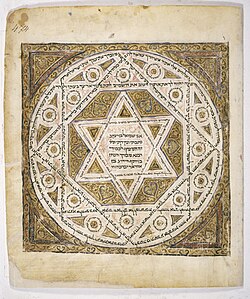
Other early appearances include a 1307 Tanakh manuscript from Toledo, Spain, belonging to Rabbi Yosef bar Yehuda ben Marvas. Evidence of the symbol also appears in architectural contexts, such as the Oshki Monastery in modern-day Turkey (dated CE 973) and the ancient synagogue at Capernaum.


Kabbalistic Interpretations
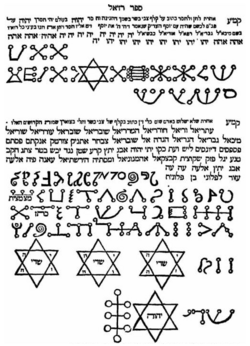
In the realm of Kabbalah (Jewish mysticism), the symbol has been subject to various interpretations. Some researchers in the 1920s suggested that Isaac Luria influenced the symbol's rise by teaching that Seder plate elements should be arranged in a hexagram. However, scholar Gershom Scholem disputed this, arguing that Luria referred to parallel triangles rather than the interlocking hexagram.
Official Usage in Central Europe
The transition of the Star of David from a decoration to an official emblem began in Central Europe. In 1354, King Charles IV of Bohemia granted the Jews of Prague a red flag featuring a hexagram. This official usage expanded over the following centuries:
- 1460: The Jews of Ofen (Buda) used a red flag with two Shields of David and two stars.
- 1512: A large hexagram appeared on the cover of the first Hebrew prayer book printed in Prague.
- 1592: Mordechai Maizel was permitted to place a "flag of King David" on his synagogue in Prague.
- 1648: Following the Battle of Prague, the community was granted a flag with a yellow hexagram on a red background, featuring a "Swedish star" in the center.

By the 1650s, the Jewish community in Vienna adopted a seal with the hexagram, likely influenced by the Prague community. This symbol became so prominent that it was used as a boundary marker between the Christian and Jewish populations in Vienna, with the cross representing Christians and the hexagram representing Jews.
The Rise of a National Symbol
In the 19th century, the Star of David began to represent Jewish identity more broadly. This culminated in the late 1800s with the rise of Zionism. Theodor Herzl, a founder of modern Zionism, sketched a flag in his diaries that included the star, though he did not explicitly describe it as a "Star of David" at the time.
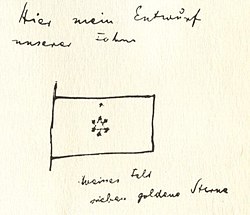
At the First Zionist Congress in 1897, the symbol was chosen for the Zionist flag. Scholars note that the symbol was ideal because it was already widely recognized across Jewish communities but was not exclusively tied to a specific religious sect, allowing it to represent a national hope for the future.
Jewish Identity in Sports
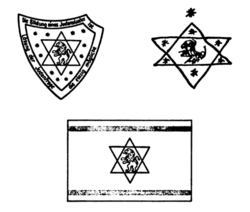
In the early 20th century, the symbol moved into the secular world of athletics to express Jewish pride. For example, Hakoah Vienna, a Jewish sports club founded in 1909, wore the Star of David on their uniforms and won the Austrian League soccer championship in 1925. Similarly, the Philadelphia Sphas basketball team wore the symbol on their jerseys.

The Holocaust and Perversion of the Symbol
During the Holocaust, the Nazi regime perverted the Star of David, using it as a tool of persecution. Jews were forced to wear a yellow badge—often a hexagram with the word Jude (Jew)—to identify and marginalize them. In occupied Poland, variations included white armbands with blue stars.
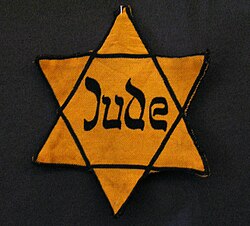
Despite this attempt to use the symbol for shame, some used it as a mark of defiance. For instance, U.S. Army private Hal Baumgarten wore a Star of David on his back during the 1944 invasion of Normandy.
Contemporary Significance
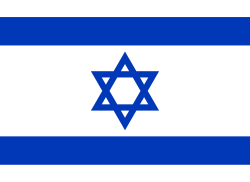
Following the establishment of the State of Israel, the "flag of Zion" was officially adopted on October 28, 1948. The flag features a blue Star of David centered between two horizontal blue stripes on a white background.
| Period | Primary Context | Key Meaning/Use |
|---|---|---|
| 11th - 14th Century | Manuscripts & Architecture | Ornamental and decorative motifs |
| 14th - 17th Century | Central European Communities | Official community flags and seals (e.g., Prague) |
| 19th Century | Eastern Europe / Zionism | Symbol of Jewish identity and national aspiration |
| 1933 - 1945 | Nazi Germany / Occupied Europe | Forced identification badge (Yellow Star) |
| 1948 - Present | State of Israel | National emblem and state flag |
Frequently Asked Questions
What does "Magen David" mean?
Magen David is the Hebrew term for the Star of David, which translates literally to "Shield of David."
When did the Star of David become the primary symbol of Judaism?
While it appeared in earlier manuscripts, it became a distinctive symbol for the Jewish people and their religion starting in 17th-century Prague, later spreading throughout Eastern Europe in the 19th century.
How did the symbol become part of the Israeli flag?
The design originated from the First Zionist Congress in 1897. It was later officially adopted as the flag of the State of Israel on October 28, 1948.
Was the Star of David always a religious symbol?
No. For much of its history, it was used as an ornament or a community identifier. Its transition to a symbol of national and religious identity occurred more recently, particularly through the Zionist movement.
What is the difference between the Star of David and the Seal of Solomon?
While both are hexagrams, the source mentions the Seal of Solomon as a related concept, though the Magen David specifically evolved as the emblem of the Jewish people.