Nazi Germany: The Rise and Fall of the Third Reich (1933–1945)
From 1933 to 1945, the German Reich—later known as the Greater German Reich—transformed from a fragile republic into a unitary fascist state. Under the absolute control of Adolf Hitler, the regime sought to reshape Europe through aggressive territorial expansion, pseudo-scientific racial engineering, and a totalitarian grip on every aspect of German life.
The era is defined by the transition from the Deutsches Reich to the Großdeutsches Reich, a period marked by the systematic dismantling of democracy and the orchestration of the most devastating conflict in human history.
Key Facts
- Duration: 1933 to 1945.
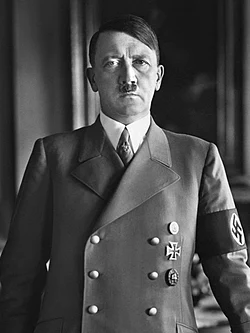
- Head of State: Adolf Hitler (Führer und Reichskanzler from 1934).
- Government Type: Unitary fascist state.
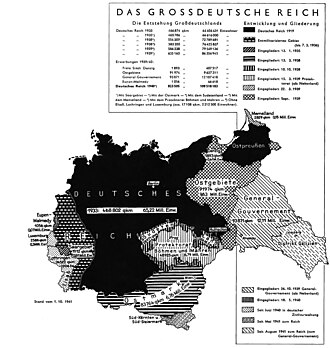
- Peak Territorial Control: Late 1942, encompassing vast areas of Europe and the Soviet Union.
- Core Ideology: Racism, antisemitism, and eugenics.
- Major Conflict: World War II (1939–1945).
The Seizure and Consolidation of Power
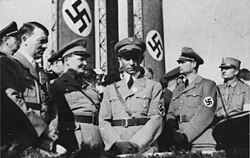
The Nazi ascent began on January 30, 1933, when Adolf Hitler was appointed Chancellor. The regime quickly moved to eliminate political opposition through the Enabling Act of March 23, 1933, which granted Hitler dictatorial powers. By 1934, following the death of President Paul von Hindenburg, Hitler merged the offices of President and Chancellor to become the Führer und Reichskanzler.
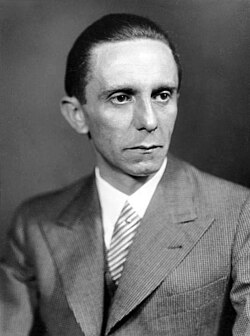
To maintain control, the state employed a combination of terror and propaganda. Joseph Goebbels, the Reich Minister of Public Enlightenment and Propaganda, managed the public image of the regime, while the legal system was rewritten by Nazi jurists to align with party ideology.
Indoctrination and Social Control
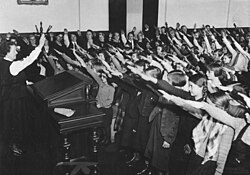
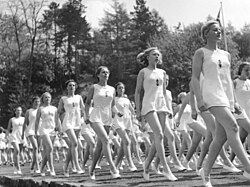
The regime targeted the youth to ensure long-term loyalty. Children were indoctrinated in schools, and organizations like the Bund Deutscher Mädel (League of German Girls) promoted physical fitness and ideological purity. Cultural censorship was absolute, exemplified by the public burning of books by Jewish and leftist authors in May 1933.
![A Nazi book burning on 10 May 1933 in Berlin, as books by Jewish and leftist authors are burnt[430]](/images/12/1c/121c9afc047b5268707ff3bff21155823a11022ebdbf1b5a94bfc80f7648723a.jpg)
Ideology and Racial Policy
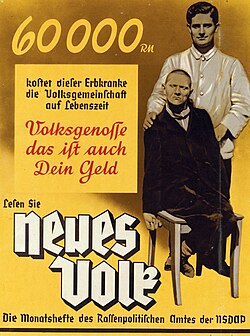
At the heart of the Third Reich was a pseudo-scientific belief in racial hierarchy. The regime implemented eugenics—the practice of improving the human species by selectively mating people with regarded desirable hereditary traits—and targeted those they deemed "unworthy of life."
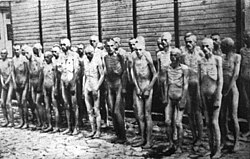
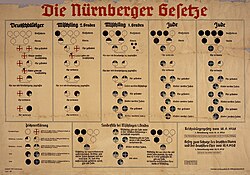
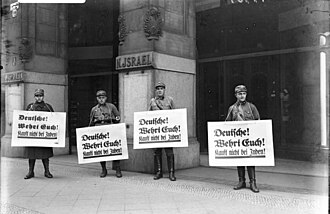
The Nuremberg Laws of September 15, 1935, formalized the persecution of Jews, stripping them of citizenship and forbidding marriage or extramarital relations between Jews and Germans. This systemic antisemitism evolved from social boycotts and discriminatory laws into the Holocaust (the Final Solution), the state-sponsored mass murder of millions of Jews, Romani people, and other persecuted groups.
The Machinery of Terror
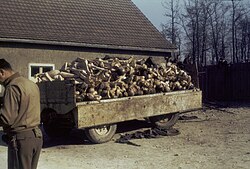
The SS (Schutzstaffel) and SA (Sturmabteilung) served as the regime's paramilitary arms. Under Heinrich Himmler, the SS managed a vast network of concentration camps, such as Dachau and Buchenwald, where political opponents, clergy, and racial "enemies" were imprisoned, tortured, and killed.
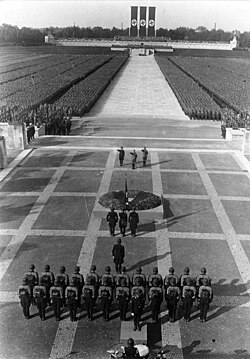
![Prisoner barracks at Dachau Concentration Camp, where the Nazis established a dedicated clergy barracks for clerical opponents of the regime in 1940[402]](/images/a5/52/a5524d40e2595a85524cbe12b24d2ed552baf07e970f91d99a8962487f60d380.jpg)
Military Expansion and World War II
Hitler's foreign policy focused on Lebensraum (living space) for the German people. This led to the Anschluss (annexation) of Austria in March 1938 and the subsequent occupation of Czechoslovakia. The invasion of Poland on September 1, 1939, triggered the start of World War II.
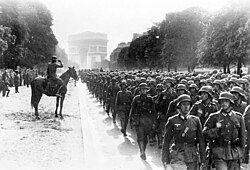
Initially, the Wehrmacht (the unified armed forces of Germany) saw rapid success, conquering much of Western Europe and marching into Paris by June 1940. However, the invasion of the Soviet Union in 1941 marked a strategic turning point.
The Turning Point and Collapse
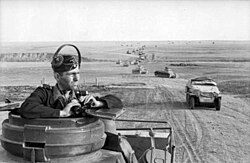
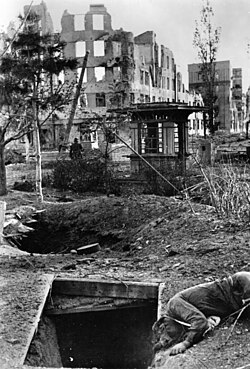
The Battle of Stalingrad (1942–1943) became a catastrophic defeat for the German army, halting their eastward advance. As the Allies closed in from both the East and West, the Reich's resources were depleted. The war ended in Europe with the fall of Berlin on May 2, 1945, and the official surrender on May 8, 1945.
Economic and Industrial Mobilization
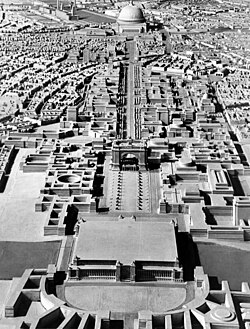
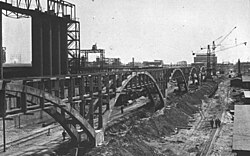
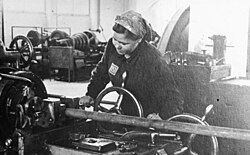
The Nazi economy shifted toward total war mobilization. The state collaborated with major industrial firms, such as IG Farben, to produce synthetic materials and armaments. This industrial machine relied heavily on forced labour, utilizing prisoners from concentration camps to fuel the war effort.
Summary of the Third Reich
| Category | Details |
|---|---|
| Capital | Berlin |
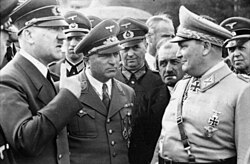
| Key Leaders | Adolf Hitler, Hermann Göring, Joseph Goebbels, Heinrich Himmler |
| Currency | Reichsmark (ℛℳ) |
| Major Laws | Enabling Act (1933), Nuremberg Laws (1935) |
| Territorial Peak | Late 1942 |
| End of Regime | May 8, 1945 (Unconditional Surrender) |
Frequently Asked Questions
What was the Enabling Act of 1933?
The Enabling Act was a law passed on March 23, 1933, that gave Adolf Hitler the power to enact laws without the consent of the Reichstag, effectively turning Germany into a legal dictatorship.
What were the Nuremberg Laws?
Introduced in September 1935, these laws institutionalized racial discrimination by stripping Jewish people of German citizenship and prohibiting marriage or relations between Jews and non-Jewish Germans.
What was the role of the SS in Nazi Germany?
The SS (Schutzstaffel) was an elite paramilitary organization under Heinrich Himmler that served as Hitler's personal guard and later managed the police state and the concentration camp system.
When did the Third Reich officially end?
The regime collapsed in 1945. Adolf Hitler committed suicide on April 30, Berlin fell on May 2, and Germany signed its unconditional surrender on May 8, 1945.
What was the purpose of the Generalplan Ost?
Generalplan Ost was the Nazi regime's secret plan for the colonization of Central and Eastern Europe, involving the ethnic cleansing and displacement of millions of Slavs to make room for German settlers.