Adolf Hitler's Rise to Power in the Weimar Republic
The ascent of Adolf Hitler from a political outsider to the absolute dictator of Germany is one of the most studied transformations in modern history. This journey began in the aftermath of World War I within the Weimar Republic—the democratic government established in Germany after the 1918 armistice. Through a combination of oratorical skill, strategic political shifts, and the exploitation of economic crises, Hitler dismantled German democracy from within.
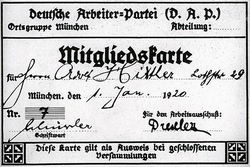
Hitler's entry into politics started in September 1919 when he joined the Deutsche Arbeiterpartei (DAP), or German Workers' Party. He quickly became known as one of the party's most effective speakers. To broaden its appeal and attract the working class, the party was renamed the Nationalsozialistische Deutsche Arbeiterpartei (NSDAP), commonly known as the Nazi Party. By 1921, Hitler had secured the position of party leader, and by 1922, his authority over the organization was absolute.
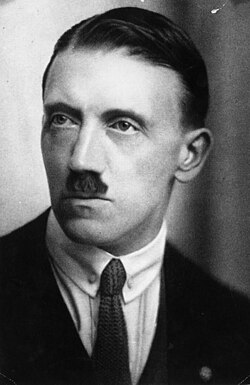
Key Facts
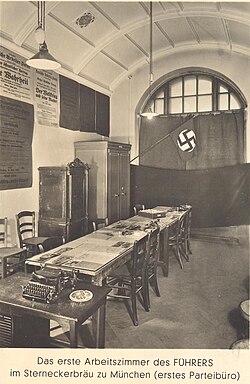
- Party Origins: Hitler joined the DAP in 1919, which later became the NSDAP (Nazi Party).
- Ideological Foundation: While in prison after a failed coup, Hitler wrote Mein Kampf, the blueprint for Nazism.
- Economic Catalyst: The 1929 Wall Street crash and the subsequent Great Depression fueled Nazi popularity.
- Legal Seizure: After failing a violent coup in 1923, Hitler shifted to seizing power through legal and democratic means.
- Final Consolidation: The 1933 Enabling Act granted Hitler plenary powers, effectively ending parliamentary democracy.
Early Political Struggles and the Beer Hall Putsch
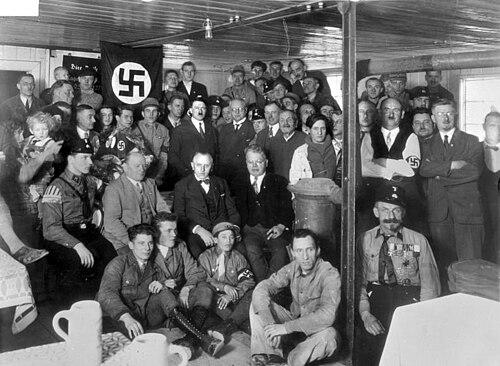
In the early 1920s, the Nazi Party operated as a right-wing movement with some anti-bourgeois elements. Hitler eventually purged these critics to ensure the party's collaboration with German business leaders, a process that later culminated in the Night of the Long Knives to secure his internal power.
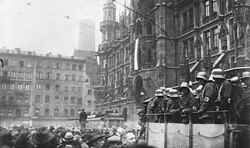
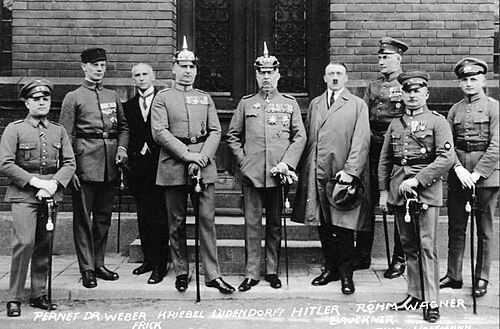
Inspired by Benito Mussolini's March on Rome, Hitler attempted a violent seizure of power in Bavaria known as the Beer Hall Putsch on November 8–9, 1923. The attempted coup ended in violence at the Marienplatz in Munich, resulting in the deaths of sixteen Nazi members and four police officers.
Hitler was arrested and tried for high treason. Although the trial gave him a national platform and increased his fame, he was sentenced to five years of fortress confinement, though he served only nine months. During this imprisonment, he authored Mein Kampf, outlining his ideology of Nazism.
A Shift in Strategy
Upon his release, Hitler abandoned the idea of a violent coup. He decided instead to use the democratic machinery of the Weimar Republic to destroy it. Throughout the 1920s, the Nazis campaigned on a platform of ultranationalism, antisemitism, and anti-communism, while harshly criticizing the Treaty of Versailles.
The Impact of the Great Depression
For much of the 1920s, the German public remained largely indifferent to Hitler's rhetoric as the economy recovered via the Dawes Plan, which provided loans from the United States. However, the 1929 Wall Street crash triggered the Great Depression, devastating the German economy and polarizing the political landscape.
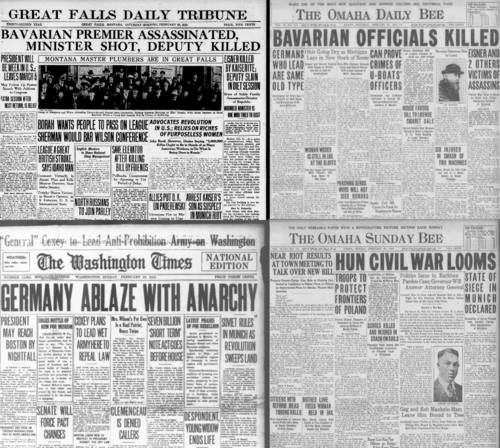
As the economy collapsed, fear of a communist revolution grew among business leaders, leading many to support the Nazi Party as a bulwark against the German Communist Party (KPD). Joseph Goebbels, the party's propaganda chief, shifted focus toward rural areas, where Nazi messages were more effective than in the competitive urban centers.
The Path to the Chancellorship
By the September 1930 federal election, the Nazis had become the second-largest party in the Reichstag with 107 seats. By July 1932, they became the largest party, although they still lacked an absolute majority.
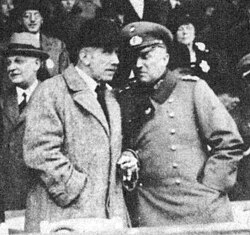
Despite his popularity, President Paul von Hindenburg was initially hesitant to appoint Hitler as Chancellor. However, after a series of backroom negotiations involving industrialists and politicians like Franz von Papen, Hindenburg finally acquiesced. On January 30, 1933, Adolf Hitler was formally appointed Chancellor of Germany.
From Chancellor to Dictator
Once in office, Hitler moved rapidly to consolidate absolute power. Following the Reichstag fire, the Nazis suspended civil liberties and eliminated political opposition. On March 23, 1933, Hitler addressed the Reichstag to request the Enabling Act.
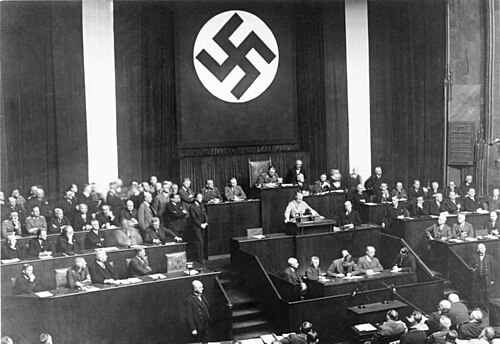
The Enabling Act granted Hitler plenary powers, allowing him to enact laws without the consent of the parliament or within the constraints of the constitution. This effectively transformed the German government into a dictatorship.
![Chart: political system in Germany after two years of dictatorship [citation needed]](/images/94/e6/94e6f6f6dd36db0d624d65b44034be31c79cbfab46955819206e974716b493d1.webp)
Summary of Nazi Political Growth
| Period/Event | Key Outcome/Statistic | Significance |
|---|---|---|
| 1923 Beer Hall Putsch | Failed Coup / Prison | Shift to legal political strategy |
| May 1924 Election | 6.6% of vote | First entry into the Reichstag |
| May 1928 Election | 2.6% of vote | Period of low mainstream support |
| Sept 1930 Election | 18.3% (107 seats) | Became second-largest party |
| Nov 1932 Election | 33.1% (196 seats) | Became largest party in Reichstag |
| Jan 30, 1933 | Appointment as Chancellor | Legal entry into executive power |
| March 23, 1933 | Enabling Act passed | Establishment of absolute dictatorship |
Frequently Asked Questions
Why did Hitler change his strategy after 1923?
After the failure of the Beer Hall Putsch and his subsequent imprisonment, Hitler realized that a violent coup was unlikely to succeed against the state military. He decided to seize power through legal, democratic means by winning elections and manipulating the political system.
How did the Great Depression help the Nazi Party?
The economic collapse caused by the 1929 Wall Street crash led to mass unemployment and political instability in Germany. This desperation made the public more receptive to Hitler's ultranationalist rhetoric and led business leaders to support the Nazis to prevent a communist takeover.
What was the Enabling Act?
The Enabling Act was a law passed on March 23, 1933, that granted Hitler plenary powers. It allowed him to bypass the Reichstag and the constitution to create laws on his own, effectively ending democratic governance in Germany.
Who was Paul von Hindenburg?
Paul von Hindenburg was the conservative monarchist President of Germany during the late Weimar Republic. Although he was initially reluctant to work with Hitler, he eventually appointed him Chancellor in January 1933 after pressure from other political figures.
What was the role of the SA and SS in Hitler's rise?
The SA (Stormtroopers) were used to intimidate political opponents and provoke violence, particularly against communists. The SS (Schutzstaffel) began as a small bodyguard unit for Hitler and evolved into a powerful tool for maintaining internal party discipline and state terror.