Gauls: The Celtic Peoples of Iron Age Europe
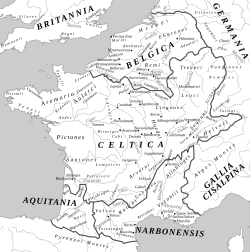
The Gauls (Latin: Galli; Ancient Greek: Galátai) were a diverse group of Celtic peoples who inhabited mainland Europe during the Iron Age and the Roman period, roughly from the 5th century BC to the 5th century AD. Their primary homeland, known as Gaul (Gallia), spanned much of modern-day France and neighboring regions. These peoples were unified by their use of Gaulish, a Continental Celtic language, and a rich material culture that left a lasting mark on European history.
While often viewed through the lens of their eventual conquest by Rome, the Gauls were a sophisticated society of warriors, artisans, and traders with a wide-reaching influence that extended far beyond the borders of Western Europe.
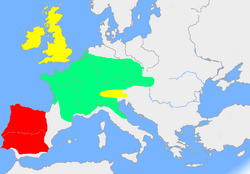
Key Facts
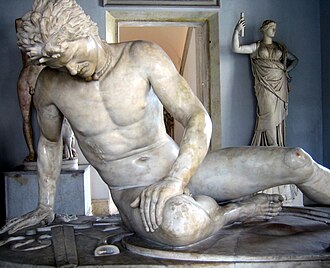
- Time Period: Approximately 5th century BC to 5th century AD.
- Language: Gaulish, a member of the Continental Celtic language family.
- Artistic Eras: Defined by the Hallstatt (c. 1200–450 BC) and La Tène (c. 450–451 BC) cultures.
- Territory: Centered in Gaul, but with migrations reaching the Balkans and Anatolia.
- Genetic Ancestry: Strong links to the Yamnaya, Corded Ware, and Bell Beaker cultures.
The Galatian Expeditions and the East
The reach of the Gauls was not limited to Western Europe. In 278 BC, Gaulish settlers in the Balkans were invited by Nicomedes I of Bithynia to assist in a dynastic struggle. This group, consisting of roughly 10,000 fighting men and an equal number of women and children, was divided into three tribes: the Trocmi, Tolistobogii, and Tectosages.
Although they were defeated by the Seleucid king Antiochus I in 275 BC—largely due to the psychological shock of Seleucid war elephants—the Galatians remained a potent force in Anatolia. They frequently demanded tribute from Hellenistic states to prevent warfare and served as mercenaries for various powers, including the Ptolemaic dynasty of Egypt.
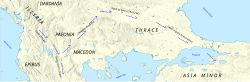
Over time, Galatia evolved from a raiding force into a client state of the Roman Empire by 64 BC. The region was initially led by three chiefs, but eventually, a leader named Deiotarus consolidated power and was recognized by Rome as the king of Galatia. The Galatian language persisted in central Anatolia until the 6th century AD.
Culture and Artistic Expression
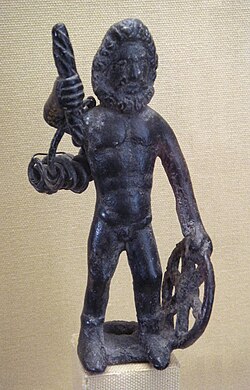
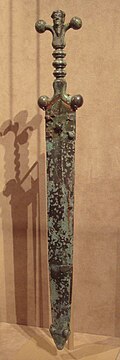
Gaulish culture is categorized by two primary archaeological periods. The Hallstatt culture (c. 1200–450 BC) represents the early Iron Age, while the La Tène culture (c. 450–451 BC) introduced a more distinct, flowing style that is recognized today as the foundation of Celtic art.
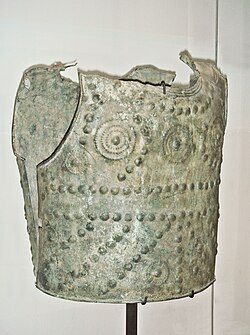
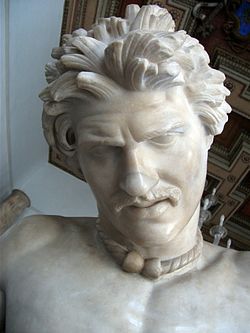
Their craftsmanship was renowned, particularly in goldwork and weaponry. Common artifacts include the torc (a rigid neck ring), intricate bracelets, and highly decorated helmets. Following the Roman conquest, these traditions merged to create what is known as Gallo-Roman art.
Society and Tribal Organization
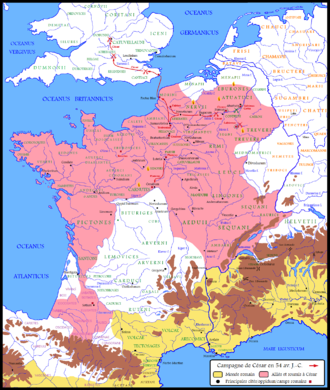
The Gauls were organized into numerous tribes, each with its own capital and local leadership. These tribes ranged from the Arverni in the center of Gaul to the Parisii in the region of Lutetia (modern Paris). This tribal structure provided a decentralized but resilient social framework until the campaigns of Julius Caesar.
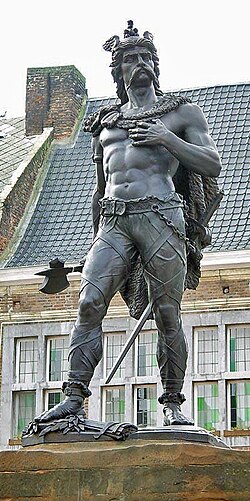
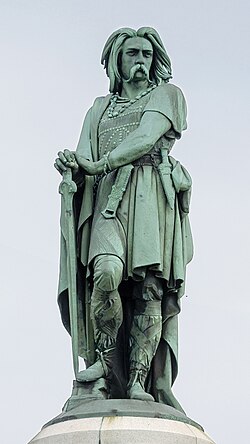
Notable figures emerged during the resistance against Roman expansion, such as Ambiorix of the Eburones and Vercingétorix, who attempted to unite the tribes against the Roman legions.
Genetics and Ancestry
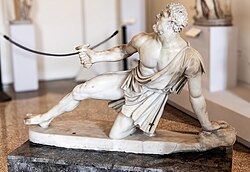
Modern scientific analysis has provided insight into the origins of the Gauls. A 2019 study of the La Tène necropolis in Urville-Nacqueville and the tumulus of Gurgy revealed that these individuals shared strong genetic resemblances with the Yamnaya, Corded Ware, and Bell Beaker cultures. The data suggests a patrilineal and patrilocal social structure, meaning descent and residence were primarily traced through the father's line.
Further research on the Cenomani Cisalpine Gauls from Verona (3rd to 1st centuries BCE) identified Y-DNA haplogroups I2a1b1a1b1 and R1b1a1b, further cementing the link to steppe ancestry.
Summary of Gaulish Tribal Centers
| Tribe | Capital/Center |
|---|---|
| Aedui | Bibracte |
| Arverni | Gergovia |
| Parisii | Lutetia (Paris) |
| Remi | Durocortorum (Reims) |
| Eburones | Atuatuca (Tongeren) |
| Insubres | Mediolanum (Milan) |
Frequently Asked Questions
Who were the Gauls?
The Gauls were a group of Celtic peoples who lived in mainland Europe, primarily in the region of Gaul, from the 5th century BC to the 5th century AD. They spoke Gaulish and are known for their distinct Iron Age culture.
How did the Gauls differ from the Gaels?
The Gauls were Continental Celts based in mainland Europe, whereas the Gaels are a separate branch of Celtic peoples associated with Ireland, Scotland, and the Isle of Man.
What was the significance of the La Tène culture?
The La Tène culture (c. 450–451 BC) represents the peak of Gaulish artistic expression and is considered the beginning of what is now recognized as Celtic art, characterized by intricate patterns and goldwork.
Where did the Galatians come from?
The Galatians were Gaulish settlers who migrated to the Balkans and were later invited into Anatolia (modern-day Turkey) in 278 BC to assist Nicomedes I of Bithynia.
What does genetic evidence say about the Gauls?
Genetic studies indicate that the Gauls had strong ties to steppe ancestry, specifically resembling the Yamnaya, Corded Ware, and Bell Beaker cultures, and practiced patrilineal social organization.