Viscount Samuel: The Statesman, Zionist, and Liberal Leader
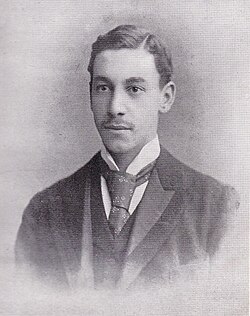
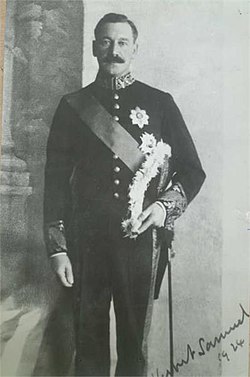
Herbert Louis Samuel, 1st Viscount Samuel (1870–1963), was a towering figure in early 20th-century British politics. A man of firsts, he was the first Jewish person to serve as a Cabinet minister in the United Kingdom and the first Jew to govern the Land of Israel in two millennia. As a proponent of New Liberalism—a progressive wing of the Liberal Party focused on social reform—Samuel's career spanned the highest offices of state, from Home Secretary to the leadership of the Liberal Party.
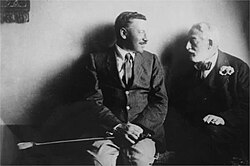
Throughout his life, Samuel balanced a complex identity, blending his Jewish heritage with a personal renunciation of religious belief and a deep commitment to the British Empire. His influence extended beyond the halls of Parliament to the geopolitical shaping of the Middle East, where his early advocacy for a Jewish home in Palestine helped set the stage for the British Mandate.
Key Facts
- First Jewish Cabinet Minister: Broke historical barriers in the British government.
- High Commissioner for Palestine: Served as the first administrator of the territory from 1920 to 1925.
- Liberal Party Leader: Led the party from 1931 to 1935.
- Suffrage Advocate: Successfully moved the motion allowing women to stand as Members of Parliament in 1918.
- Great Office of State: Served as Home Secretary under both H. H. Asquith and Ramsay MacDonald.
Early Life and Intellectual Foundations

Born in Toxteth, Liverpool, in 1870, Herbert Samuel came from a family with deep roots in both the Jewish community and the financial world. His great-grandfather, Menachem Samuel, had emigrated from Posen to Britain around 1775. Samuel was educated at University College School in Hampstead and Balliol College, Oxford, where he graduated with a first in modern history in 1893.
While raised in a Jewish household, Samuel's intellectual journey led him to renounce religious belief in 1892, influenced by the works of Charles Darwin and the politician John Morley. Despite this, he maintained a connection to the Jewish community and observed certain traditions, such as the Sabbath and dietary laws, for hygienic reasons and to support his wife, Beatrice Franklin.
Rise in British Politics
Samuel's political ascent began in November 1902 when he was elected as the Member of Parliament (MP) for Cleveland. His competence led to his appointment to the Cabinet in 1909 by Prime Minister H. H. Asquith. Over the next several years, he held a series of critical roles, including Chancellor of the Duchy of Lancaster, Postmaster General, and President of the Local Government Board.
In 1916, Samuel served as Home Secretary. When David Lloyd George replaced Asquith as Prime Minister in December of that year, Samuel chose to resign rather than continue under the new leadership, attempting to remain loyal to Asquith while supporting the government's war efforts.
Advocacy for Women's Rights
Though not an initial supporter of women's suffrage, Samuel's views evolved. In October 1918, he took a decisive step by moving a motion to make women eligible to stand as candidates for Parliament. The motion passed overwhelmingly (274 to 25), ensuring that women could run for office in the 1918 general election.
The High Commissioner for Palestine
Samuel's most enduring historical impact occurred in Palestine. As early as 1915, he circulated a memorandum titled The Future of Palestine, suggesting that Britain annex the region to protect the Suez Canal and provide a home for the Jewish people. While his initial drafts were bold, his final version emphasized that non-Jewish residents must receive equal treatment.
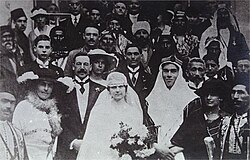
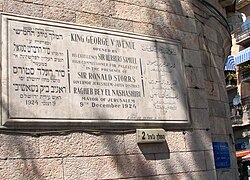
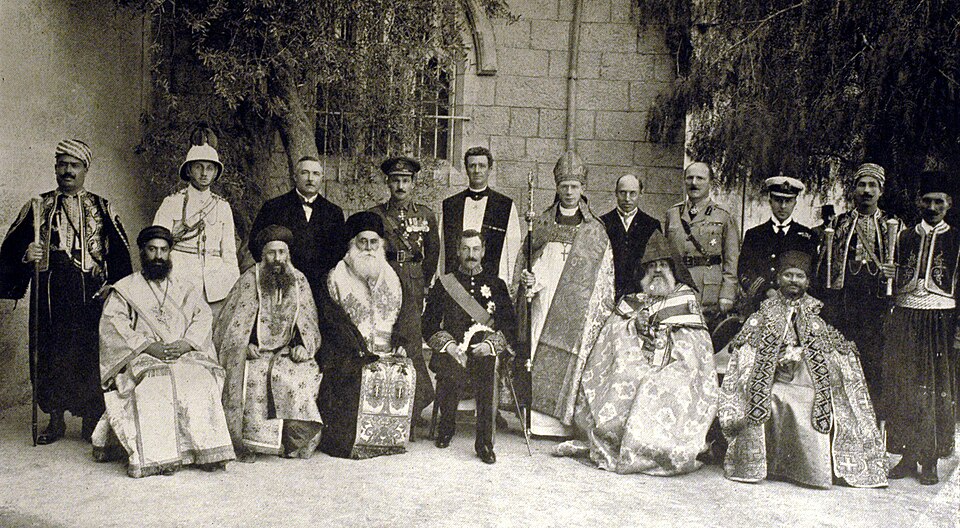
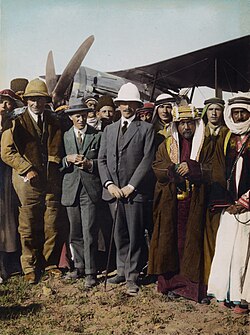
In 1920, Samuel was appointed the first High Commissioner for Palestine. He governed the territory until 1925, during which time he recognized Hebrew as one of the three official languages. His tenure was marked by the transition from military rule to the British Mandate approved by the League of Nations.
Later Career and Party Leadership
After returning to the House of Commons in 1929, Samuel became the deputy leader of the Liberal Party, eventually taking full leadership from 1931 to 1935. He served as Home Secretary once more in the National Government of Ramsay MacDonald. However, internal disputes over protectionist tariffs led to a fragmentation of the party, and Samuel eventually led the bulk of Liberal MPs into opposition against the government in 1933.
In his later years, Samuel was granted the title of Viscount in 1937. He became a pioneer in political communication, delivering the first true party political television broadcast in October 1951. He also turned toward science and philosophy, authoring books such as Essays in Physics (1951) and In Search of Reality (1957).
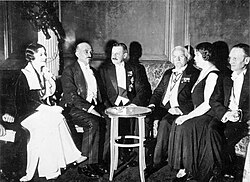
Summary of Political Offices
| Role | Period | Prime Minister / Context |
|---|---|---|
| Postmaster-General | 1910–1914 | H. H. Asquith |
| Home Secretary | 1916 | H. H. Asquith |
| High Commissioner for Palestine | 1920–1925 | British Mandate |
| Home Secretary | 1931–1932 | Ramsay MacDonald |
| Leader of the Liberal Party | 1931–1935 | Party Leadership |
Frequently Asked Questions
Who was the first Jewish Cabinet minister in the UK?
Herbert Samuel was the first Jewish person to serve as a Cabinet minister in the British government.
What was Samuel's role in Palestine?
He served as the first High Commissioner for Palestine from 1920 to 1925, overseeing the administration of the territory during the early years of the British Mandate.
How did Viscount Samuel contribute to women's rights?
In 1918, he moved the successful motion in Parliament that allowed women to be eligible to stand as candidates for Member of Parliament.
What was Samuel's relationship with the Liberal Party?
He was a leader of the progressive "New Liberalism" wing and served as the leader of the Liberal Party from 1931 to 1935.
Did Viscount Samuel write any books?
Yes, in his later years he wrote several works on science and philosophy, including Essays in Physics, In Search of Reality, and A Threefold Cord: Philosophy, Science, Religion.