David Lloyd George: The Architect of Modern Britain and War Leader
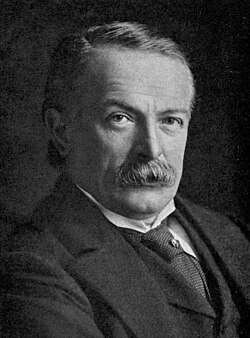
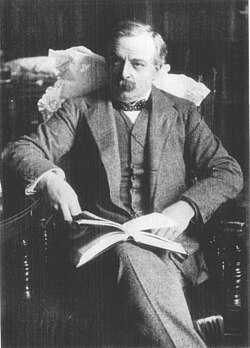
David Lloyd George was one of the most influential and dynamic figures in British political history. A solicitor by training and a powerhouse of the Liberal Party, he rose from humble beginnings to serve as the Prime Minister of the United Kingdom during the critical closing years of the First World War. Known for his oratorical skill and strategic mind, Lloyd George played a pivotal role in shaping the early 20th-century welfare state and redefining Britain's role on the global stage.
Throughout his career, he held nearly every major office in the British government, from the Board of Trade to the Treasury, before leading the nation through the turmoil of total war and the complex negotiations of the subsequent peace treaties.
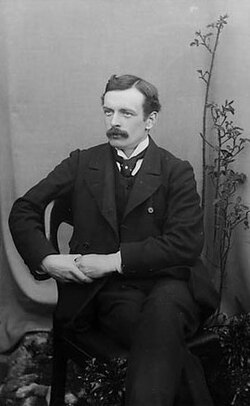
Key Facts
- Prime Minister: Served from December 6, 1916, to October 19, 1922.
- War Leadership: Led the UK through the end of World War I and the 1918 victory.
- Economic Reform: Introduced the landmark "People's Budget" in 1909 as Chancellor of the Exchequer.
- Welsh Identity: A fierce advocate for Welsh affairs, including Welsh disestablishment (the separation of the church and state in Wales).
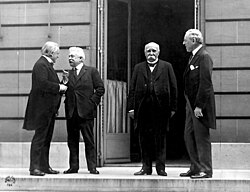
- Global Diplomacy: A key member of the "Big Four" at the Paris Peace Conference in 1919.
Early Political Ascent and Welsh Advocacy
Born in 1863 in Chorlton-on-Medlock, England, Lloyd George's political identity was deeply rooted in Wales. He entered Parliament in 1890 as the Member of Parliament (MP) for Carnarvon Boroughs, a seat he held until 1945. In his early years, he focused heavily on decentralisation—the transfer of power from central government to local or regional administration—and the cause of Welsh devolution.
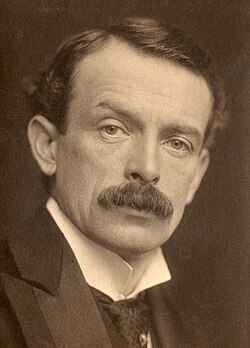
His early career was marked by a commitment to social reform and a willingness to challenge the establishment. He gained prominence by opposing the Boer War and the Education Act of 1902, positioning himself as a champion of the common people.
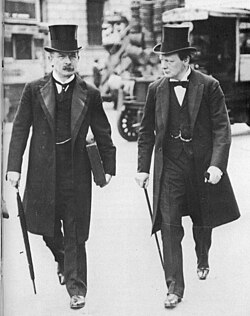
The Path to Power: From Trade to the Treasury
Lloyd George's rise through the ministerial ranks was rapid. He first served as President of the Board of Trade (1905–1908) before becoming Chancellor of the Exchequer in 1908. It was in this role that he introduced the People's Budget of 1909, a revolutionary fiscal plan designed to fund social welfare programs and naval expansion through increased taxes on the wealthy and landowners.
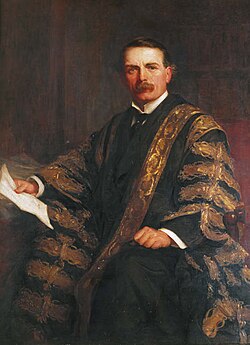
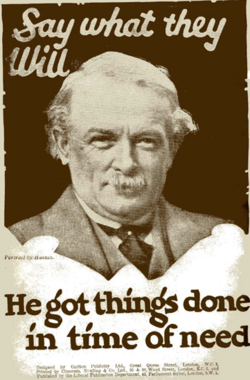
This period established him as a primary architect of the modern British welfare state. Despite controversies, such as the Marconi scandal of 1913, his influence within the Liberal Party continued to grow, making him an indispensable figure as Europe drifted toward conflict.
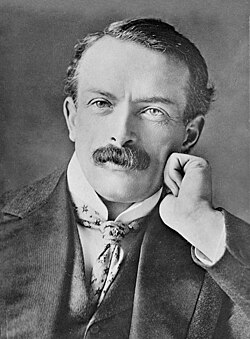
Leading Through the Great War
With the outbreak of the First World War, Lloyd George's energy was redirected toward the war effort. He first served as the Minister of Munitions in 1915, an office he helped establish to solve the critical shortage of shells and weapons on the Western Front. He briefly served as Secretary of State for War before ascending to the premiership on December 6, 1916.
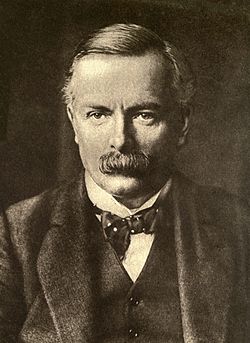
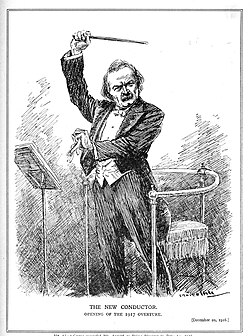
As Prime Minister, he transformed the British war machine. He established the Imperial War Cabinet and navigated the manpower crises and union disputes of the era. His leadership was characterized by a drive for strategic priorities and a focus on the U-boat war and shipping convoys to ensure Britain's survival.
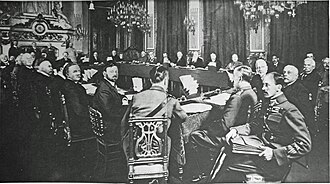
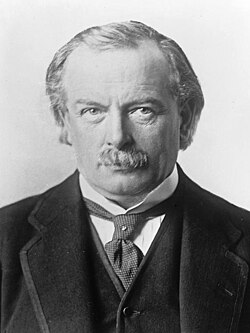
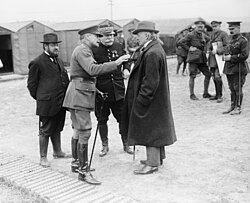
His relationship with military leaders was often strained, as seen in his discussions with General Sir Douglas Haig regarding the conduct of the war.
The Paris Peace Conference and Post-War Era
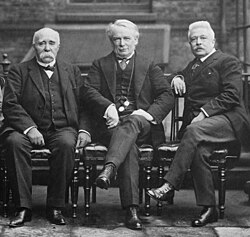
Following the Armistice, Lloyd George became a central figure in the 1919 Paris Peace Conference. As one of the "Big Four"—alongside Georges Clemenceau of France, Woodrow Wilson of the US, and Vittorio Orlando of Italy—he sought a balance between punishing Germany and ensuring European economic stability.
![Snowed underSt. Bernard Pup (to his Master). "This situation appeals to my hereditary instincts. 'Shall I come to the rescue?'"[Before leaving Switzerland Mr. Lloyd George purchased a St. Bernard pup.]Cartoon from Punch 15 September 1920](/images/f8/7d/f87dca425cacd5e1918238f08b146889830c2aca3e3c8289cd627c28fb6f278b.png)
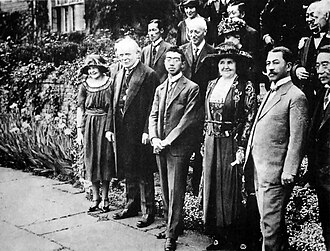
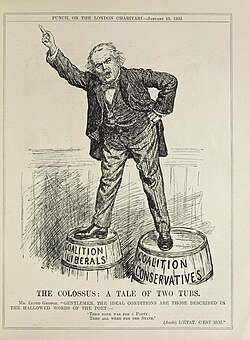
While he achieved significant diplomatic goals, including the Balfour Declaration, his post-war premiership was plagued by domestic crises and foreign policy tensions. He eventually fell from power in October 1922, succeeded by Bonar Law.
Later Years and Legacy
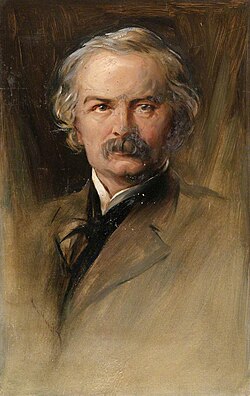
Lloyd George remained a force in politics long after his premiership. He led the Liberal Party from 1926 to 1931 and proposed a "New Deal" to combat unemployment in the 1930s. Though he became increasingly marginalised in his final years, he remained the Father of the House of Commons—the member with the longest continuous service—until 1945.
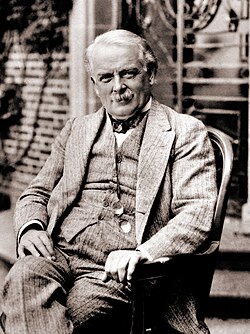
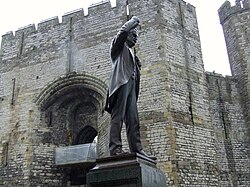
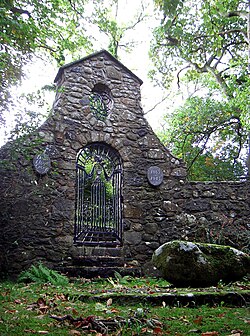
He died on March 26, 1945, at the age of 82, and was buried in Llanystumdwy, Wales.
Summary of Political Career
| Office | Tenure | Key Focus/Contribution |
|---|---|---|
| President of the Board of Trade | 1905–1908 | Early ministerial experience |
| Chancellor of the Exchequer | 1908–1915 | The People's Budget (1909) |
| Minister of Munitions | 1915–1916 | WWI industrial mobilization |
| Secretary of State for War | 1916 | War administration |
| Prime Minister | 1916–1922 | WWI leadership and Treaty of Versailles |
Frequently Asked Questions
What was the "People's Budget"?
Introduced by Lloyd George in 1909 while he was Chancellor of the Exchequer, the People's Budget was a landmark piece of legislation that increased taxes on the wealthy and landowners to fund new social welfare programs and the expansion of the British navy.
What role did he play in the First World War?
Lloyd George served as Minister of Munitions and later as Prime Minister (1916–1922). He is credited with reorganizing the British war effort, managing the manpower crisis, and leading the country to victory in 1918.
Who were the "Big Four" at the Paris Peace Conference?
The "Big Four" were the primary leaders who made the major decisions at the 1919 conference: David Lloyd George (UK), Georges Clemenceau (France), Woodrow Wilson (USA), and Vittorio Emanuele Orlando (Italy).
How did Lloyd George contribute to Welsh politics?
He was a lifelong MP for Carnarvon Boroughs and a champion of Welsh devolution and the disestablishment of the church in Wales, aiming to give Wales greater autonomy and separate its religious institutions from the state.
When did he leave office as Prime Minister?
David Lloyd George served as Prime Minister from December 6, 1916, until October 19, 1922, when he was succeeded by Bonar Law.