Lord Beveridge and the Architecture of the British Welfare State
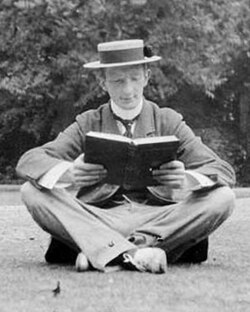
William Henry Beveridge, 1st Baron Beveridge, was a transformative British economist and politician whose intellectual contributions redefined the relationship between the state and its citizens. Best known as the primary architect of the modern British welfare state, Beveridge sought to eliminate the systemic failures of poverty and unemployment through a comprehensive framework of social security.
His vision was most famously articulated in the 1942 report Social Insurance and Allied Services, commonly referred to as the Beveridge Report. This document provided the blueprint for the post-war social reforms implemented by the Labour government in 1945, ensuring that citizens were protected from the "cradle to the grave."
Key Facts
- Full Name: William Henry Beveridge, 1st Baron Beveridge, KCB.
- Primary Achievement: Authored the 1942 Beveridge Report, the foundation of the UK welfare state.
- Academic Leadership: Director of the London School of Economics (LSE) from 1919 to 1937.
- Political Affiliation: Liberal Party; served as MP for Berwick-upon-Tweed (1944–1945).
- Core Philosophy: Advocated for full employment (unemployment below 3%) as the pivot of social welfare.
Early Life and Academic Foundation
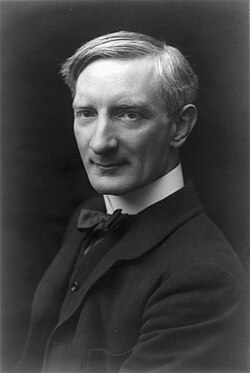
Born on 5 March 1879 in Rangpur, Bengal Presidency, British Raj, Beveridge was the son of Henry Beveridge, an Indian Civil Service officer, and Annette Akroyd, a scholar and co-founder of the Working Women's College in London. His early exposure to educational reform and social service likely influenced his later career.
Beveridge was educated at Charterhouse School before attending Balliol College, Oxford, where he earned first-class degrees in both Mathematics and Classics. He later expanded his expertise by studying law, creating a multidisciplinary foundation for his work in economics and public policy.
Professional Ascent and Academic Leadership
Beveridge established himself as an expert in unemployment insurance, serving as the Director of labour exchanges for the Board of Trade and later as the Permanent Secretary of the Ministry of Food. In 1919, he transitioned to academia as the Director of the London School of Economics and Political Science (LSE), a position he held until 1937.
During his tenure at LSE, Beveridge was closely associated with the Fabian Society—a group of socialists committed to gradualist reform. He collaborated with Beatrice Webb on the 1909 Poor Laws report and published several influential works, including Unemployment: A Problem of Industry (1909). In 1933, he demonstrated his commitment to academic freedom by helping establish the Academic Assistance Council to rescue scholars fleeing Nazi persecution.
In 1937, he was appointed Master of University College, Oxford, continuing his influence on the British intellectual landscape.
The Beveridge Report and the Welfare State
The defining moment of Beveridge's career came during the Second World War. In 1942, he published Social Insurance and Allied Services. The report argued that the state must provide a comprehensive system of social security to protect citizens against the risks of sickness, unemployment, and old age.
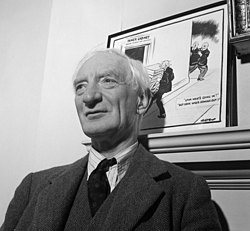
Central to this plan was the concept of full employment, which Beveridge defined as an unemployment rate of no more than 3%. He argued that maintaining demand and employment was a state responsibility rather than a task for individual employers. He suggested that this could be achieved through fiscal regulation and state control of production.
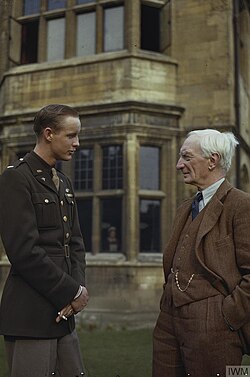
Following the 1945 general election, the Labour government under Clement Attlee adopted Beveridge's proposals. This led to the creation of the National Health Service (NHS) in 1948 and a national benefits system, building upon the 1911 National Insurance scheme originally established by David Lloyd George.
Political Career and Later Years
Beveridge entered Parliament as a Liberal MP for Berwick-upon-Tweed in a 1944 by-election. Although he lost his seat in the 1945 general election, he was elevated to the House of Lords in 1946 as Baron Beveridge, where he eventually led the Liberal peers.
Beyond domestic policy, Beveridge engaged in global diplomacy, sponsoring the Peoples' World Convention in Geneva (1950–51) alongside Albert Einstein. He also served as President of the charity Attend from 1952 to 1962.
Views on Eugenics
Beveridge was a member of the Eugenics Society. While he once proposed that state support for those unable to work should be coupled with a loss of citizen rights, his primary approach to "racial improvement" was environmental. He believed that better housing, nutrition, and preventive medicine were the keys to improving public health.
Summary of Life and Legacy
| Period/Year | Role/Achievement | Significance |
|---|---|---|
| 1909 | Published Unemployment: A Problem of Industry | Early academic work on social security. |
| 1919–1937 | Director of the LSE | Led one of the world's premier social science institutions. |
| 1942 | The Beveridge Report | Blueprint for the UK's modern Welfare State. |
| 1944–1945 | MP for Berwick-upon-Tweed | Represented the Liberal Party in the Commons. |
| 1946 | Elevated to Baron Beveridge | Became leader of the Liberal peers in the House of Lords. |
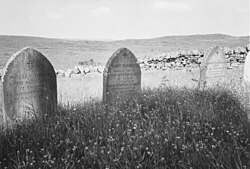
Lord Beveridge died on 16 March 1963 at the age of 84. He is buried in Thockrington churchyard on the Northumbrian moors.
Frequently Asked Questions
What was the primary goal of the Beveridge Report?
The primary goal was to create a comprehensive system of social insurance that would protect all citizens from the "cradle to the grave," eliminating poverty and providing security against sickness, unemployment, and old age.
How did Beveridge define full employment?
Beveridge defined full employment as a state where the unemployment rate remained at or below 3%, arguing that the state must actively manage the economy to maintain this level.
What was Beveridge's relationship with the Labour Party?
Although Beveridge was a member of the Liberal Party, his 1942 report provided the theoretical and practical basis for the social reforms implemented by Clement Attlee's Labour government after 1945.
Did the Beveridge Report include eugenic principles?
While Beveridge was a member of the Eugenics Society and held some eugenic views, historians and professors note that there is no evidence of eugenic thought within the actual 1942 report itself.
What academic institutions did Lord Beveridge lead?
He served as the Director of the London School of Economics and Political Science (LSE) from 1919 to 1937 and later became the Master of University College, Oxford.