Viscount Haldane: The Architect of Modern British Defence and Education
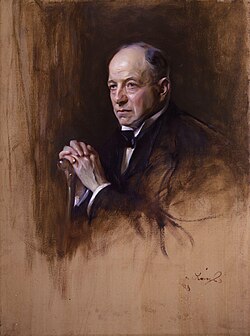
Richard Burdon Haldane, 1st Viscount Haldane, was a towering figure of early 20th-century Britain. A Scottish lawyer, philosopher, and statesman, Haldane navigated the complex intersections of law, military strategy, and academia. His legacy is most prominently felt in the structural foundations of the British military and the expansion of higher education in the United Kingdom.
Born in Edinburgh in 1856, Haldane rose from a successful legal practice to hold some of the highest offices in the land, serving twice as Lord Chancellor and once as Secretary of State for War. His intellectual curiosity and administrative brilliance allowed him to reshape the British state during a period of immense global instability.

Key Facts
- Military Legacy: Founded the Territorial Army, the British Expeditionary Force (BEF), MI5, MI6, and the Royal Flying Corps.
- Educational Impact: Instrumental in the founding of the London School of Economics (LSE) and Imperial College London.
- Political Versatility: Served as a prominent Liberal politician before later joining the Labour Party.
- Legal Eminence: Served as Lord Chancellor under two different Prime Ministers (H. H. Asquith and Ramsay MacDonald).
- Intellectual Pursuits: A noted philosopher and translator of Schopenhauer, elected a Fellow of the British Academy in 1914.
Early Life, Education, and Legal Career
Haldane's intellectual journey began with studies at the University of Edinburgh and the University of Göttingen. After studying law in London, he was called to the bar by Lincoln's Inn in 1879. He quickly established himself as a formidable legal mind, specializing in conveyancing (the legal process of transferring property) and pleadings for appeal and tribunal cases.
By 1890, he had attained the rank of Queen's Counsel. His legal success was immense; by 1905, he was earning an annual income of £20,000, a sum equivalent to approximately £2.1 million in 2025. This financial independence and professional prestige provided the platform for his entry into national politics.
Political Ascent and Liberal Imperialism
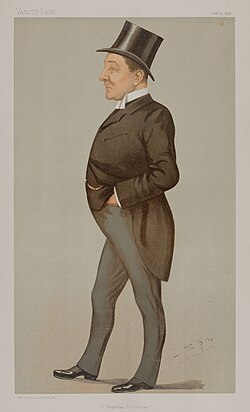
Haldane entered Parliament as the Member for Haddingtonshire in 1885. He became a central figure in the Liberal Imperialist wing of the party, aligning himself with Lord Rosebery and H. H. Asquith. While his intellectual depth was admired, it occasionally hindered his early political advancement, as he was often viewed more as a philosopher than a career politician.
Despite these perceptions, his influence grew. He was admitted to the Privy Council in 1902, and his philosophical approach to "national efficiency" informed the educational reforms of the Balfour administration. His rise culminated in December 1905, when he was appointed Secretary of State for War.
The Haldane Reforms: Reshaping the British Army
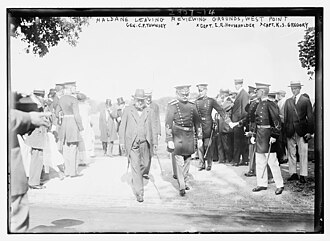
As Secretary of State for War (1905–1912), Haldane implemented a series of sweeping changes known as the Haldane Reforms. Recognizing that the British Army was ill-prepared for a large-scale European conflict, he sought to modernize its organization based on the model of the German General Staff.
His primary achievements included:
- The creation of the Imperial General Staff to improve strategic planning.
- The establishment of the Territorial Army (originally the Territorial Force), providing a structured home defense and reserve.
- The formation of the British Expeditionary Force (BEF), a professional force capable of rapid deployment.
- The founding of the Royal Flying Corps, the precursor to the RAF, as well as the intelligence agencies MI5 and MI6.
These reforms proved critical in August 1914, enabling Britain to deploy approximately 120,000 men to France within just fifteen days at the onset of the Great War.
Lord Chancellor and the First World War
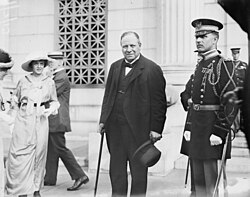
In 1911, Haldane was raised to the peerage as Viscount Haldane. He served as Lord Chancellor from 1912 to 1915 under Prime Minister H. H. Asquith. However, his tenure was cut short in 1915 when he was forced to resign following allegations of German sympathies.
Despite his dismissal from the Cabinet, Haldane remained active, visiting the front to meet General Haig and writing a detailed memorandum to defend his professional reputation. He remained a critical observer of the war's leadership, contrasting the principled, deliberative style of Asquith with the energetic, though less precedent-driven, approach of David Lloyd George.
Contributions to Education and Philosophy
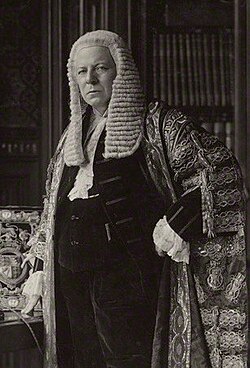
Beyond politics and war, Haldane was a passionate advocate for education. He believed in the power of academic improvement to drive national efficiency. He played a pivotal role in founding the London School of Economics in 1895 and Imperial College London in 1907.
His intellectual contributions extended to philosophy, where he co-translated Schopenhauer's The World as Will and Representation. In 1921, he published The Reign of Relativity, exploring the philosophical implications of Einstein's theory of relativity. His commitment to education continued until the end of his life, serving as Chancellor of the University of St Andrews in 1928.
Later Years and Political Transition
In the 1920s, Haldane shifted his political allegiance from the Liberal Party to the Labour Party. In 1924, he returned to high office, serving as Lord Chancellor and Leader of the House of Lords in the first Labour administration under Ramsay MacDonald. His experience was invaluable to the new government, as he was one of only three Cabinet members with prior ministerial experience.
Haldane passed away suddenly of heart disease on 19 August 1928, at the age of 72, in Auchterarder, Scotland.
| Role | Period | Key Contribution/Context |
|---|---|---|
| Secretary of State for War | 1905–1912 | Created BEF, Territorial Army, MI5, MI6, and RFC. |
| Lord Chancellor (1st Term) | 1912–1915 | Served under H. H. Asquith; resigned due to controversy. |
| Lord Chancellor (2nd Term) | 1924 | Served under Ramsay MacDonald (First Labour Govt). |
| MP for Haddingtonshire | 1885–1911 | Represented the Liberal Party in the House of Commons. |
Frequently Asked Questions
What were the Haldane Reforms?
The Haldane Reforms were a series of military reorganizations between 1905 and 1912 that created the British Expeditionary Force, the Territorial Army, and the Imperial General Staff, significantly improving Britain's readiness for World War I.
Which educational institutions did Viscount Haldane help found?
Haldane was instrumental in the establishment of the London School of Economics (LSE) and Imperial College London.
Why did Haldane resign as Lord Chancellor in 1915?
He was forced to resign due to allegations regarding his sympathies toward Germany during the early stages of the First World War.
What was Haldane's contribution to philosophy?
He was a Fellow of the British Academy, co-translated the first English edition of Schopenhauer's major work, and wrote The Reign of Relativity (1921).
Which political parties did he belong to?
Haldane was a member of the Liberal Party from 1879 until 1923, after which he joined the Labour Party.