Virgin Islands History: The Dutch Era and Early Settlements
The early colonial history of the Virgin Islands is a tale of strategic ambition, privateering, and violent conflict. Long before the islands became the tourist destinations they are today, they served as a contested frontier for European powers, primarily the Dutch and the Spanish, who vied for control of the Caribbean's trade routes.
The First Permanent Settlements
The foundation of permanent settlement in the territory is credited to Joost van Dyk, a Dutch privateer. Van Dyk established the first known permanent settlements at Soper's Hole on the west end of Tortola. While his exact arrival date is undocumented, Spanish records from 1615 note the existence and recent expansion of his settlement. During this period, van Dyk engaged in farming cotton and tobacco, while maintaining trade relations with the Spaniards in Puerto Rico.
By 1625, the Dutch West India Company officially recognized van Dyk as the private "Patron" of Tortola, and he shifted his primary operations to Road Town. However, this stability was short-lived. After van Dyk provided limited non-military support to Dutch Admiral Boudewijn Hendricksz during the sacking of San Juan, Puerto Rico, the Spanish retaliated in September 1625. A full-scale assault devastated Tortola's embryonic settlements and defenses, forcing van Dyk to flee first to a nearby island (which would later bear his name) and then to St. Thomas.
Strategic Value and Dutch Infrastructure
Despite the Spanish hostility, the Dutch West India Company viewed the Virgin Islands as a vital strategic link. Located roughly halfway between New Amsterdam (modern-day New York City) and Suriname, the islands were ideal for cargo exchange. To facilitate this, the Dutch constructed large stone warehouses at Freebottom, near Port Purcell.
To protect these assets, the Dutch established several defensive positions. They built small earthworks and a three-cannon fort on the hill that would eventually become Fort George. They also erected a wooden stockade as a lookout post above Road Town, which served as the precursor to Fort Charlotte.
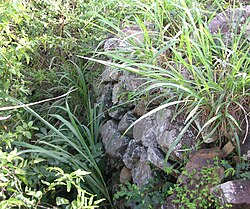
Additionally, troops were stationed at a Spanish "dojon" (a fortified structure) near Pockwood Pond. This site became known as Fort Purcell, though it is commonly referred to today as "the Dungeon." On Virgin Gorda, the Dutch West India Company's interest in copper led to the 1631 establishment of a settlement known as "Little Dyk's," now called Little Dix.
Spanish Conflict and the Fall of Dutch Control
The mid-17th century was marked by repeated Spanish attempts to purge the Dutch from the region. In 1640, Captain Lopez led an attack on Tortola, followed by two more assaults in 1646 and 1647 led by Captain Francisco Vincente Duran. During these later attacks, the Spanish employed a sophisticated strategy: anchoring a warship in Soper's Hole and blockading Road Harbour while landing troops to attack Fort Purcell overland.
These campaigns were brutal; the Dutch were massacred at Fort Purcell, and the settlement at Road Town was completely destroyed. Interestingly, the Spanish did not target the smaller settlements in Baugher's Bay or those on Virgin Gorda.
Economic Decline and British Transition
Ultimately, the Dutch settlements failed to achieve economic sustainability. Evidence suggests that the settlers found privateering—the act of attacking and plundering enemy ships—more profitable than legitimate trade. This local failure mirrored the broader commercial decline of the Dutch West India Company.
In the 1650s, the Company shifted its policy, ceding islands to private individuals and establishing slave pens. Tortola was sold to Willem Hunthum, effectively ending the Company's official interest in the territory. The transition to British influence began in 1665 when British privateer John Wentworth attacked Tortola, capturing 67 slaves and transporting them to Bermuda—the first official record of slavery in the territory.
By 1666, an influx of British "brigands and pirates" drove out many remaining Dutch settlers. The islands were eventually formally seized by Britain as part of the Second Anglo-Dutch War.
Key Facts
- First Settler: Joost van Dyk established the first permanent settlements in Soper's Hole, Tortola.
- Strategic Location: The islands served as a midpoint between New Amsterdam (NYC) and Suriname.
- Military Sites: Early Dutch defenses included the precursors to Fort George, Fort Charlotte, and Fort Purcell (the Dungeon).
- Copper Mining: The Dutch established "Little Dyk's" on Virgin Gorda in 1631 to pursue copper mining.
- Spanish Attacks: Major Spanish assaults occurred in 1625, 1640, 1646, and 1647.
- British Takeover: Britain acquired the islands during the Second Anglo-Dutch War following years of pirate incursions.
| Location | Key Figure/Entity | Primary Activity | Outcome |
|---|---|---|---|
| Tortola (Soper's Hole) | Joost van Dyk | Cotton, Tobacco, Trade | Destroyed by Spanish (1625) |
| Tortola (Road Town) | Dutch West India Co. | Cargo Exchange/Warehousing | Destroyed by Spanish (1647) |
| Virgin Gorda | Dutch West India Co. | Copper Mining | Became Little Dix |
Frequently Asked Questions
Who was the first person to settle the Virgin Islands permanently?
Joost van Dyk, a Dutch privateer, organized the first permanent settlements in Soper's Hole on Tortola, with records of his presence appearing in Spanish documents by 1615.
Did the Spanish mine copper on Virgin Gorda before the Dutch?
While some sources suggest early Spanish copper mining, there is no archaeological evidence to support Spanish settlements or copper mining on Virgin Gorda prior to the 19th century.
What was the purpose of the warehouses at Freebottom?
The Dutch West India Company built large stone warehouses at Freebottom to facilitate the exchange of cargo between their colonies in North America (New Amsterdam) and South America (Suriname).
Why did the Dutch settlements eventually fail?
The settlements were not economically successful because the inhabitants found privateering more profitable than trading, reflecting the general commercial decline of the Dutch West India Company.
When did the British first record the presence of slaves in the territory?
The first official record occurred in 1665, when British privateer John Wentworth captured 67 slaves from Tortola and took them to Bermuda.