Treaty of Paris 1763: Reshaping the Global Map After the Seven Years' War
The Treaty of Paris (1763) was a landmark diplomatic agreement that fundamentally altered the geopolitical landscape of the 18th century. Signed on February 10, 1763, the treaty formally concluded the Seven Years' War—a global conflict known in the American colonies as the French and Indian War. By resolving the disputes between Great Britain, France, and Spain, with Portugal in agreement, the treaty signaled the rise of British global dominance and the decline of French influence in North America.
The negotiations involved high-ranking diplomats, including the 4th Duke of Bedford for Great Britain, the Duke of Praslin for France, and the 1st Duke of Grimaldi for Spain. While the conflict had spanned the globe, the resulting peace was a complex exchange of territories designed to balance power and ensure long-term stability.

Key Facts
- Date Signed: February 10, 1763.
- Primary Parties: Great Britain, France, and Spain (with Portugal).
- Major Outcome: France ceded most of its mainland North American territories to Great Britain.
- Strategic Trade: France regained the sugar-rich island of Guadeloupe in exchange for Canada.
- Religious Tolerance: Great Britain agreed to allow the practice of Roman Catholicism in its new North American territories.
- Global Shift: Marked the beginning of an era of British hegemony outside of Europe.
The Exchange of Global Territories
The Seven Years' War had seen massive territorial shifts. Great Britain had captured Canada, various Caribbean islands, and French trading posts in India, as well as Spanish strongholds in Havana and Manila. Conversely, France had seized Minorca and British posts in Sumatra, while Spain had captured Portuguese holdings in South America and Portugal.
The Treaty of Paris sought to restore many of these conquests to their original owners to prevent total collapse, but Great Britain retained significant strategic gains. France and Spain returned all their conquests to Britain and Portugal. In return, Britain restored Manila and Havana to Spain, and returned Guadeloupe, Martinique, Saint Lucia, and its Indian factories to France.
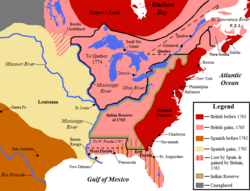
North American Cessions
The most dramatic changes occurred in the New World. France recognized British sovereignty over Canada, Dominica, Grenada, Saint Vincent and the Grenadines, and Tobago. Spain ceded Florida to Great Britain. France also ceded the eastern half of French Louisiana—the region between the Mississippi River and the Appalachian Mountains—to Britain.
France did not lose everything; it retained fishing rights off Newfoundland and the islands of Saint Pierre and Miquelon. Crucially, France prioritized the return of Guadeloupe, a sugar colony that generated immense wealth, over the vast but expensive territories of Canada.
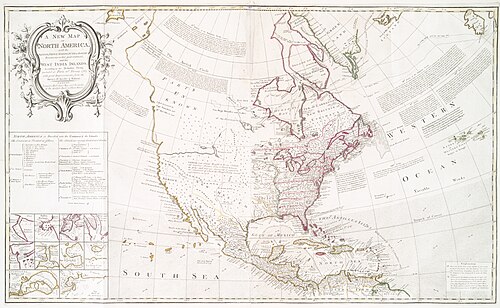
The Louisiana and Canada Questions
The Louisiana Transfer
The status of Louisiana was particularly complex. Three months prior to the Treaty of Paris, France had secretly transferred Louisiana to Spain via the Treaty of Fontainebleau. The Treaty of Paris further refined this by granting Britain the east side of the Mississippi River (including Baton Rouge), while New Orleans temporarily remained French. This fragmented region was not reunited until the Louisiana Purchase of 1803 and the Adams–Onís Treaty of 1819.
The Canadian Perspective
From the British perspective, keeping Canada was a strategic necessity, despite the high cost of administration. To avoid antagonizing the French or driving settlers to other colonies, British Prime Minister Lord Bute ensured that Roman Catholicism would be tolerated. This was a significant concession, as the Protestant British government generally restricted Catholic influence.
For the French, the loss of Canada was viewed as a financial relief, as the territory had become a burden. However, the French Canadians felt a deep sense of betrayal, believing their mother country had abandoned them. While the treaty allowed for 18 months of unrestrained emigration, only 1,600 people left, and the majority of French Canadians remained under British rule.
Diplomatic Friction and Aftermath
The Dunkirk Dispute
A lingering point of contention was the fortification of Dunkirk, a French coastal settlement. Britain feared Dunkirk could be used as a launch point for an invasion. The 1763 treaty forced France to demolish fortifications built since 1713, a requirement that caused lasting resentment in France until it was overturned in the Treaty of Paris of 1783.
Reactions in the Thirteen Colonies
The treaty was not universally welcomed in the American colonies. Protestant colonists were displeased by the legal protections granted to Catholics in Quebec. Furthermore, the subsequent ban on settlement beyond the Appalachian Mountains in the newly acquired Indian territories created friction. Historians suggest these grievances contributed to the eventual outbreak of the American Revolution.
Summary of Territorial Changes
| Power | Territories Gained/Retained | Territories Ceded/Returned |
|---|---|---|
| Great Britain | Canada, Florida, East Louisiana, Dominica, Grenada, Tobago | Havana, Manila, Guadeloupe, Martinique, Saint Lucia |
| France | Guadeloupe, Martinique, Saint Lucia, Fishing rights (Newfoundland) | Canada, East Louisiana, various Caribbean islands |
| Spain | Havana, Manila, West Louisiana (via Fontainebleau) | Florida |
Frequently Asked Questions
How does the Treaty of Paris 1763 differ from the Treaty of Paris 1783?
The 1763 treaty ended the Seven Years' War and established British dominance in North America. The 1783 treaty ended the American Revolutionary War and recognized the independence of the United States.
Why did France prefer Guadeloupe over Canada?
Guadeloupe was a highly profitable sugar colony, whereas Canada was vast, expensive to maintain, and viewed by some French officials as a financial burden.
What happened to the French settlers in Canada after the treaty?
Most remained in Canada. The treaty allowed them to practice Roman Catholicism and provided a brief window for emigration, though few actually left due to the high cost of travel.
Did the treaty involve Prussia and Austria?
No. While they were combatants in the Seven Years' War, Prussia and Austria settled their disputes separately through the Treaty of Hubertusburg, signed five days after the Treaty of Paris.
How did the treaty contribute to the American Revolution?
The treaty granted religious tolerance to Catholics in Quebec and was followed by a ban on colonial settlement west of the Appalachian Mountains, both of which frustrated the Protestant colonists in the Thirteen Colonies.