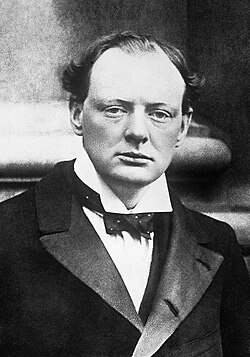
Winston ChurchillPrime Minister of the United KingdomWorld War IIBritish politicsConservative Party

Winston Churchill: The Life and Legacy of a British Icon

Winston Churchill: The Life and Legacy of a British Icon Sir Winston Churchill remains one of the most influential figures in global history. A polymath who excelled as a politician, mili...

Winston Churchill: The Life and Legacy of a British Icon

Sir Winston Churchill remains one of the most influential figures in global history. A polymath who excelled as a politician, military officer, historian, and painter, he is most remembered for leading the United Kingdom through the darkest days of the Second World War. His resolve, oratorical skill, and strategic vision helped steer the Allied forces toward victory against Nazi Germany.

From his early days as a cavalry officer in the far reaches of the British Empire to his two terms as Prime Minister, Churchill's life was marked by dramatic shifts in political allegiance and a relentless drive for public service.
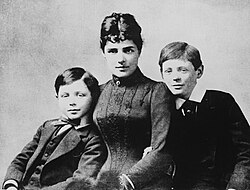
Jennie Spencer Churchill with her two sons, Jack (left) and Winston (right) in 1889

Key Facts

  • Full Name: Sir Winston Churchill (KG OM CH TD DL FRS RA).
  • Prime Minister Terms: 1940–1945 and 1951–1955.
  • Military Rank: Colonel in the British Army.
  • Political Parties: Conservative (1899–1904, 1924–1964) and Liberal (1904–1924).
  • Key Roles: First Lord of the Admiralty, Chancellor of the Exchequer, and Secretary of State for War and Air.
  • Lifespan: November 30, 1874 – January 24, 1965.

Early Life and Military Beginnings

Born in Blenheim, Oxfordshire, to Lord Randolph Churchill and Jeanette "Jennie" Jerome, Churchill was educated at the Royal Military College, Sandhurst. His early career was defined by a thirst for adventure and military experience. He served in various hotspots of the British Empire, including Cuba, India, and Sudan.

Churchill in the military dress uniform of the 4th Queen's Own Hussars at Aldershot in 1895[18]

By 1899, Churchill had entered politics as a Conservative MP while continuing his military service. During the Second Boer War, he gained notoriety and bravery, though he was eventually taken as a prisoner of war (POW) before making a daring escape.
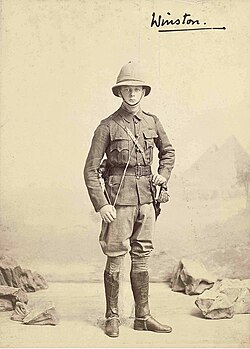
Winston Churchill posing in uniform in front of a backdrop depicting the Egyptian Pyramids, 1898.

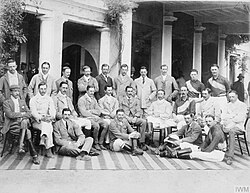
Officers involved in the Inter-Regimental Polo Tournament at Meerut, 1899. Winston Churchill is standing second from right.

A Dynamic Political Career

Churchill's political journey was far from linear. After starting as a Conservative, he "crossed the floor" in 1904 to join the Liberal Party, where he held several high-ranking positions under H. H. Asquith, including Home Secretary and First Lord of the Admiralty (the cabinet minister responsible for the Royal Navy).

Churchill in 1900 around the time of his first election to Parliament[47]

Churchill in 1904 when he "crossed the floor"

During World War I, he served as Minister of Munitions, ensuring the British army was properly equipped. He later held the roles of Secretary of State for War and Air, and Secretary of State for the Colonies. Despite these successes, he faced a period of political isolation known as the "Wilderness Years" (1929–1939), during which he warned the British government about the rising threat of Nazi Germany and criticized the policy of appeasement—the strategy of making concessions to avoid conflict.
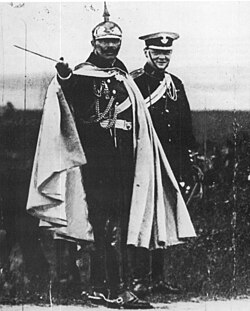
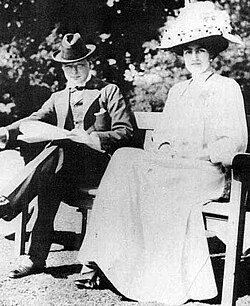
Churchill and German Kaiser Wilhelm II during a military manoeuvre near Breslau, Silesia, in 1906

Churchill and his fiancée Clementine Hozier shortly before their marriage in 1908

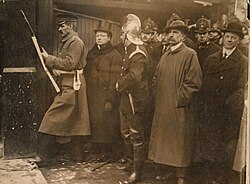
Churchill (second left) photographed at the Siege of Sidney Street

Leading Britain Through World War II

In September 1939, as war broke out, Churchill returned to the Admiralty. By May 1940, he succeeded Neville Chamberlain as Prime Minister. His leadership was characterized by an unwavering resolve to fight on, even when Britain stood alone against the Axis powers.
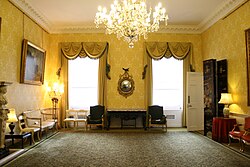
As First Lord of the Admiralty, Churchill's London residency was Admiralty House.

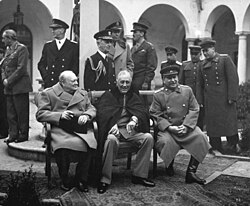
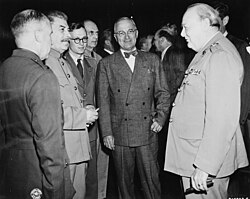
Churchill coordinated closely with other world leaders, most notably U.S. President Franklin D. Roosevelt and Soviet leader Joseph Stalin. Together, they formed the "Big Three," meeting at historic summits such as the Tehran, Yalta, and Potsdam Conferences to plan the defeat of Germany and the postwar order of Europe.
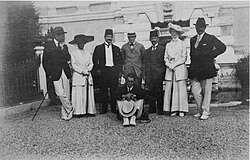
Winston Churchill between Talaat Bey and Cavid Bey (both wearing fezzes) during his private stay in Istanbul in July 1910

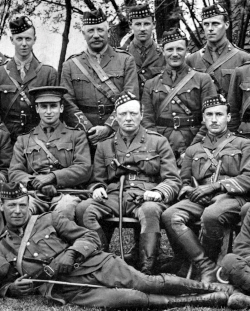
Churchill commanding the 6th Battalion, the Royal Scots Fusiliers, 1916.

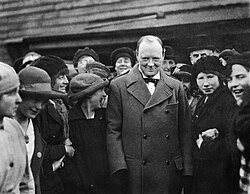
Churchill meets female workers at Georgetown's filling works near Glasgow in October 1918.

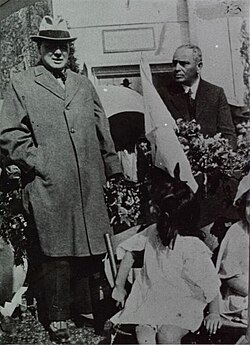
Churchill as Secretary of State for the Colonies during his visit to Mandatory Palestine, Tel Aviv, 1921.
Churchill as Secretary of State for the Colonies during his visit to Mandatory Palestine, Tel Aviv, 1921

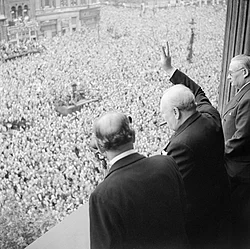
From the evacuation at Dunkirk to the Allied invasion of Normandy (D-Day), Churchill's strategic oversight and public broadcasts galvanized the British people. On May 8, 1945, he announced the victory in Europe (VE Day) to a cheering crowd in Whitehall.
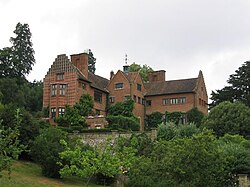
Churchill's main home was Chartwell in Kent.

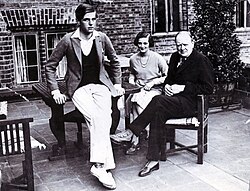
Churchill with son Randolph and daughter Diana in 1923

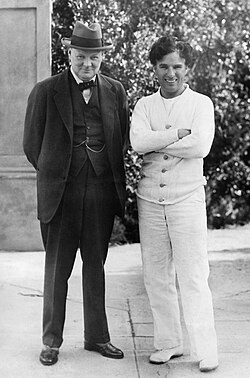
Churchill meeting with film star Charlie Chaplin in 1929

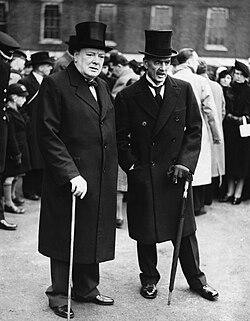
Churchill and Neville Chamberlain, the chief proponent of appeasement

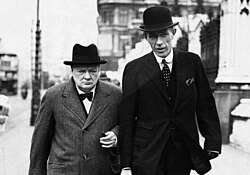
Churchill with Lord Halifax in 1938

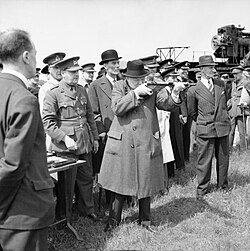
Churchill takes aim with a Sten sub-machine gun in June 1941.

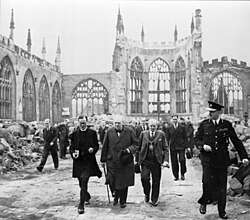
Churchill walks through the ruins of Coventry Cathedral, 1941

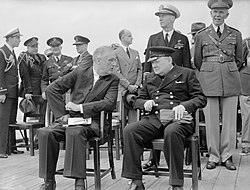
Churchill and Roosevelt seated on the quarterdeck of HMS Prince of Wales for a Sunday service during the Atlantic Conference, 10 August 1941

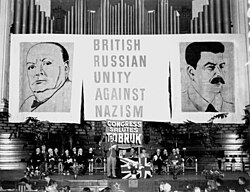
Huge portraits of Churchill and Stalin, Brisbane, Australia, 31 October 1941

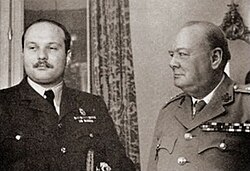
Churchill meeting King Farouk in Cairo in December 1942

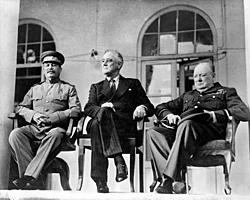
Stalin, Roosevelt and Churchill at the Tehran Conference in 1943

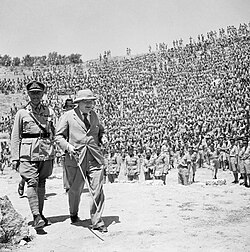
Churchill in the Carthage theatre, near the ancient Carthage Amphitheatre, to address 3,000 British and American troops, June 1943

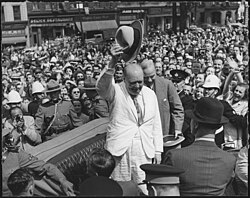
Churchill is greeted by a crowd in Québec City, Canada, 1943

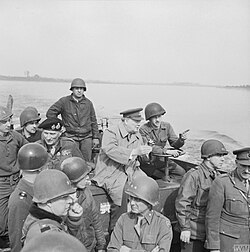
Churchill's crossing of the Rhine river in Germany, during Operation Plunder on 25 March 1945

Churchill, Roosevelt, and Stalin at the Yalta Conference, February 1945

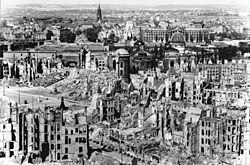
The destruction of Dresden, February 1945

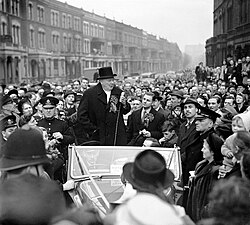
Churchill waving the Victory sign to the crowd in Whitehall on the day he broadcast to the nation that the war with Germany had been won, 8 May 1945.

Churchill, Harry S. Truman, and Stalin at the Potsdam Conference, July 1945

Post-War Era and Final Years

Although he lost the general election of 1945 to Clement Attlee, Churchill remained a pivotal figure. He famously warned of an "Iron Curtain" descending across Europe, signaling the start of the Cold War. He returned to the premiership for a second term from 1951 to 1955.
Churchill in 1949
Churchill in 1949

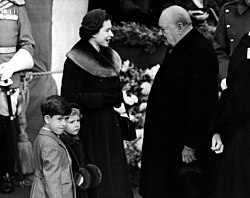
Churchill with Queen Elizabeth II, Prince Charles and Princess Anne, 10 February 1953

Churchill with Anthony Eden, Dean Acheson and Harry Truman, 5 January 1952

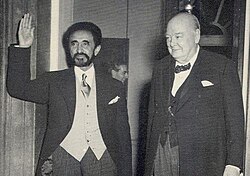
Churchill meeting Ethiopian Emperor Haile Selassie, 22 October 1954, one of the UK's African allies in World War II

In his later years, Churchill focused on his passions for history and art. He died on January 24, 1965, at the age of 90 and was laid to rest at St Martin's Church, Bladon.
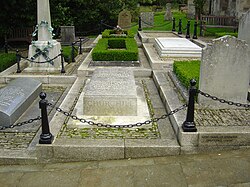
Churchill's grave at St Martin's Church, Bladon

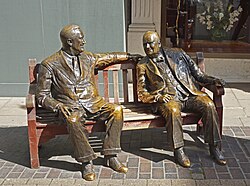
Allies (1995) by Lawrence Holofcener, a sculptural group depicting Franklin D. Roosevelt and Churchill in Bond Street, London

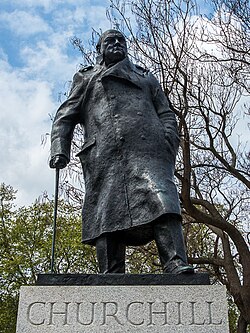
The statue of Churchill (1973) by Ivor Roberts-Jones in Parliament Square, London

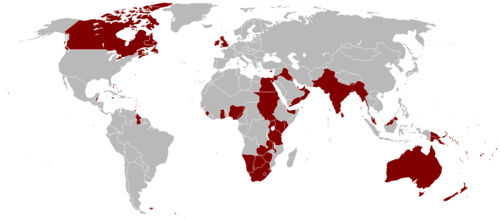
The British Empire at its territorial peak in 1921

Summary of Political and Military Career

The following table summarizes the key offices and roles held by Sir Winston Churchill throughout his multifaceted career.

Winston Churchill's Major Offices and Roles
Period Role/Office Key Focus
1893–1924 Military Service British Army (Colonel)
1908–1910 President of the Board of Trade Commerce and Trade
1911–1915 First Lord of the Admiralty Naval Strategy (WWI)
1917–1919 Minister of Munitions War Production
1924–1929 Chancellor of the Exchequer National Finance
1940–1945 Prime Minister WWII Leadership
1951–1955 Prime Minister Post-War Recovery

Frequently Asked Questions

Which political parties did Winston Churchill belong to?

Churchill was a member of the Conservative Party from 1899 to 1904 and again from 1924 until 1964. He spent the intervening years (1904–1924) as a member of the Liberal Party.

What were the "Wilderness Years"?

The "Wilderness Years" refer to the period between 1929 and 1939 when Churchill held no major government office. During this time, he was largely marginalized by his peers but used the opportunity to warn against the dangers of Nazi Germany.

What was Churchill's role in the "Big Three"?

Churchill represented the United Kingdom alongside U.S. President Franklin D. Roosevelt and Soviet leader Joseph Stalin. Together, they coordinated military strategy and planned the geopolitical structure of the world following World War II.

Did Winston Churchill serve in the military?

Yes, Churchill had an extensive military career from 1893 to 1924, reaching the rank of Colonel. He saw action in the North-West Frontier, the Mahdist War, and the Second Boer War.

What is the significance of the "Iron Curtain" speech?

Delivered after World War II, this speech described the ideological and physical division of Europe into two separate areas—the democratic West and the communist East—effectively announcing the beginning of the Cold War.