European Enclaves in North Africa: A History of Coastal Strongholds
Long before the full-scale colonization of the interior, European powers established a series of semi-enclaves along the Mediterranean and Atlantic coasts of North Africa, a region often referred to as the Maghreb. These semi-enclaves—consisting of fortified towns, trading posts, and military garrisons—were strategic footholds maintained by powers that lacked the military capacity to occupy the inland territories. This era of coastal presence lasted from the 11th century until the French conquest of Algeria in 1830.
These outposts served various purposes, from securing lucrative trade routes to combating piracy. While most were evacuated by the late 18th century, a few Spanish possessions remain to this day.
The Italian and Sicilian Influence
The earliest European ventures into North Africa were led by the Maritime Republics—powerful city-states with dominant navies—such as Amalfi, Pisa, and Genoa. Around the year 1000, merchant colonies began appearing, primarily driven by the desire to control the highly profitable coral trade. By 1133, Pisa and Genoa had negotiated commercial treaties with the Almoravids, though these relationships often shifted toward military aggression as Almoravid power waned.
In the 12th century, the Normans, who had conquered Sicily, expanded their reach. Under Roger II of Sicily, the Normans seized Djerba in 1135 and several Tunisian coastal cities, creating a short-lived entity known as the Norman Kingdom of Africa.
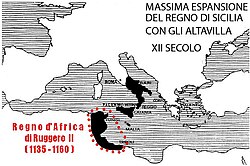
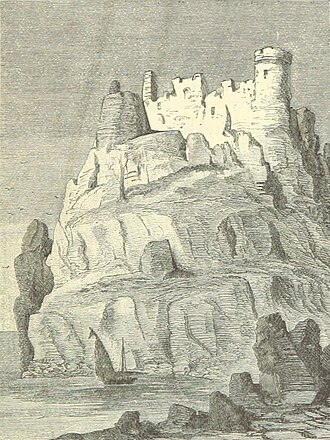
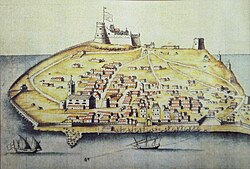
Following the evacuation of Mahdia in 1160, Norman control vanished. Later, the Aragonese and Sicilians intermittently held Djerba and the Kerkennah Islands until the late 14th century. Eventually, Genoa became the primary Italian power in the region, maintaining control of Jijel in Algeria and Tabarka in Tunisia, the latter of which they held from 1540 to 1742.
The Portuguese "Algarve-Beyond-the-Sea"
Portuguese expansion began in 1415 with the conquest of Ceuta under King João I. This venture was recognized by Pope Martin V as a crusade. The Portuguese referred to their North African possessions, mostly located along the Atlantic coast of Morocco, as the Algarve-Beyond-the-Sea (Algarve de Além-Mar), distinguishing them from the European Algarve.
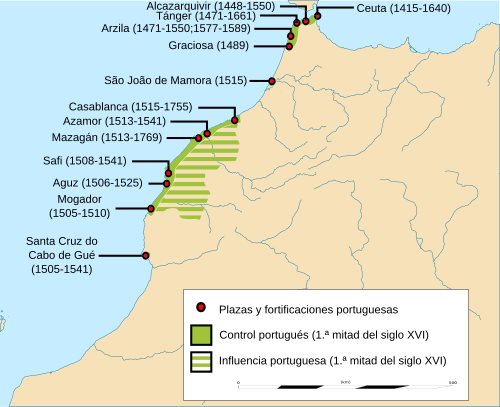
Under King Afonso V, known as o Africano, Portugal expanded its holdings to include Ksar es-Seghir and Arcila. Later, João II fortified El Jadida (Mazagan) in 1486, and Manuel I secured Agadir, Essaouira, and Azemmour. The Portuguese also occupied Anfa, which they renamed "Casa Branca," the origin of the modern name Casablanca.
By the mid-16th century, the Portuguese Empire's global expansion made these Moroccan outposts militarily unsustainable and economically unattractive. Many fell to the Saadi dynasty between 1541 and 1550. After Portugal regained its independence from Spain in 1640, Ceuta opted to remain under Spanish rule. Portugal eventually ceded Tangier to England in 1661 and abandoned Casablanca after the 1755 Lisbon earthquake. The Portuguese presence officially ended on March 10, 1769, with the evacuation of El Jadida.
The Spanish Presence and the Plazas de soberanía
Following the completion of the Reconquista—the centuries-long campaign to reclaim the Iberian Peninsula from Muslim rule—Spain sought to extend its influence across the Straits of Gibraltar. Starting with Melilla in 1497, Spain established several bridgeheads, including Oran, Algiers, and Béjaïa by 1510.
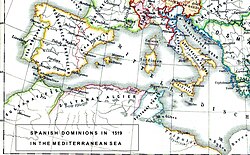
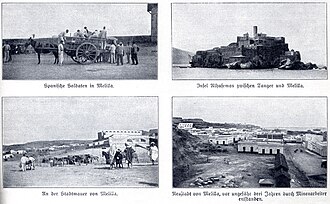
Spanish control was often precarious. In 1516, Oruç Reis expelled the Spanish from Algiers, and his brother Hayreddin Barbarossa later made Algiers a vassal of the Ottoman Empire. Despite these losses, Spain maintained a presence in Melilla and the Peñón de Vélez de la Gomera. Under the Bourbon ruler Philip V, Spain briefly retook Oran and Mers El Kebir in 1732, though these were evacuated in 1792 following a devastating earthquake.
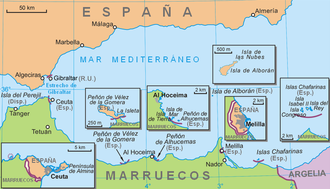
Today, the only remaining European enclaves in North Africa are the Spanish Plazas de soberanía (sovereignty plazas). These are small territories and islands that Spain continues to administer.
French and English Trading Posts
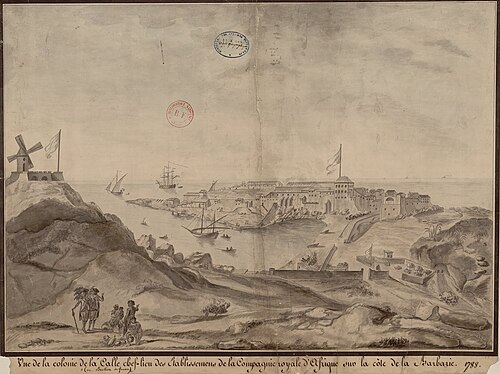
French involvement began with a 1536 alliance with the Ottoman Empire. Rather than large-scale conquest, France focused on commercial concessions. In 1552, merchant Tomasino Lenche was permitted to build the Bastion de France, a fortress used to exploit the coral trade and sell weaponry to the Dey of Algiers.
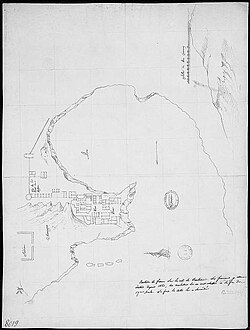
The Bastion de France and other posts like La Calle (El Kala) changed hands frequently due to Algerian attacks and diplomatic shifts. By 1690, these rights were assigned to the French Africa Company. However, by 1827, diplomatic crises led to the abandonment and destruction of these posts, setting the stage for the full French conquest of Algeria in 1830.
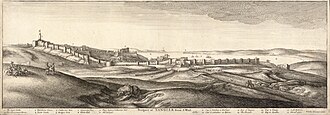
England's presence was brief and limited. Tangier was ceded to England by Portugal in 1661 as part of the dowry for Catherine of Braganza upon her marriage to Charles II. Because the city was expensive to defend and offered little strategic advantage, English troops evacuated in 1684, destroying the city's walls and harbor mole upon their departure.
Summary of Major European Enclaves
| European Power | Notable Enclaves | Primary Period of Control | Key Motivation |
|---|---|---|---|
| Italian Republics | Tabarka, Jijel, Djerba | 11th – 18th Century | Coral trade and commerce |
| Portugal | Ceuta, Tangier, El Jadida | 1415 – 1769 | Crusading and Atlantic trade |
| Spain | Melilla, Ceuta, Oran | 1497 – Present (some) | Strategic security and Reconquista |
| France | Bastion de France, La Calle | 16th Century – 1827 | Trading concessions and coral |
| England | Tangier | 1661 – 1684 | Marriage dowry/Strategic outpost |