The Spanish Protectorate in Morocco: A History of Colonial Ambition and Conflict (1912–1956)
Between 1912 and 1956, a significant portion of Morocco was governed under a protectorate—a legal arrangement where a powerful state controls the foreign affairs and security of a weaker state while maintaining a facade of local sovereignty. The Spanish Protectorate in Morocco was born from a complex web of European diplomacy, strategic fears, and the desire for national prestige during an era of global imperial expansion.
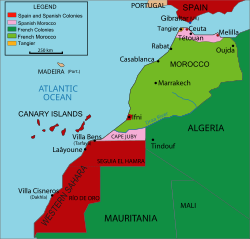
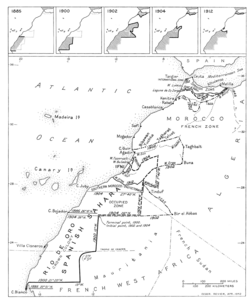
Established on November 27, 1912, through a treaty between France and Spain, this protectorate divided Moroccan territory into spheres of influence. While France controlled the majority of the country, Spain was granted a northern strip along the Mediterranean and the Strait of Gibraltar, as well as a southern region around Cape Juby. The city of Tangier remained a unique exception, operating as an internationally controlled zone.
The Path to Formation
By the late 19th century, Spain was struggling to maintain its global standing after the loss of most of its empire in 1898. Despite a lack of general enthusiasm for new colonial ventures, the Spanish government felt compelled to expand in northern Morocco to protect its presidios—fortified garrisons—in Ceuta and Melilla. There was also a growing fear that if France gained total control of northwestern Morocco, Spain would be strategically besieged.
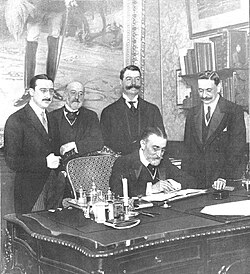
Diplomatic negotiations throughout the early 1900s, including the 1904 Entente cordiale between Britain and France, eventually solidified Spain's role. Britain supported a Spanish presence on the coast opposite Gibraltar, preferring a weaker power to hold the strategic territory. Following the Algeciras Conference of 1906, which guaranteed equal commercial rights for European powers, the formal protectorate was established via the Treaty of Fes in 1912.
Geographic Scope and the Southern Zone
The protectorate covered approximately 20,000 square kilometers. The northern zone was the primary administrative focus, with its capital at Tétouan. The southern zone, centered on Cape Juby, was more sparsely populated and often administered alongside the Spanish Sahara. This southern strip would later become a point of legal contention during Morocco's push for independence.
The Rif War and Internal Resistance
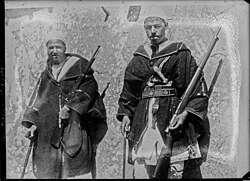
Spanish rule was far from peaceful, particularly in the mountainous interior. From 1921 to 1926, the region saw the rise of the Republic of the Rif, a breakaway state led by the guerrilla leader Abd el-Krim. This period culminated in the Rif War, a brutal conflict that challenged Spanish military authority.
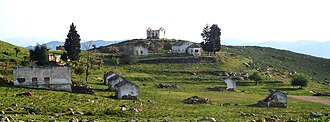
The war is most remembered for the disaster at Annual in July and August 1921, where Spain lost more than 13,000 soldiers. This defeat caused massive political instability in Spain and contributed to the unpopularity of King Alfonso XIII, eventually leading to a military coup by General Miguel Primo de Rivera in 1923. The conflict only ended after a joint French-Spanish expedition launched decisive air and amphibious landings at Alhucemas in 1925.
Political Turmoil: Civil War and World War II
The protectorate played a pivotal role in the Spanish Civil War. In 1936, the uprising against the Republican Government began in Spanish Morocco at Llano Amarillo. The Army of Africa, commanded by Francisco Franco and consisting of professional soldiers and regulares (locally recruited Moroccan troops), became the core of the Nationalist Army that eventually won the war.
Because the regulares were so vital to Franco's victory, the protectorate actually enjoyed more political autonomy and press freedom than mainland Spain during the early Francoist era. Later, during World War II, Spanish troops provisionally occupied Tangier to prevent a potential Italian invasion.
Administration and Economy
The protectorate operated under a dual administrative system. On the Moroccan side was the Makhzen (the traditional government), headed by a Khalifa who acted as the Sultan's representative. The Khalifa issued dahirs (royal decrees) and served as the highest religious authority.
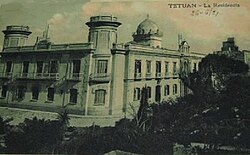
Parallel to this was the Spanish administration, led by a High Commissioner. While the High Commissioner was formally accredited to the Khalifa, he held the actual power, directing political action and military operations. The two leaders resided in adjacent palaces in Tétouan, which were later merged into the Royal Palace of Tétouan.
![1920 map of the "Spanish zone in Morocco", with images of Santiago Tablas [es], Dámaso Berenguer and Manuel Fernández.](/images/b6/c8/b6c8ba59a159f7ac025fd623c5f1510f67aeaa1a69ae7ced109d07385644cbff.jpg)
Economic Development
Spain focused heavily on the mineral wealth of the region. Iron mines in the Rif sparked an economic boom in Melilla, and the Spanish built numerous narrow-gauge railways to transport these resources. Additionally, Spain established a Health Inspectorate in 1916 to conduct vaccination campaigns and a Board of Education in 1913 to manage schooling and Moroccan studies.
Retrocession and the Path to Independence
The end of the protectorate came in 1956, shortly after France relinquished its own control over Morocco. Spain retroceded the northern territory to the newly independent Kingdom of Morocco on April 7, 1956. However, Spain initially attempted to retain Cape Juby, Ifni, and the Spanish Sahara.
This led to the Ifni War in 1958, waged by the Moroccan Army of Liberation. As a result, Morocco gained control of Tarfaya (the southern part of the protectorate). After further negotiations, Spain finally ceded Ifni to Morocco on January 5, 1969. To this day, Morocco continues to claim Ceuta and Melilla as integral parts of its territory, while Spain maintains they are integral parts of Spanish geography.
The following table summarizes the key details of the Spanish Protectorate in Morocco:
| Category | Details |
|---|---|
| Duration | 1912 – 1956 |
| Capital | Tétouan |
| Key Treaties | Treaty of Madrid (1912), Treaty of Angra de Cintra (1958) |
| Major Conflict | Rif War (1921–1926) |
| Administrative Heads | High Commissioner (Spain) and Khalifa (Morocco) |
| Official Languages | Spanish, Berber, Arabic, Tetuani (Haketia) |
| Currency | Spanish peseta |